Table of Contents
Before diving into individual drugs, here is something important that applies to the entire chapter.
Almost all drugs in this chapter share a common storage requirement — keep them at room temperature in a cool, dry place, away from direct sunlight. The only notable exception is Norepinephrine, which requires refrigeration at 4°C in PVC bags when stored as a solution.
This is a high-yield exam point. If a question asks about storage of any ANS drug and you are unsure, “cool, dry place, room temperature, away from direct sunlight” is the safe answer for most of them.
What Are Sympathomimetic Agents?
Sympathomimetic agents, also called adrenergic agonists, are drugs that mimic the effects of the sympathetic nervous system. They do this by activating adrenergic receptors — proteins found on the surface of cells throughout the body.
There are two main families of adrenergic receptors:
Alpha receptors — further divided into alpha-1 (causes vasoconstriction, pupil dilation) and alpha-2 (reduces norepinephrine release as a feedback mechanism)
Beta receptors — divided into beta-1 (heart rate and contractility), beta-2 (bronchodilation, uterine relaxation), and beta-3 (fat breakdown)
Based on how they work, sympathomimetic agents are classified into three groups:
- Direct Acting — bind and activate adrenergic receptors themselves
- Indirect Acting — cause norepinephrine release from nerve terminals
- Mixed Acting — do both
This article covers the Direct Acting group in detail.
Direct Acting Sympathomimetic Agents
Direct acting agents bind directly to alpha or beta adrenergic receptors. Their effect is not abolished by drugs like reserpine or guanethidine that deplete norepinephrine stores, which is an important distinction from indirect acting agents.
1. Norepinephrine (Nor-epinephrine)
Norepinephrine is the principal neurotransmitter of the sympathetic nervous system. The body releases it naturally during stress to prepare for a fight-or-flight response — raising heart rate, tightening blood vessels, and sharpening alertness. As a medication, it is one of the most important vasopressors used in intensive care.
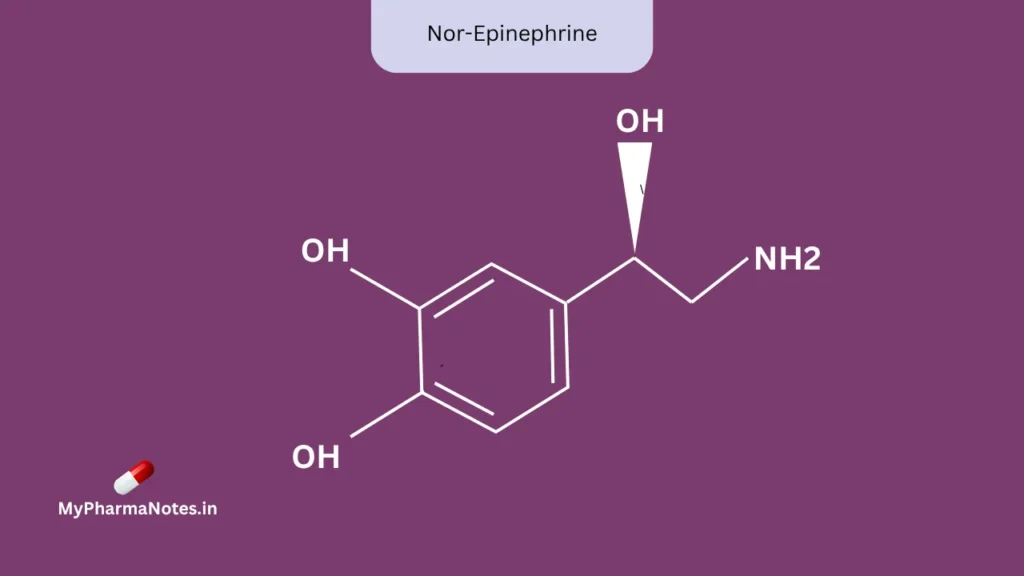
IUPAC Name: 4-[(1R)-2-amino-1-hydroxyethyl]benzene-1,2-diol
Receptor Action: Primarily alpha-1 and alpha-2, with mild beta-1 activity
Uses: Given intravenously to restore and maintain blood pressure in life-threatening hypotension, including septic shock and cardiogenic shock. It is not used for chronic conditions — only acute, hospital-based emergencies.
Special Storage Note: Unlike other drugs in this chapter, Norepinephrine solutions must be stored in PVC bags at 4°C for up to 61 days and must be protected from light at all times. It oxidizes easily on exposure to air or light.
Formulations: Intravenous solution, Injectable solution
Brand Names: Levophed, Levarterenol, Norepin
2. Phenylephrine
While epinephrine and norepinephrine activate multiple receptor types, phenylephrine is selective — it targets only alpha-1 receptors. This selectivity makes it predictable and safe enough for over-the-counter use as a decongestant.
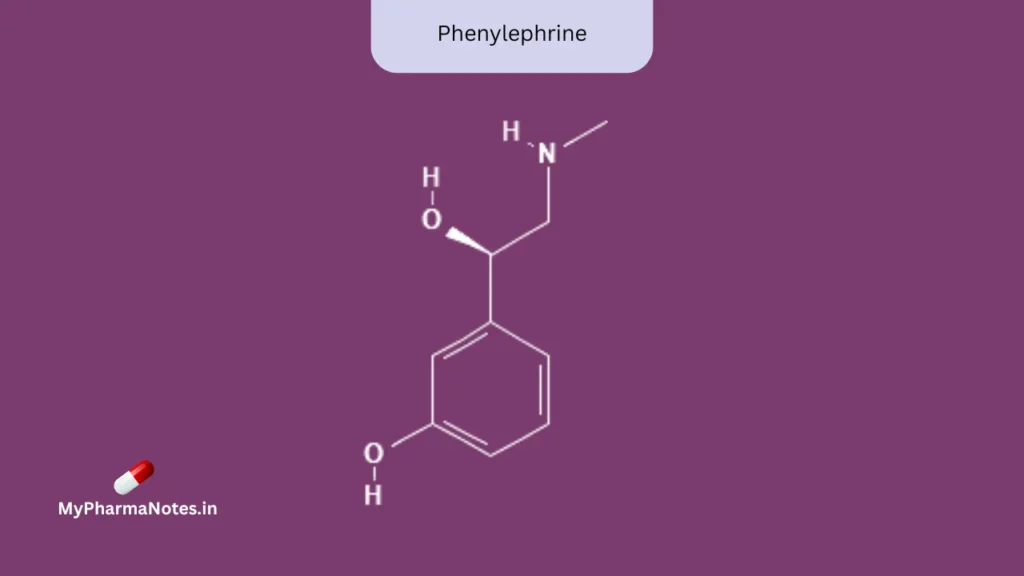
IUPAC Name: (R)-3-[-1-hydroxy-2-(methylamino)ethyl]phenol
Receptor Action: Selective alpha-1 agonist
Uses: Nasal congestion relief in colds, allergies, and hay fever. Also reduces sinus pressure. Important point for exams — phenylephrine treats symptoms only, it does not cure or speed up recovery from the underlying illness.
Formulations: Nasal Drops, Solution, Tablets, Granules
Brand Names: Nostril, Pretz-D, Rhinall, Tur-Bi-Cal
3. Terbutaline
Terbutaline belongs to the beta agonist class, specifically targeting beta-2 receptors found in bronchial smooth muscle. When these receptors are activated, the airways relax and widen, making breathing easier.
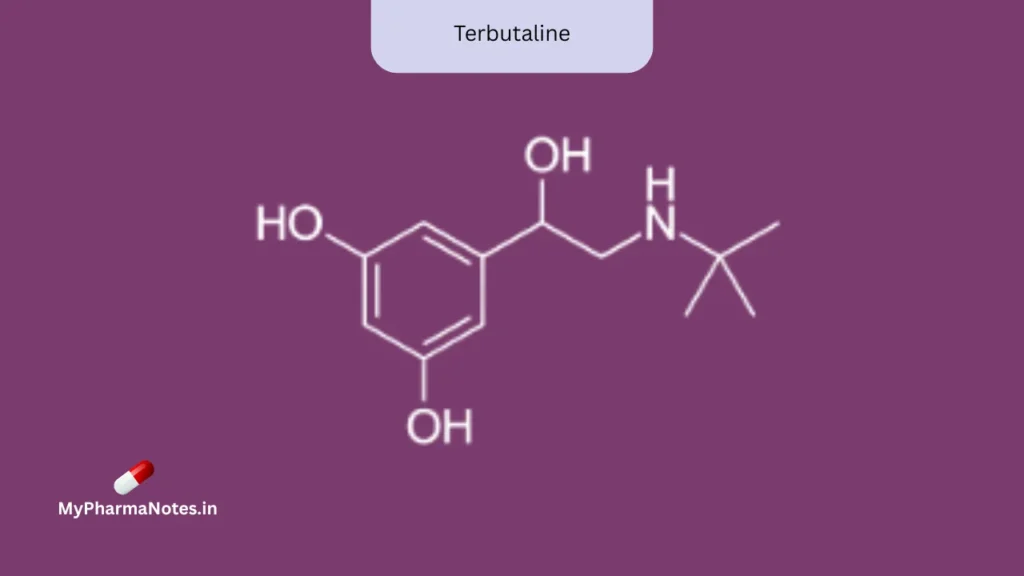
IUPAC Name: (RS)-5-[2-(tert-Butylamino)-1-hydroxyethyl]benzene-1,3-diol
Receptor Action: Selective beta-2 agonist
Uses: Prevention and treatment of wheezing, breathlessness, and chest tightness in asthma, chronic bronchitis, and emphysema. It is often compared with salbutamol — both are beta-2 agonists, but terbutaline has a slightly longer duration of action.
Formulations: Powder, Solution
Brand Names: Brethaire, Brethine
4. Naphazoline
Naphazoline has a unique structural feature worth noting — it contains an imidazoline ring, which is the same ring system found in tetrahydrozoline and tolazoline. This ring system gives it strong alpha-adrenergic activity and a rapid vasoconstrictor effect.
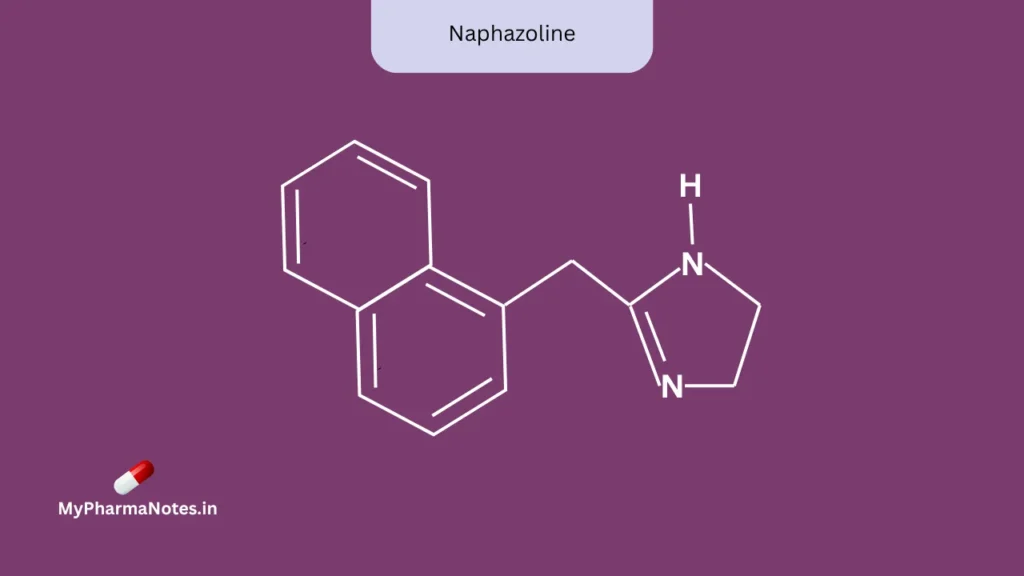
IUPAC Name: 2-(naphthalen-1-ylmethyl)-4,5-dihydro-1H-imidazole
Receptor Action: Alpha-1 and alpha-2 agonist (vasoconstrictor)
Uses: Relieves redness and minor irritation in the eye caused by dust, wind, pollen, cold air, swimming, or contact lens use. Also available as nasal drops for congestion. Not recommended for prolonged use as it can cause rebound congestion.
Formulations: Nasal Drops, Ophthalmic gel-forming solution, Ophthalmic solution
Brand Names: Naphcon-A
5. Epinephrine (Adrenaline)
Epinephrine is the drug you reach for when there is no time to think. It is the first-line emergency treatment for anaphylaxis — a severe, potentially fatal allergic reaction. The human body itself produces it from the adrenal medulla. What makes epinephrine different from norepinephrine is the presence of a methyl group on the nitrogen, which gives it significant beta-2 activity in addition to alpha and beta-1 effects.
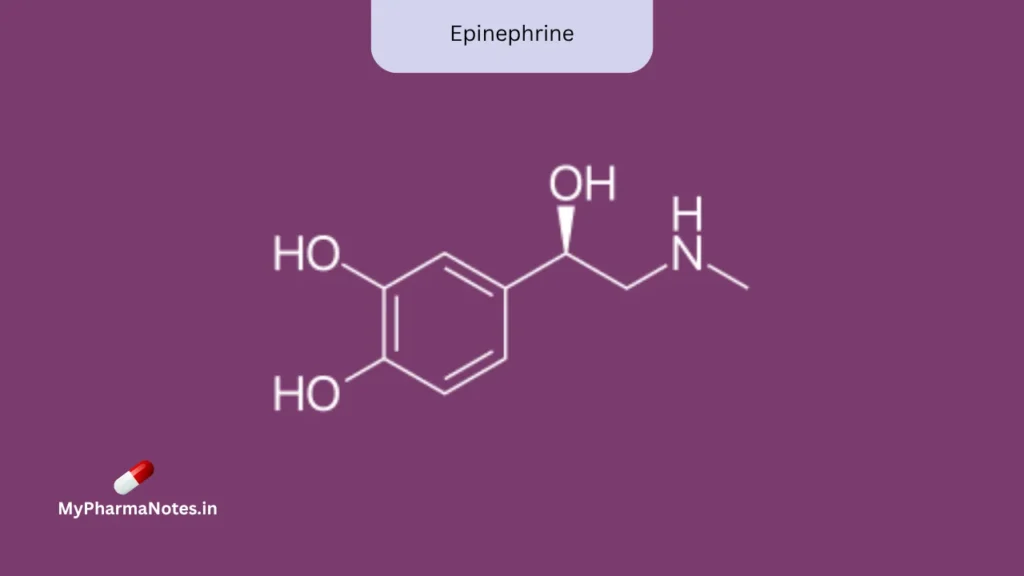
IUPAC Name: 4-[(1R)-1-hydroxy-2-(methylamino)ethyl]benzene-1,2-diol
Receptor Action: Alpha-1, Alpha-2, Beta-1, Beta-2 (non-selective)
Uses: Emergency treatment of anaphylaxis triggered by food, medications, insect bites, or latex. Also used in cardiac resuscitation and combined with local anesthetics to prolong their effect.
Formulations: Injection solution
Brand Names: EpiPen, Adrenaclick
6. Dopamine
Dopamine has a dual identity — in the brain, it is the neurotransmitter responsible for reward, motivation, and movement. In clinical medicine, it is used as a vasopressor in emergency care. Its effects are dose-dependent, which makes it particularly versatile.
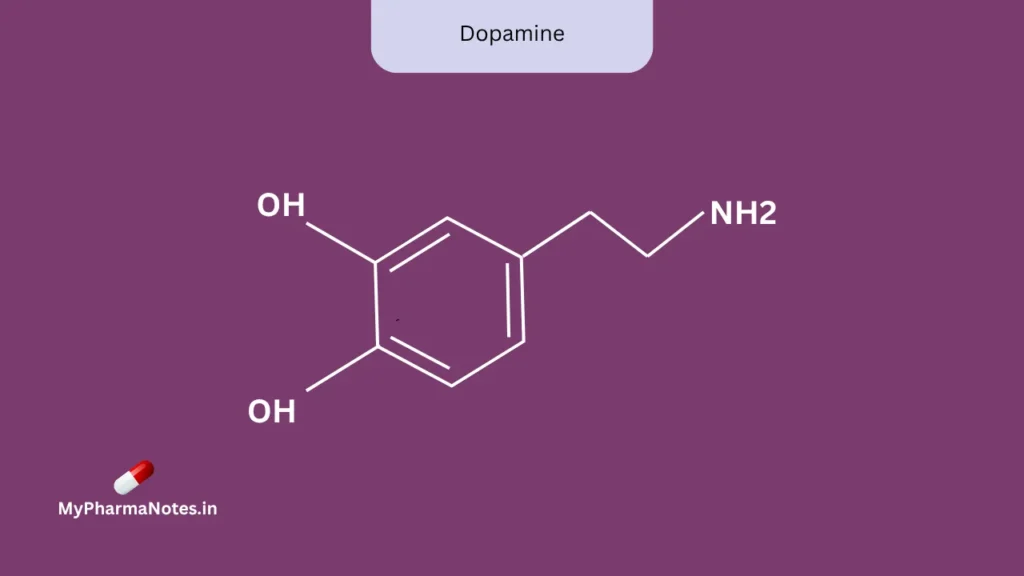
IUPAC Name: 4-(2-aminoethyl)benzene-1,2-diol
Receptor Action: At low doses — dopaminergic receptors (renal vasodilation); at moderate doses — beta-1 (cardiac output); at high doses — alpha-1 (vasoconstriction)
Uses: Treatment of cardiogenic shock, low blood pressure, and low heart rate. Used in intensive care settings for shock caused by heart attack, trauma, major surgery, or infection.
Formulations: Injectable solution
Brand Names: Intropin
7. Salbutamol (Albuterol)
Salbutamol is arguably the most recognised bronchodilator in the world. Walk into any pharmacy in India and you will find it under the brand name Asthalin or Ventolin. It is the go-to rescue medication for acute asthma attacks.
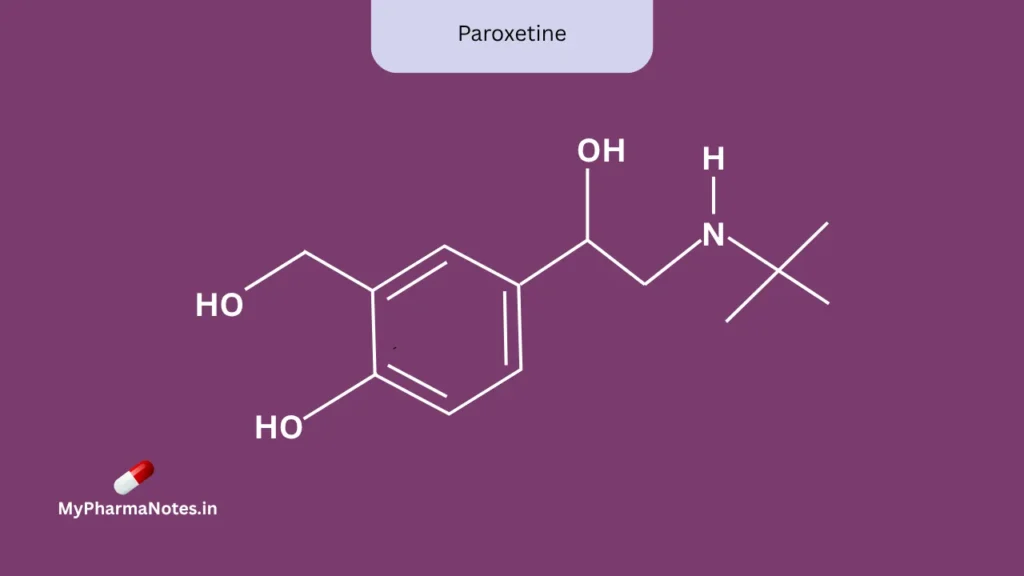
IUPAC Name: (RS)-4-[2-(tert-Butylamino)-1-hydroxyethyl]-2-(hydroxymethyl)phenol
Receptor Action: Selective beta-2 agonist
Uses: Rapid relief of bronchospasm in asthma and COPD. Reduces coughing, wheezing, and breathlessness within minutes of inhalation. Also used as a tocolytic (to delay preterm labour) in obstetrics.
Formulations: Aerosol, Solution, Tablets, Inhaler
Brand Names: Ventolin, Airomir, Asmalal, Easyhaler, Pulvinal, Salamol, Salbulin, Easi-Breathe
8. Tetrahydrozoline (Tetryzoline)
Like naphazoline, tetrahydrozoline contains an imidazoline ring. However, instead of a naphthalene group, it has a tetralin (1,2,3,4-tetrahydronaphthalene) ring fused to the imidazoline. This makes it slightly less potent but still effective as a topical vasoconstrictor.
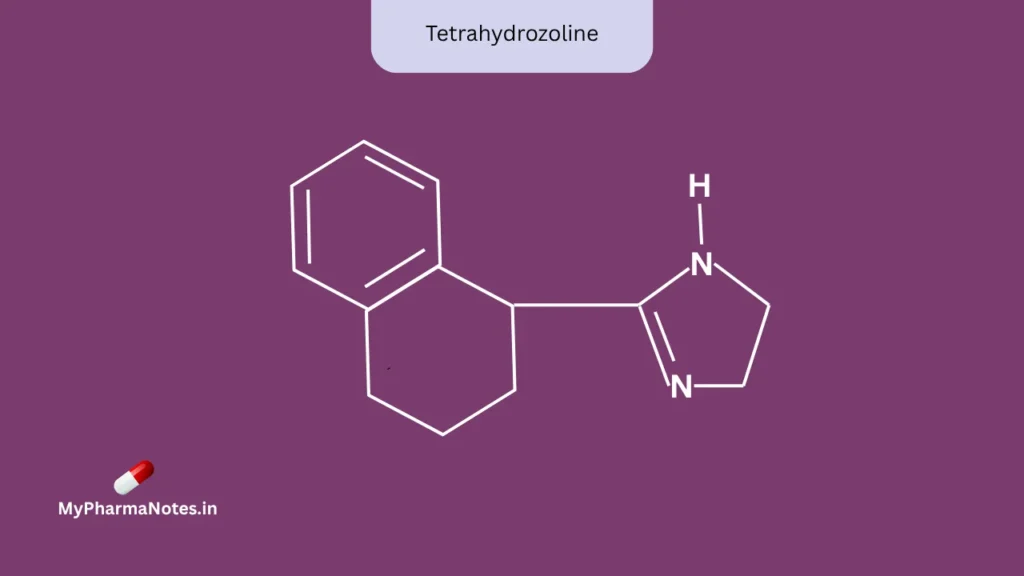
IUPAC Name: (RS)-2-(1,2,3,4-tetrahydronaphthalen-1-yl)-4,5-dihydro-1H-imidazole
Receptor Action: Alpha-1 and alpha-2 agonist
Uses: Available as OTC eye drops for temporary relief of minor eye redness and irritation from environmental factors like pollen, cold air, and chlorine from swimming pools.
Formulations: Eye Drops
Brand Names: Visine
Quick Comparison: Naphazoline vs Tetrahydrozoline
Both are imidazoline derivatives used in eye drops. The key difference is in their ring structure — naphazoline has a naphthalene ring, while tetrahydrozoline has a tetralin ring. Both are alpha-adrenergic vasoconstrictors and both are used to reduce eye redness. Tetrahydrozoline (Visine) is more commonly found in OTC products.
FAQ – Sympathomimetic Direct Acting Agents
What is the difference between direct and indirect acting sympathomimetics?
Direct acting agents bind to adrenergic receptors themselves. Indirect acting agents work by triggering the release of norepinephrine from nerve endings. Direct acting drugs still work even after norepinephrine stores are depleted.
Which direct acting agent is used in anaphylaxis?
Epinephrine (Adrenaline) is the first-line drug for anaphylaxis. It acts rapidly on alpha and beta receptors to reverse bronchospasm and hypotension.
What is the IUPAC name of Salbutamol?
(RS)-4-[2-(tert-Butylamino)-1-hydroxyethyl]-2-(hydroxymethyl)phenol
Why is Dopamine dose-dependent in its effects?
Dopamine activates different receptors at different doses — dopaminergic receptors at low doses, beta-1 at moderate doses, and alpha-1 at high doses. This makes it useful across a range of clinical situations.
Which drug in this group has a special refrigeration requirement?
Norepinephrine solution must be stored at 4°C in PVC bags, protected from light. All other drugs in this category are stored at room temperature.
D.Pharma 1st Year — All Subjects Notes
D.Pharma 2nd Year — All Subjects Notes
