Table of Contents
Indirect Acting Sympathomimetic Agents
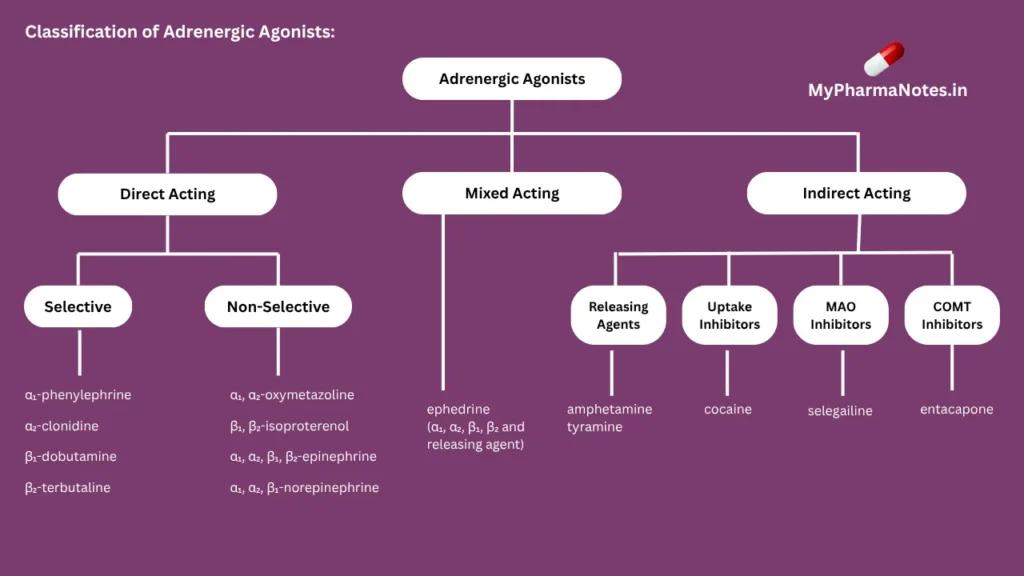
Indirect acting agents do not bind to adrenergic receptors directly. Instead, they enter the presynaptic nerve terminal and displace norepinephrine stored in vesicles, causing it to flood the synapse. This means their effects are dependent on the availability of norepinephrine — if norepinephrine stores are depleted (by drugs like reserpine), indirect acting agents lose their effectiveness.
This is a key exam distinction: direct acting agents work even when norepinephrine is depleted. Indirect acting agents do not.
1. Hydroxyamphetamine
Hydroxyamphetamine is a sympathomimetic with a very specific and narrow clinical use — it is almost exclusively used in ophthalmology to dilate the pupil. It is sometimes used in combination with tropicamide to enhance the mydriatic effect.
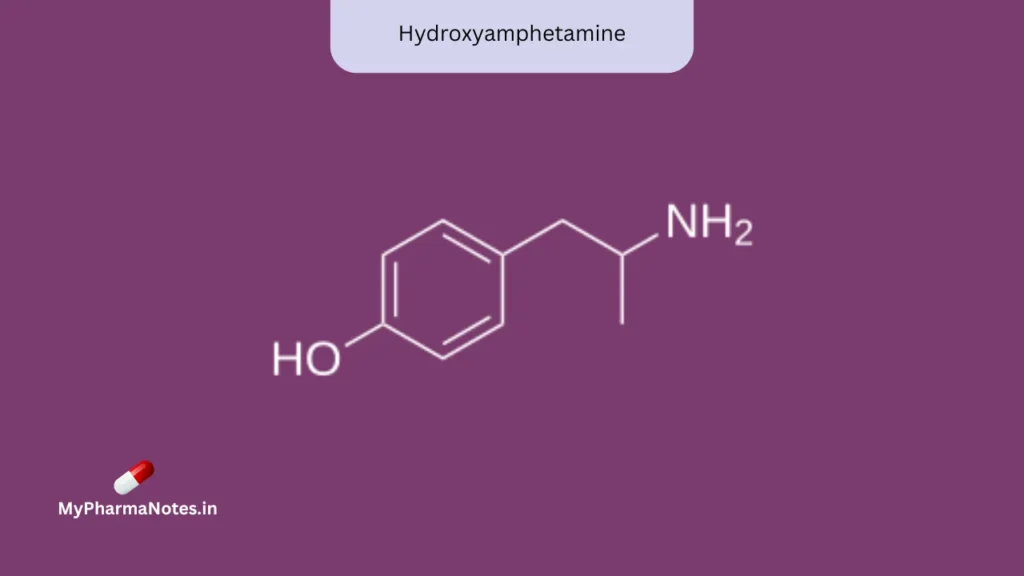
Chemical Name: Hydroxyamphetamine hydrobromide
Receptor Action: Indirect — causes norepinephrine release at sympathetic nerve terminals in the iris dilator muscle
Uses: Administered as eye drops to dilate the pupil (mydriasis) before fundus examination. It also reduces the eye’s ability to accommodate for near vision temporarily.
Formulations: Eye Drops
Brand Names: Paremyd
2. Pseudoephedrine
Pseudoephedrine is the stereoisomer of ephedrine. While the two are chemically similar, pseudoephedrine has predominantly indirect action and weaker CNS stimulant effects than ephedrine. It is widely available in cold and flu medications.
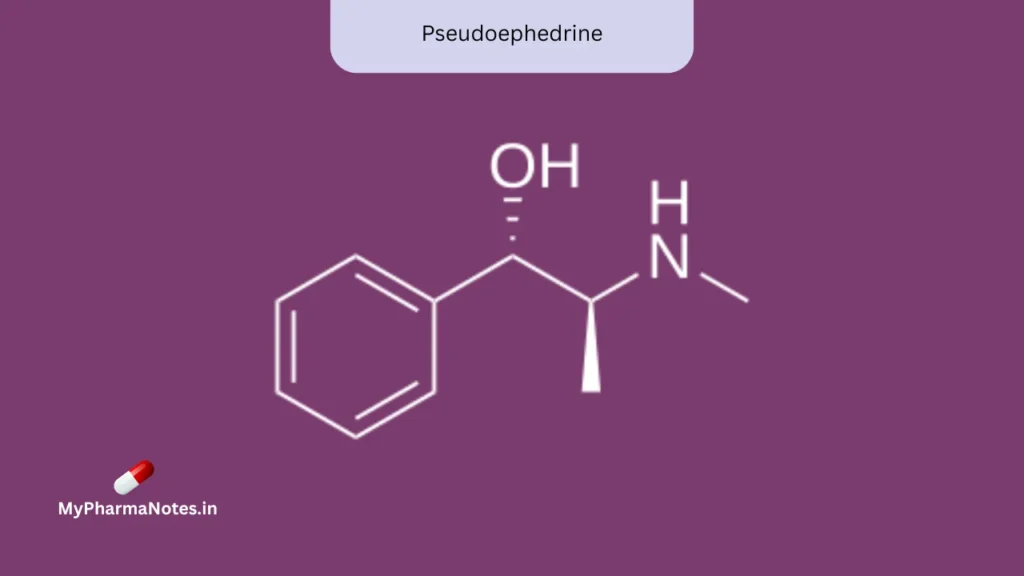
IUPAC Name: (S,S)-2-methylamino-1-phenylpropan-1-ol
Receptor Action: Indirect — promotes norepinephrine release; also has mild direct alpha and beta activity
Uses: Nasal and sinus decongestant for colds, allergies, and hay fever. At higher doses it can act as a stimulant. Notably, pseudoephedrine is a precursor in illicit methamphetamine synthesis, which is why it is often kept behind pharmacy counters and has purchase limits in several countries.
Formulations: Tablet, Capsule, Aerosol, Inhaler
Brand Names: Sudafed, Galpseud, Boots Decongestant
Mixed Acting Sympathomimetic Agents
Mixed acting agents combine both mechanisms — they activate adrenergic receptors directly and also trigger norepinephrine release. Their effects are partially reduced (but not completely abolished) by norepinephrine-depleting drugs.
3. Ephedrine
Ephedrine is one of the oldest sympathomimetic drugs known. It comes from the plant Ephedra sinica and has been used in traditional Chinese medicine for centuries. Unlike catecholamines such as epinephrine and dopamine, ephedrine is not broken down by catechol-O-methyltransferase (COMT), so it has a longer duration of action and can be taken orally.
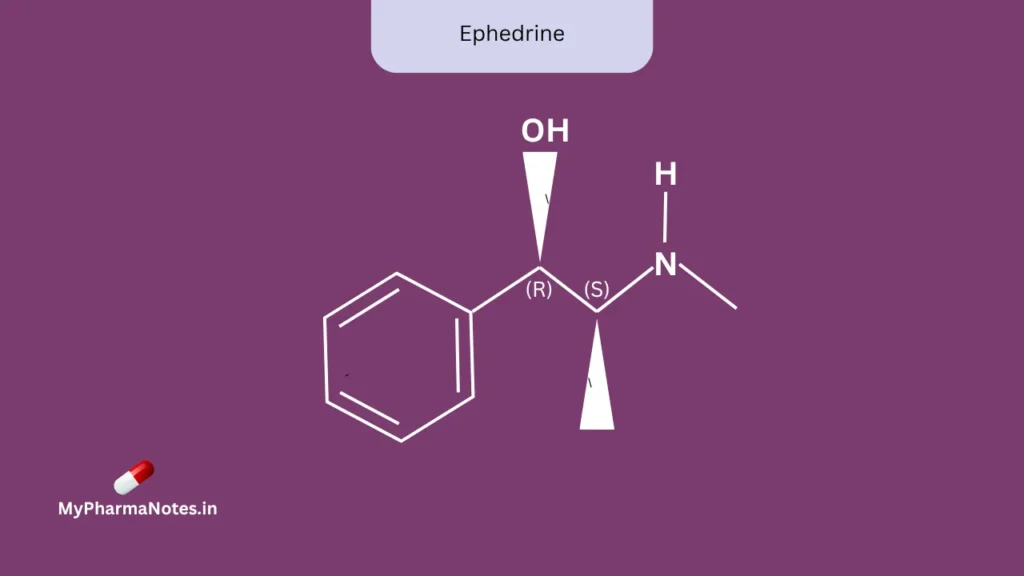
IUPAC Name: benzenemethanol α-[1-(methylamino)ethyl]-sulfate (2:1) (salt)
Receptor Action: Mixed — directly activates alpha and beta receptors and indirectly triggers norepinephrine release
Uses: Primary use is treatment of clinically significant hypotension during spinal or general anesthesia. Secondary uses include asthma, narcolepsy, and nasal congestion, though it is not the preferred agent for these conditions.
Formulations: Tablet, Capsule
Brand Names: Akovaz, Corphedra, Emerphed
4. Metaraminol
Metaraminol is less commonly discussed but appears regularly in exam questions. It resembles norepinephrine in structure but is not a catecholamine. Its predominant action is alpha-adrenergic, making it a reliable vasopressor.
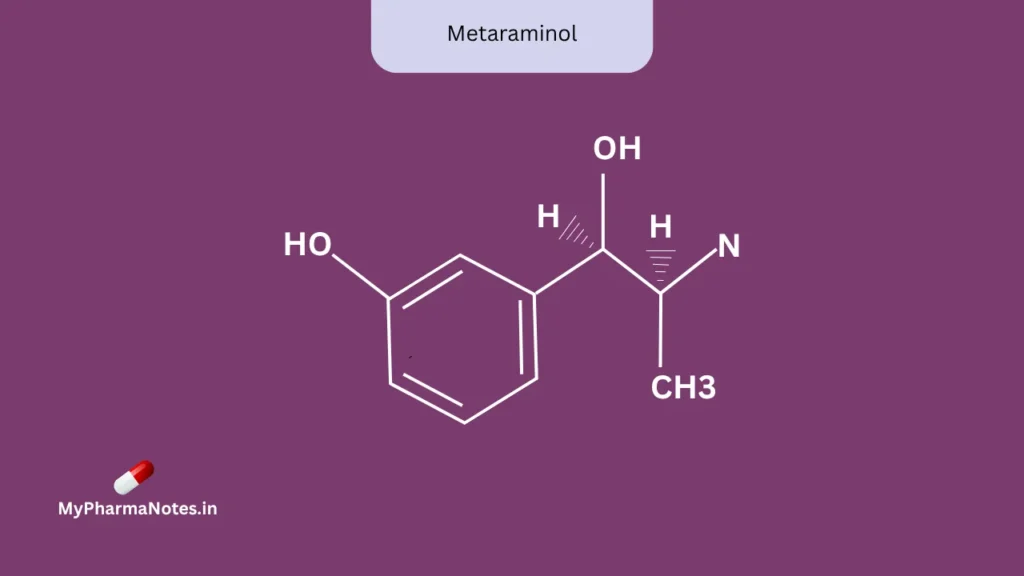
IUPAC Name: (1R,2S)-3-[-2-amino-1-hydroxy-propyl]phenol
Receptor Action: Mixed — predominantly alpha-1 (vasoconstriction) with some beta-1 (increased cardiac contractility)
Uses: Indicated for prevention and treatment of acute hypotension occurring with spinal anesthesia. Sometimes used as a backup vasopressor when other agents are unavailable.
Formulations: Injection
Brand Names: Aramine, Metaramin, Pressonex
Adrenergic Antagonists – Alpha Adrenergic Blockers
Adrenergic antagonists are the opposite of agonists. They occupy adrenergic receptors without activating them, blocking the effects of both endogenous catecholamines and exogenous sympathomimetics. They are also called sympatholytic agents because they “lyse” (block) sympathetic activity.
Alpha blockers specifically target alpha receptors on blood vessels and other tissues, causing vasodilation and a drop in blood pressure.
5. Tolazoline
Tolazoline was one of the early non-selective alpha blockers. It shares the imidazoline ring structure seen in naphazoline and tetrahydrozoline, but instead of being an agonist, it works as an antagonist. This is a useful point to remember — the imidazoline ring appears in both agonists and antagonists depending on what is attached to it.
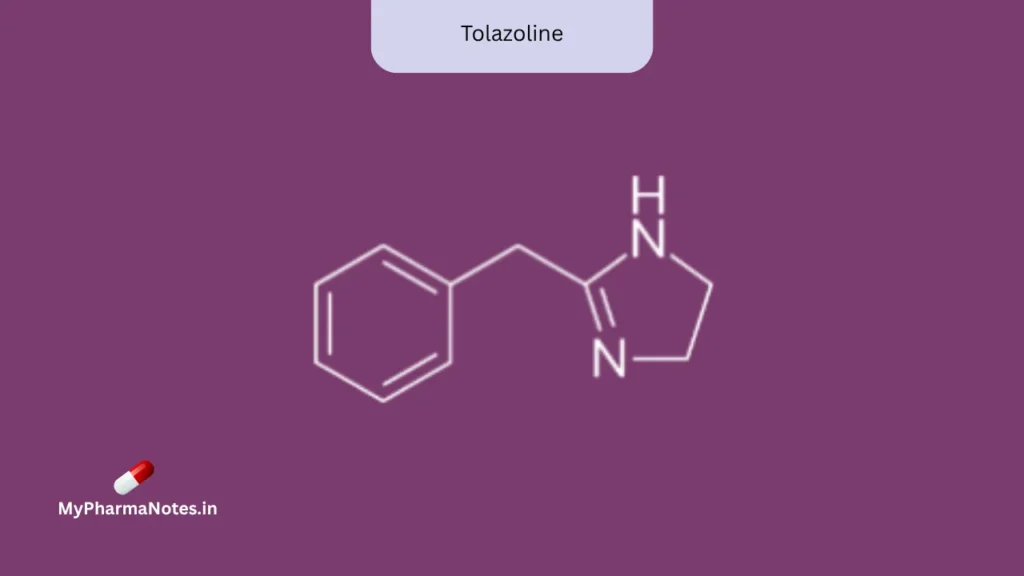
IUPAC Name: 2-Benzyl-4,5-dihydro-1H-imidazole
Receptor Action: Non-selective competitive alpha-adrenergic antagonist
Uses: Used as a vasodilator to treat pulmonary artery anomalies and peripheral vascular spasms. Historically used in newborns with persistent pulmonary hypertension.
Formulations: Syrup, Tablet
Brand Names: Priscoline
6. Phentolamine
Phentolamine is a reversible, competitive alpha blocker. Its most important clinical use is in the diagnosis and management of pheochromocytoma, a rare tumor of the adrenal medulla that secretes excess catecholamines.
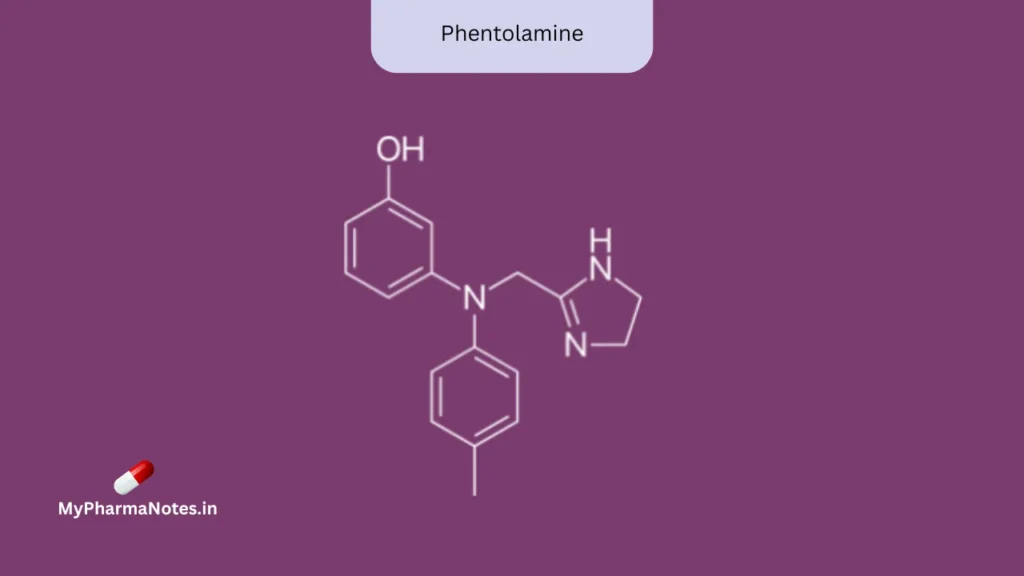
IUPAC Name: 3-[(4,5-Dihydro-1H-imidazol-2-ylmethyl)(4-methylphenyl)amino]phenol
Receptor Action: Non-selective competitive alpha-1 and alpha-2 blocker
Uses: Controls hypertensive episodes and sweating in pheochromocytoma. Also used in OraVerse form by dentists to reverse soft tissue numbness after dental procedures.
Formulations: Powder for injection, Injection solution
Brand Names: Regitine, OraVerse
7. Phenoxybenzamine
What makes phenoxybenzamine stand out from all other alpha blockers is that it is irreversible. It forms a covalent bond with the receptor, so the blockade lasts until the body synthesizes new receptors — typically 24 to 48 hours. All other alpha blockers discussed here are competitive (reversible).
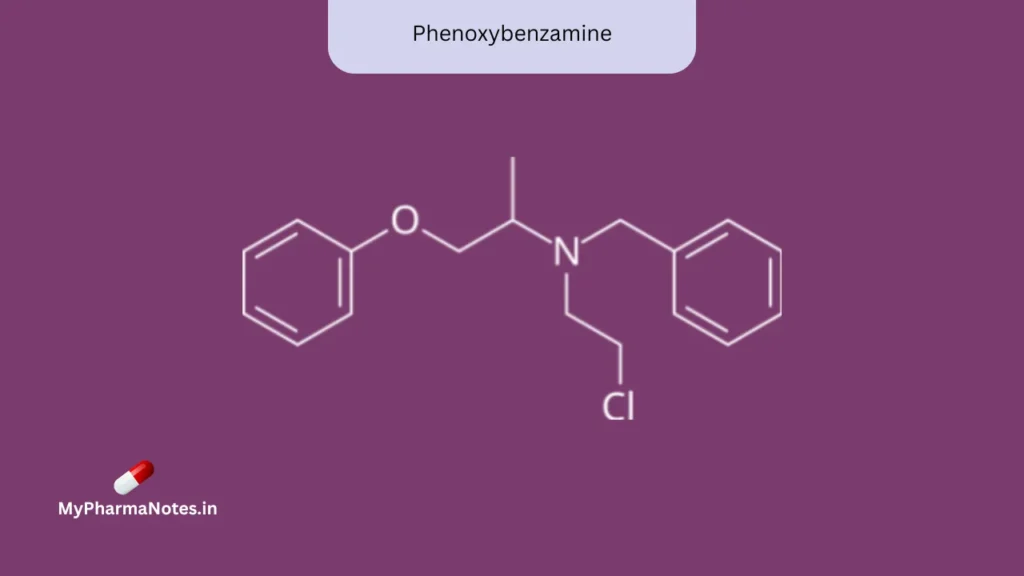
IUPAC Name: N-(2-chloroethyl)-N-(1-methyl-2-phenoxyethyl)benzylamine
Receptor Action: Non-selective, irreversible alpha-1 and alpha-2 antagonist
Uses: Long-term management of hypertension and excessive sweating caused by pheochromocytoma, especially before surgical removal of the tumor.
Formulations: Capsule, Tablet
Brand Names: Dibenzyline
8. Prazosin
Prazosin represented a major advance when it was introduced because it is the first selective alpha-1 blocker — it does not block alpha-2 receptors. This selectivity matters because alpha-2 receptors act as a feedback brake on norepinephrine release. When non-selective alpha blockers like phentolamine block alpha-2, they cause reflex tachycardia. Prazosin avoids this problem.
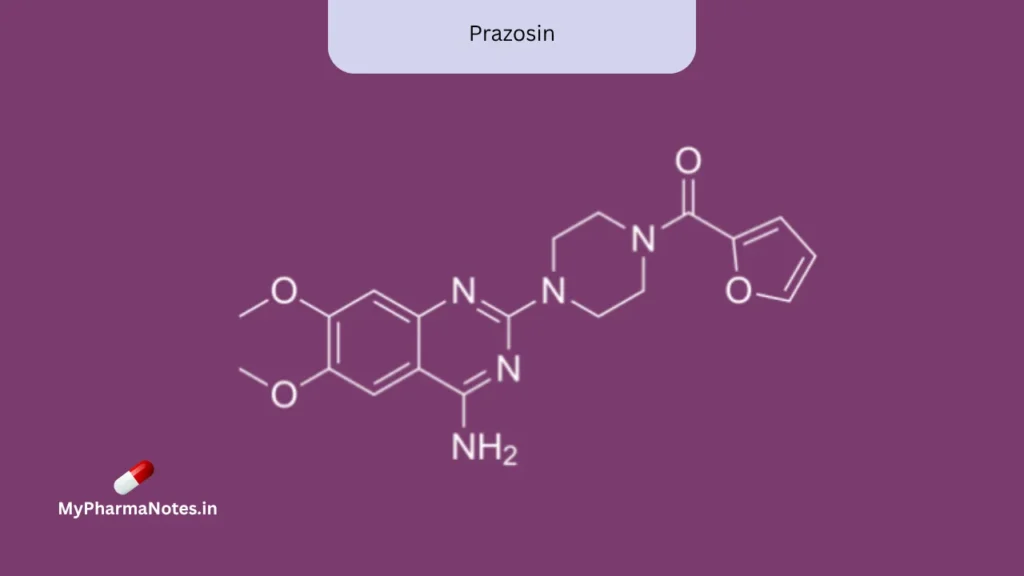
IUPAC Name: 4-(4-Amino-6,7-dimethoxy-2-quinazolinyl)-1-piperazinylmethanone
Receptor Action: Selective competitive alpha-1 antagonist
Uses: Treatment of hypertension, used alone or in combination. Also used in benign prostatic hyperplasia (BPH) to relax smooth muscle in the bladder neck and prostate.
Formulations: Capsules
Brand Names: Minipress
Quick Comparison: Alpha Blockers
| Drug | Selectivity | Reversibility | Main Use |
|---|---|---|---|
| Tolazoline | Non-selective | Competitive (reversible) | Pulmonary hypertension |
| Phentolamine | Non-selective | Competitive (reversible) | Pheochromocytoma diagnosis |
| Phenoxybenzamine | Non-selective | Irreversible (covalent) | Pre-op pheochromocytoma |
| Prazosin | Selective alpha-1 | Competitive (reversible) | Hypertension, BPH |
FAQ – Indirect & Mixed Acting Sympathomimetic Agents + Alpha Adrenergic Blockers
What is the key difference between ephedrine and pseudoephedrine?
Ephedrine is a mixed acting agent with both direct and indirect action. Pseudoephedrine is predominantly indirect acting. Ephedrine also has stronger CNS stimulant effects. Chemically, they are stereoisomers of each other.
Why does phenoxybenzamine have a longer duration than other alpha blockers?
Because it forms an irreversible covalent bond with the receptor. The blockade only ends when the body replaces the affected receptors, which takes 24 to 48 hours.
Why does prazosin not cause reflex tachycardia?
Prazosin blocks only alpha-1 receptors. It does not block alpha-2 receptors, which continue to function as a feedback mechanism to limit norepinephrine release. This prevents the compensatory tachycardia seen with non-selective blockers.
What is pheochromocytoma and which drugs are used for it?
Pheochromocytoma is a tumor of the adrenal medulla that secretes excessive catecholamines. Alpha blockers — phentolamine and phenoxybenzamine — are used to control the resulting hypertension.
What is the IUPAC name of Prazosin?
4-(4-Amino-6,7-dimethoxy-2-quinazolinyl)-1-piperazinylmethanone
D.Pharma 1st Year — All Subjects Notes
D.Pharma 2nd Year — All Subjects Notes
