
Table of Contents
Sedatives reduce anxiety and produce calm. Hypnotics induce sleep. Many drugs act as both depending on dose — low doses sedate, higher doses induce sleep, and toxic doses cause anaesthesia or death. Most act by enhancing GABA activity.
Classification:
- Benzodiazepines: Diazepam, Alprazolam, Nitrazepam, Lorazepam, Clonazepam
- Non-benzodiazepine hypnotics (Z-drugs): Zolpidem, Eszopiclone, Zaleplon
- Barbiturates: Phenobarbital, Secobarbital, Pentobarbital
- Miscellaneous: Chloral hydrate, Paraldehyde
Diazepam ⭐
IUPAC Name: 7-chloro-1-methyl-5-phenyl-3H-1,4-benzodiazepin-2-one
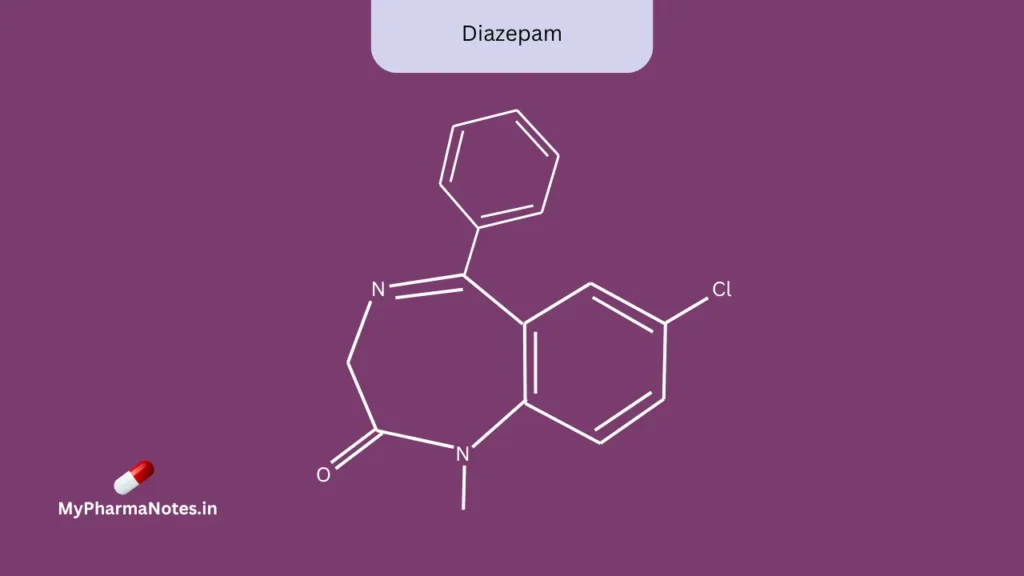
About: The prototype benzodiazepine. Long-acting with active metabolites that can persist for days. One of the most prescribed drugs in the world.
Mechanism: Binds to benzodiazepine site on GABA-A receptors → increases frequency of chloride channel opening → enhanced inhibitory neurotransmission → sedation, anxiolysis, muscle relaxation, anticonvulsant effect.
Uses: Anxiety disorders; alcohol withdrawal (reduces risk of seizures and delirium tremens); acute seizure management; muscle spasms; pre-procedural sedation; status epilepticus (IV route).
Side Effects: Sedation, cognitive impairment, anterograde amnesia, paradoxical excitation (especially in elderly), respiratory depression, dependence and tolerance with long-term use, withdrawal seizures on abrupt discontinuation.
Contraindications: Myasthenia gravis, severe respiratory insufficiency, sleep apnea, acute narrow-angle glaucoma, severe hepatic impairment.
Drug Interactions: Additive CNS depression with alcohol, opioids, antihistamines, antipsychotics. CYP3A4 inhibitors (ketoconazole, erythromycin) increase diazepam blood levels. Flumazenil is the specific antidote for benzodiazepine overdose.
Clinical Pearl: Diazepam is the drug of choice for alcohol withdrawal because it prevents withdrawal seizures and delirium tremens through its long half-life, providing smooth, self-tapering effect.
Stability & Storage: Stable as 5mg doses in glass syringes for 90 days at 4°C or 30°C. Store in refrigerator.
Formulations: Tablet, Oral solution, Rectal gel, Injectable solution
Brand Names: Valium, Valtoco, Diazepam Intensol
Alprazolam ⭐
IUPAC Name: 8-Chloro-1-methyl-6-phenyl-4H-[1,2,4]triazolo[4,3-a][1,4]benzodiazepine
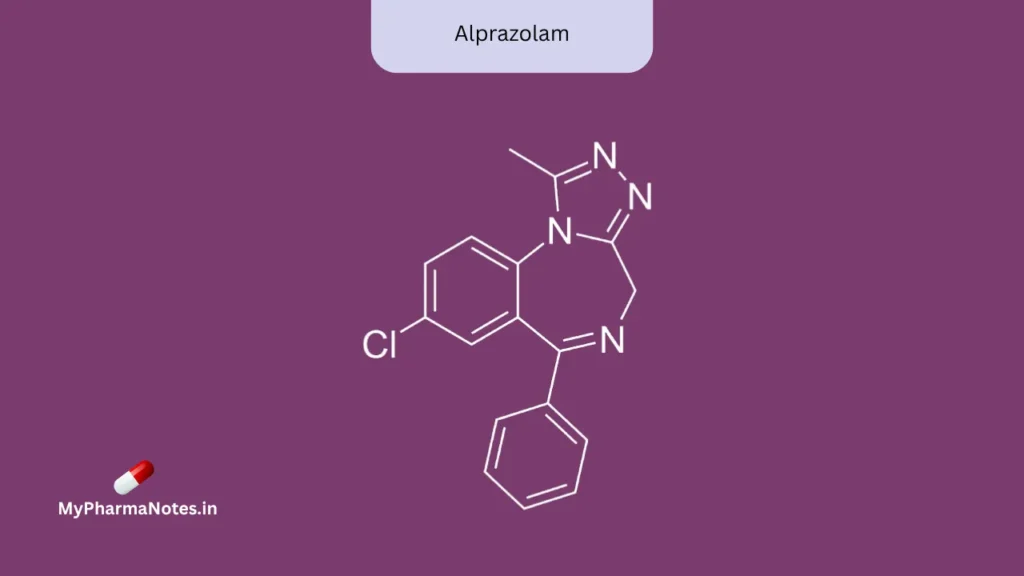
About: Short-to-intermediate acting benzodiazepine. One of the most commonly prescribed psychiatric medications globally. Higher abuse potential than longer-acting benzodiazepines.
Mechanism: Same as diazepam — positive allosteric modulator of GABA-A receptors. Enhances GABA activity → anxiolytic and sedative effects.
Uses: Anxiety disorders; panic disorder (with or without agoraphobia); short-term anxiety relief.
Side Effects: Sedation, cognitive impairment, memory problems, physical dependence (develops quickly — even within weeks), rebound anxiety on discontinuation, withdrawal symptoms (can be severe and life-threatening).
Contraindications: Acute narrow-angle glaucoma, severe respiratory insufficiency, myasthenia gravis, concurrent use with ketoconazole or itraconazole.
Drug Interactions: CYP3A4 inhibitors significantly increase alprazolam levels (ketoconazole, itraconazole, nefazodone). Opioids combined with alprazolam carry a black box warning for respiratory depression and death. Alcohol potentiates CNS depression.
Clinical Pearl: Alprazolam has a shorter half-life than diazepam, which means it wears off faster and produces more pronounced rebound anxiety — contributing to its higher dependence potential. Tapering must be done slowly.
Stability & Storage: Dry place at room temperature, away from direct sunlight. Keep in original container.
Formulations: Tablet, Extended-release tablet
Brand Names: Xanax, Xanax XR, Niravam, Intensol
Nitrazepam
IUPAC Name: 1,3-Dihydro-7-nitro-5-phenyl-2H-1,4-benzodiazepin-2-one
About: Long-acting benzodiazepine with intermediate onset. Primarily used as a hypnotic and for infantile spasms.
Mechanism: GABA-A receptor positive allosteric modulator → sedation and sleep induction. Also reduces seizure activity in the brain.
Uses: Severe insomnia (short-term); panic disorders; severe anxiety; seizures (particularly infantile spasms in children).
Side Effects: Daytime sedation and hangover (due to long half-life), cognitive impairment, dependence, respiratory depression, paradoxical excitement.
Contraindications: Respiratory insufficiency, sleep apnea, severe hepatic impairment, myasthenia gravis.
Drug Interactions: Additive CNS depression with alcohol, opioids, antihistamines. CYP enzymes metabolize nitrazepam — enzyme inducers reduce its effect.
Stability & Storage: Cool, dry place away from light and moisture; 20–25°C.
Formulations: Tablet, Injectable solution
Brand Names: Mogadon, Nitrosun, Apodorm
Phenobarbital ⭐
IUPAC Name: 5-ethyl-5-phenylbarbituric acid | Formula: C₁₂H₁₂N₂O₃
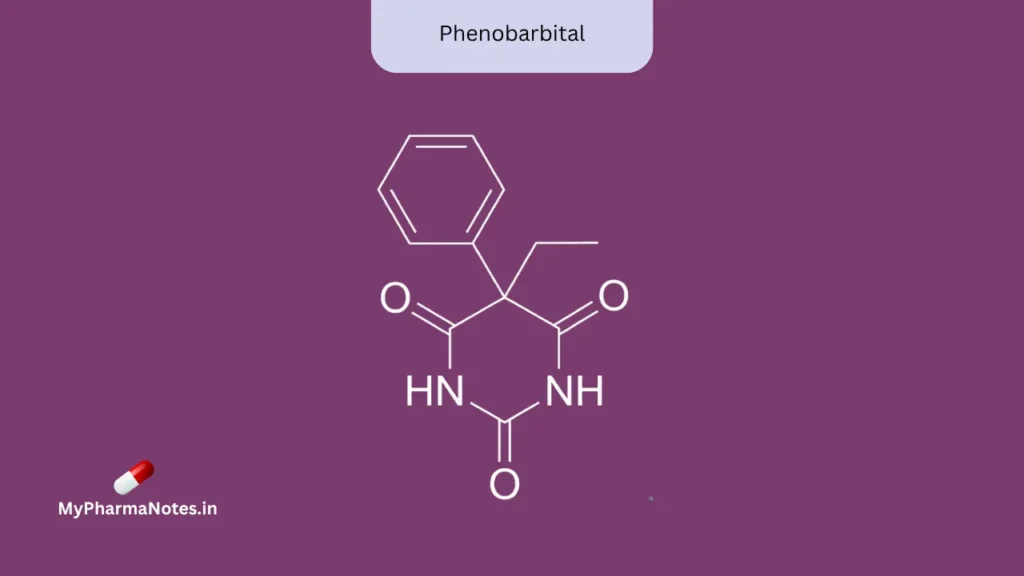
About: One of the oldest anticonvulsants still in widespread use. Barbiturate class. Has a very long half-life (80–100 hours) allowing once-daily dosing. On the WHO Essential Medicines List.
Mechanism: Enhances GABA-A receptor activity by increasing duration of chloride channel opening (unlike benzodiazepines which increase frequency). At higher concentrations, directly activates GABA-A channels without GABA. Also blocks AMPA receptors (glutamate). This dual mechanism makes it both sedative and anticonvulsant.
Uses: Epilepsy and seizure control (tonic-clonic and partial seizures); alcohol withdrawal; short-term anxiety and insomnia management; neonatal seizures.
Side Effects: Sedation, cognitive impairment (especially in children), paradoxical hyperactivity in children, physical dependence, tolerance, respiratory depression, megaloblastic anemia (folate deficiency), osteomalacia (reduces vitamin D metabolism), Stevens-Johnson syndrome.
Contraindications: Severe respiratory disease, porphyria, severe hepatic impairment, known hypersensitivity.
Drug Interactions: Powerful CYP450 enzyme inducer — reduces efficacy of many drugs including oral contraceptives, warfarin, corticosteroids, and other antiepileptics. Combined with valproate increases phenobarbital levels. Additive CNS depression with alcohol and other CNS depressants.
Clinical Pearl: Phenobarbital is the first-line drug for neonatal seizures due to its safety profile in newborns and availability as an IV formulation. However, its use in older children and adults is declining due to significant cognitive side effects.
Stability & Storage: Cool, dry place away from light and moisture; 20–25°C.
Formulations: Tablets, Syrup/Elixir, Injection
Brand Names: Luminal, Solfoton, Mudrane, Donnatal
D.Pharma 1st Year — All Subjects Notes
D.Pharma 2nd Year — All Subjects Notes
