
Table of Contents
Also known as antiepileptic drugs (AEDs). They work by reducing abnormal electrical activity in the brain through various mechanisms — sodium channel blockade, GABA enhancement, calcium channel blockade, or glutamate inhibition.
Classification:
| Mechanism | Drugs |
|---|---|
| Sodium channel blockers | Phenytoin, Carbamazepine, Lamotrigine, Oxcarbazepine |
| GABA enhancers | Valproate, Gabapentin, Pregabalin, Vigabatrin |
| Calcium channel blockers | Ethosuximide, Gabapentin |
| Glutamate antagonists | Topiramate, Felbamate |
| GABA transaminase inhibitors | Vigabatrin |
| Miscellaneous | Levetiracetam, Lacosamide |
Phenytoin ⭐
IUPAC Name: Sodium 5,5-diphenyl-2,4-imidazolidinedione
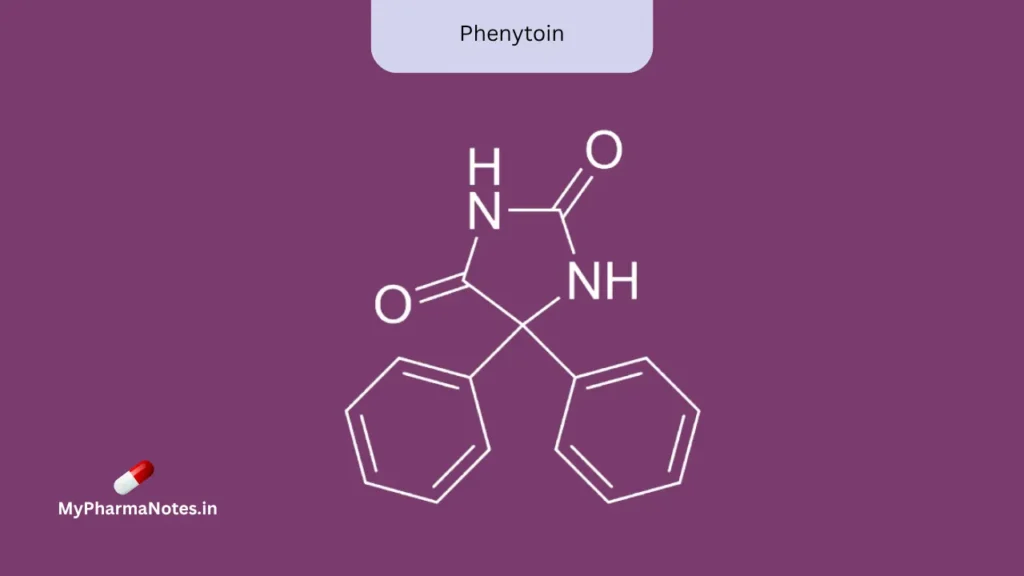
About: One of the oldest and most important anticonvulsants. Also a Class Ib antiarrhythmic. Has a narrow therapeutic index requiring blood level monitoring.
Mechanism: Blocks voltage-gated sodium channels in a use-dependent manner → stabilizes neuronal membranes → prevents repetitive firing of action potentials in epileptic focus.
Uses: Generalized tonic-clonic seizures; complex partial seizures; status epilepticus (IV); digitalis-induced arrhythmias.
Side Effects: Dose-related: nystagmus, ataxia, diplopia, cognitive impairment. Chronic: gingival hyperplasia (gum overgrowth — characteristic side effect), hirsutism, coarsening of facial features, peripheral neuropathy, megaloblastic anemia (folate deficiency), osteomalacia. Severe: Stevens-Johnson syndrome, drug reaction with eosinophilia and systemic symptoms (DRESS).
Contraindications: Sinus bradycardia, sinoatrial block, second/third degree heart block, Adams-Stokes syndrome.
Drug Interactions: Potent CYP450 inducer — reduces efficacy of oral contraceptives, warfarin, corticosteroids, many other drugs. Valproate, isoniazid, cimetidine increase phenytoin levels. Has zero-order kinetics at therapeutic doses — small dose increases cause disproportionately large rises in blood levels.
Clinical Pearl: Phenytoin has zero-order (saturation) kinetics at therapeutic doses. This means small dose increases can cause toxic blood levels. Blood level monitoring is mandatory.
Stability & Storage: Tightly closed or sealed container.
Formulations: Tablet, Capsule, Oral suspension, Injectable solution
Brand Names: Epanutin, Epanutin Infatabs
Carbamazepine ⭐
IUPAC Name: 5H-dibenzo[b,f]azepine-5-carboxamide
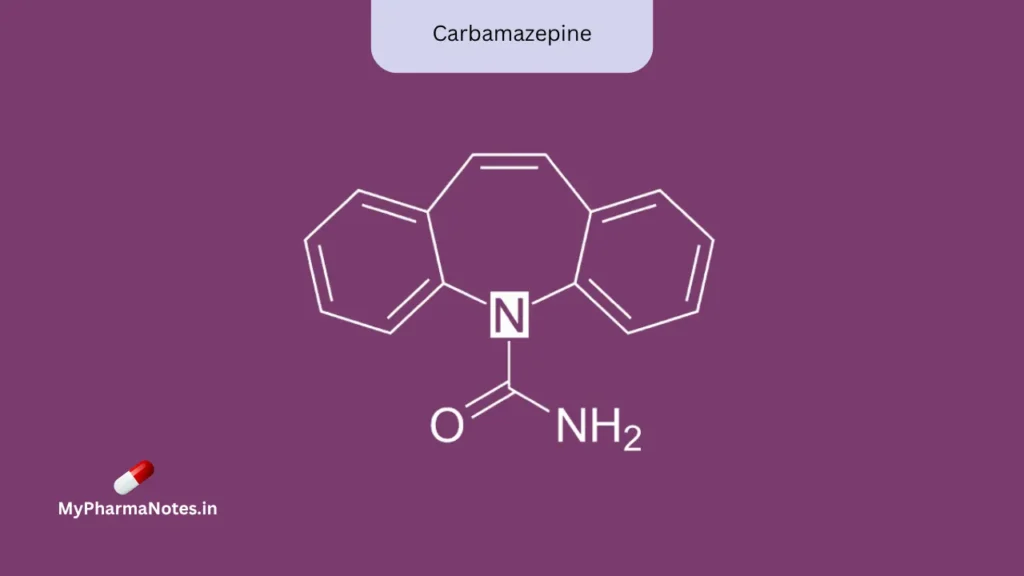
About: First-line treatment for focal (partial) seizures and trigeminal neuralgia. Also a mood stabilizer for bipolar disorder. Structurally related to tricyclic antidepressants.
Mechanism: Blocks voltage-gated sodium channels (use-dependent block) → stabilizes neuronal membranes → reduces repetitive firing. Also reduces synaptic transmission at the trigeminal nucleus.
Uses: Focal (partial) seizures and generalized tonic-clonic seizures; trigeminal neuralgia (drug of choice); bipolar I disorder (acute manic and mixed episodes); also used for diabetic neuropathy.
Side Effects: Dizziness, diplopia, ataxia, nausea (dose-related); hyponatremia (SIADH — relatively unique to carbamazepine among AEDs); aplastic anemia and agranulocytosis (rare but serious); Stevens-Johnson syndrome (especially in patients carrying HLA-B*1502 allele — common in Asian populations); hepatotoxicity; teratogenicity (neural tube defects).
Contraindications: Bone marrow depression, concurrent MAOIs, known HLA-B*1502 allele positivity (risk of SJS), atrioventricular block.
Drug Interactions: Potent CYP450 inducer (autoinduction — induces its own metabolism, requiring dose adjustments after starting therapy). Reduces efficacy of oral contraceptives, warfarin, lamotrigine. Valproate inhibits carbamazepine metabolism increasing epoxide metabolite levels.
Clinical Pearl: Carbamazepine undergoes autoinduction — it induces the enzymes that metabolize itself. This means blood levels drop after the first few weeks of therapy and doses need to be increased. Regular blood level monitoring is essential.
Stability & Storage: Cool, dry place at room temperature. No direct sunlight.
Formulations: Tablet, Capsule, Oral suspension
Brand Names: Tegretol, Tegretol XR, Carbatrol, Equetro, Epitol
Clonazepam
IUPAC Name: (2-Chlorophenyl)-1,3-dihydro-7-nitro-2H-1,4-benzodiazepin-2-one | Formula: C₁₅H₁₀ClN₃O₃
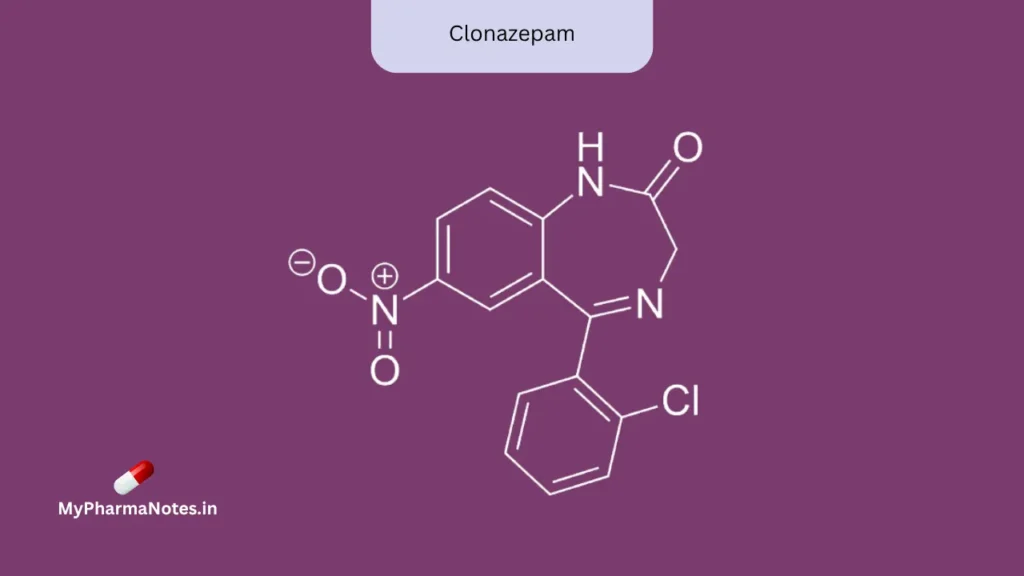
About: Long-acting benzodiazepine with potent anticonvulsant properties. Used for seizures and panic disorder.
Mechanism: GABA-A receptor positive allosteric modulator → enhanced inhibitory neurotransmission → anticonvulsant and anxiolytic effects.
Uses: Panic disorder; epilepsy (absence seizures, myoclonic seizures, Lennox-Gastaut syndrome); nonconvulsive status epilepticus; restless leg syndrome.
Side Effects: Sedation, ataxia, cognitive impairment, dependence, tolerance (anticonvulsant effect may diminish with time), respiratory depression, withdrawal seizures on abrupt discontinuation.
Contraindications: Severe hepatic disease, acute narrow-angle glaucoma, respiratory insufficiency, myasthenia gravis.
Drug Interactions: Additive CNS depression with alcohol, opioids, other AEDs; valproate combined with clonazepam may cause absence status epilepticus.
Stability & Storage: Cool, dry place at room temperature. No direct sunlight.
Formulations: Tablet, Capsule, Oral suspension
Brand Names: Klonopin
Valproic Acid ⭐
IUPAC Name: 2-propylpentanoic acid
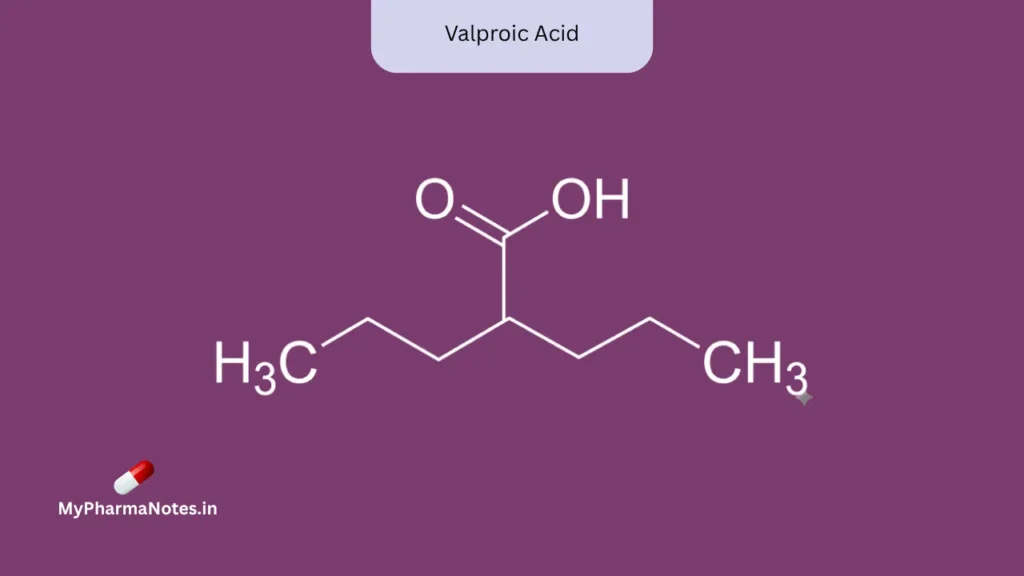
About: Broad-spectrum anticonvulsant and mood stabilizer. One of the most versatile drugs in neurology. However, it carries significant teratogenicity risk making it problematic in women of childbearing age.
Mechanism: Multiple mechanisms — enhances GABA by inhibiting GABA transaminase and succinic semialdehyde dehydrogenase; blocks voltage-gated sodium channels; blocks T-type calcium channels; may inhibit histone deacetylase (contributing to mood stabilization).
Uses: Epilepsy (broad spectrum — effective for most seizure types); bipolar disorder (mood stabilization and acute mania); migraine prevention; also used for neuropathic pain.
Side Effects: GI disturbances (nausea, vomiting — take with food); weight gain; hair loss (alopecia); tremor; hepatotoxicity (especially in children under 2 years — can be fatal); pancreatitis; thrombocytopenia; teratogenicity (neural tube defects, valproate syndrome — cognitive impairment in offspring); hyperammonemia.
Contraindications: Hepatic disease, urea cycle disorders, known mitochondrial disorders (POLG mutations), pregnancy (high teratogenic risk — neural tube defects up to 2%), personal or family history of severe hepatic dysfunction.
Drug Interactions: Inhibits metabolism of lamotrigine (requires lamotrigine dose reduction by 50%), phenobarbital, and phenytoin. Carbamazepine reduces valproate levels. Aspirin displaces valproate from protein binding increasing free levels.
Clinical Pearl: Valproate is the most teratogenic of all common anticonvulsants. It is now contraindicated in pregnancy in many countries unless no effective alternative exists. Women of childbearing potential must use effective contraception.
Stability & Storage: Cool, dry place at room temperature. No direct sunlight.
Formulations: Tablet, Capsule, Oral suspension, Injectable solution
Brand Names: Depakote, Convulex, Belvo, Dyzantil, Syonell
Gabapentin ⭐
IUPAC Name: 2-[1-(Aminomethyl)cyclohexyl]acetic acid
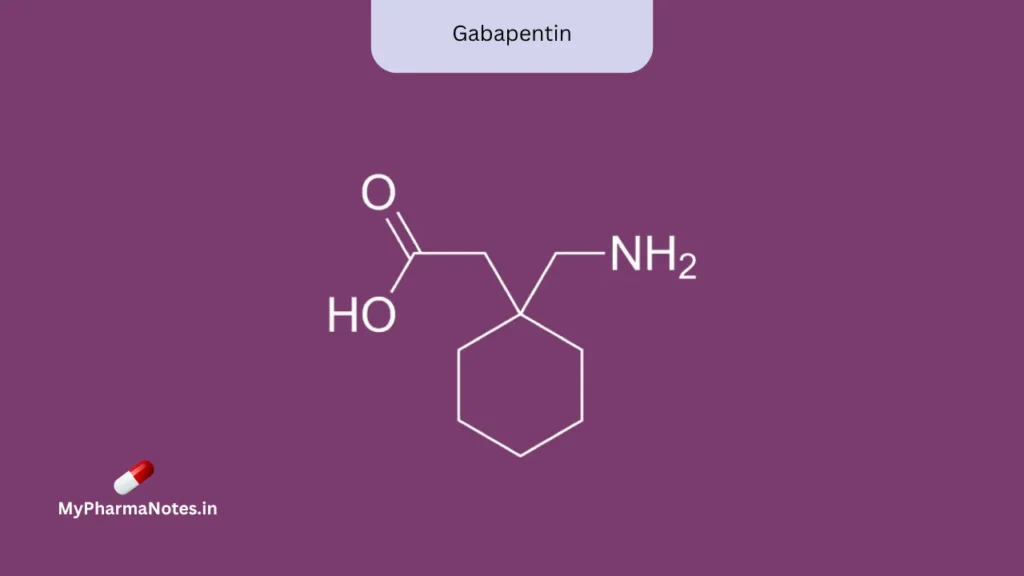
About: Structurally related to GABA but does not actually bind to GABA receptors. Originally developed as a muscle relaxant but found to be effective as an anticonvulsant and neuropathic pain agent.
Mechanism: Binds to the alpha-2-delta subunit of voltage-gated calcium channels → reduces calcium influx at presynaptic terminals → decreases release of excitatory neurotransmitters (glutamate, substance P, norepinephrine). Despite structural similarity to GABA, it does not act on GABA receptors.
Uses: Partial seizures (adjunct therapy); postherpetic neuralgia; diabetic neuropathy; restless leg syndrome; hot flashes; fibromyalgia.
Side Effects: Somnolence, dizziness, ataxia, fatigue, weight gain, peripheral edema, cognitive impairment. Risk of misuse and dependence (especially in patients with substance use disorders).
Contraindications: Caution in renal impairment (dose reduction required as renally excreted unchanged).
Drug Interactions: Antacids reduce gabapentin absorption; opioids combined with gabapentin increase respiratory depression risk (black box warning in some countries); CNS depressants have additive effects.
Clinical Pearl: Gabapentin does not inhibit CYP enzymes and has no significant protein binding, meaning it has minimal drug-drug interactions — a major advantage in epilepsy patients taking multiple drugs.
Stability & Storage: Cool, dry place at room temperature. No direct sunlight.
Formulations: Tablet, Capsule, Oral suspension, Injectable solution
Brand Names: Neurontin, Horizant, Gralise
Topiramate
IUPAC Name: 2,3:4,5-Bis-O-(1-methylethylidene)-beta-D-fructopyranose sulfamate
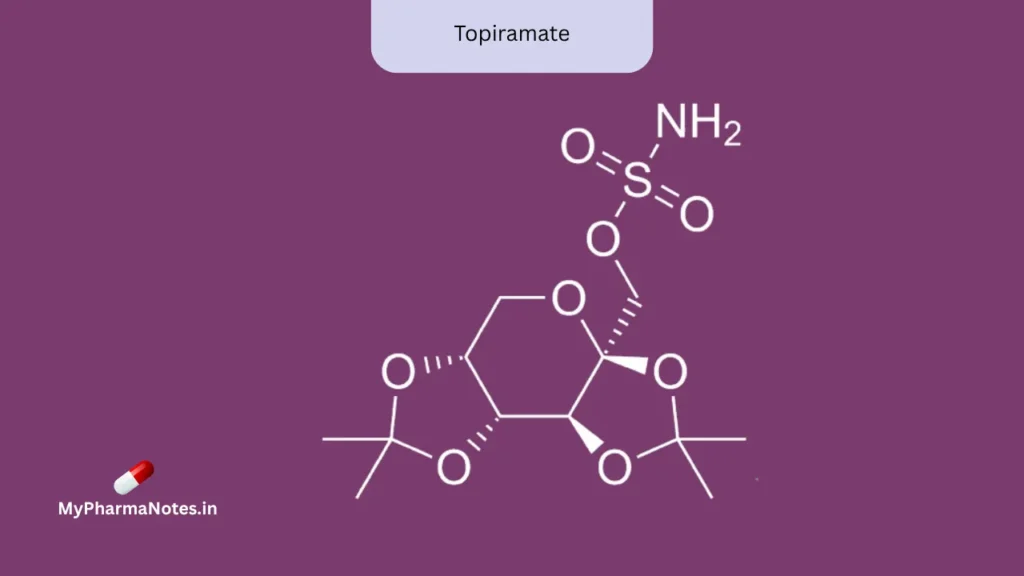
About: Second-generation broad-spectrum anticonvulsant with a unique sugar-based chemical structure. Also approved for migraine prevention and weight loss.
Mechanism: Multiple mechanisms — blocks voltage-gated sodium channels; enhances GABA-A activity; blocks AMPA/kainate glutamate receptors; inhibits carbonic anhydrase (contributes to kidney stone risk and cognitive effects).
Uses: Focal and generalized seizures; Lennox-Gastaut syndrome; migraine prevention; obesity (combined with phentermine as Qsymia).
Side Effects: Cognitive impairment and word-finding difficulties (“Dopamax” — notorious cognitive side effect); weight loss (unusual for AEDs — used therapeutically); kidney stones (due to carbonic anhydrase inhibition); paresthesia; metabolic acidosis; glaucoma; teratogenicity (cleft palate).
Contraindications: Metabolic acidosis combined with metformin (worsens acidosis), nephrolithiasis history, pregnancy (cleft palate risk).
Drug Interactions: Reduces efficacy of oral contraceptives; phenytoin and carbamazepine reduce topiramate levels; combined with valproate increases risk of hyperammonemia and encephalopathy.
Clinical Pearl: Topiramate is one of the few drugs that causes weight loss rather than gain — making it attractive for overweight epilepsy and migraine patients. However, cognitive side effects limit its tolerability.
Stability & Storage: Cool, dry place at room temperature. No direct sunlight.
Formulations: Tablet, Capsule, Oral suspension
Brand Names: Topamax
Vigabatrin
IUPAC Name: (RS)-4-aminohex-5-enoic acid
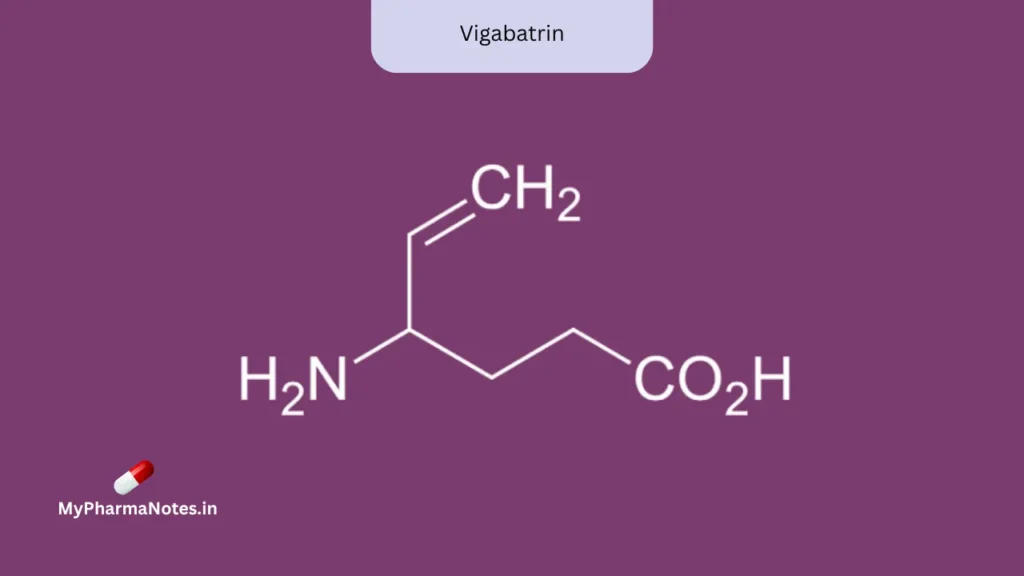
About: Irreversible GABA transaminase inhibitor. Effective for infantile spasms but use is restricted due to a serious irreversible visual field defect.
Mechanism: Irreversibly inhibits GABA transaminase → prevents GABA breakdown → increased GABA levels in the brain → reduced neuronal excitability.
Uses: Infantile spasms (West syndrome — drug of choice alongside ACTH); refractory complex partial seizures.
Side Effects: Irreversible peripheral visual field defect (affects up to 40% of patients — permanent bilateral concentric constriction); sedation; weight gain; depression and psychosis. Regular visual field monitoring is mandatory.
Contraindications: Pre-existing visual field defect; not recommended in patients where vision loss would be particularly harmful.
Drug Interactions: Reduces phenytoin levels by 20–30%; additive CNS depression with other AEDs.
Clinical Pearl: Vigabatrin causes permanent visual field loss in up to 40% of patients. This serious side effect has severely restricted its use to conditions where no safer alternative exists, primarily infantile spasms.
Stability & Storage: Cool, dry place at room temperature. No direct sunlight.
Formulations: Tablet, Capsule, Oral suspension (sachet)
Brand Names: Sabril
Lamotrigine
IUPAC Name: 3,5-diamino-6-(2,3-dichlorophenyl)-as-triazine
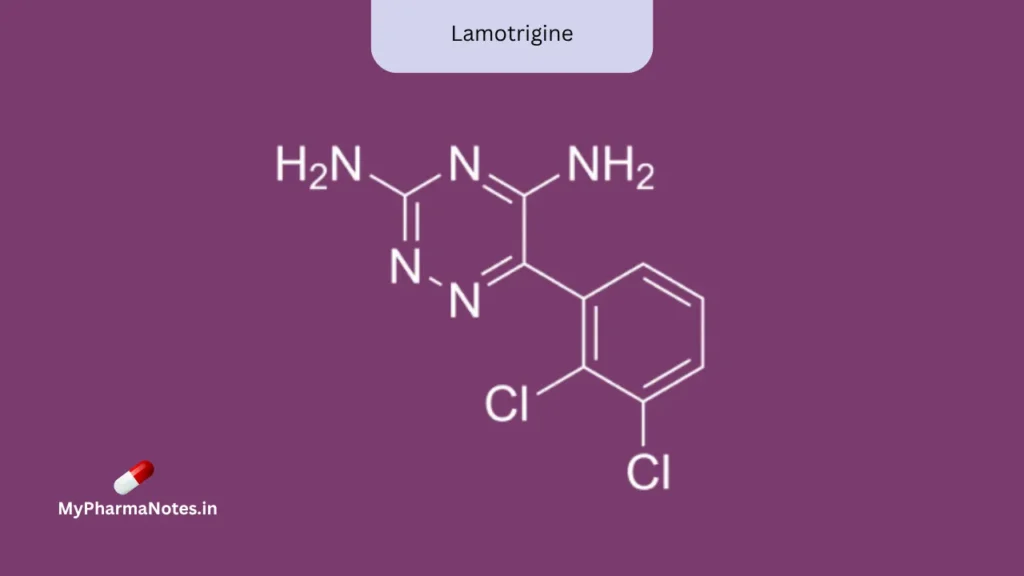
About: Broad-spectrum anticonvulsant and mood stabilizer. One of the most commonly used AEDs today due to its efficacy, tolerability, and safety in pregnancy compared to valproate.
Mechanism: Blocks voltage-gated sodium channels (use-dependent) → stabilizes neuronal membranes. Also blocks voltage-gated calcium channels and reduces glutamate release.
Uses: Focal and generalized seizures; Lennox-Gastaut syndrome; bipolar I disorder maintenance (prevents depressive episodes better than manic episodes).
Side Effects: Skin rash (in up to 10% of patients — usually benign but can progress to Stevens-Johnson syndrome); dizziness; diplopia; ataxia; headache. Rash risk is dramatically increased by rapid dose titration and concurrent valproate use.
Contraindications: Known hypersensitivity. Requires very slow dose titration especially when combined with valproate.
Drug Interactions: Valproate inhibits lamotrigine metabolism → doubles lamotrigine levels (require 50% dose reduction); enzyme-inducing AEDs (carbamazepine, phenytoin, phenobarbital) reduce lamotrigine levels by 40–50% requiring higher doses; oral contraceptives reduce lamotrigine levels.
Clinical Pearl: Lamotrigine is one of the preferred AEDs in pregnancy because it has a better fetal safety profile than valproate or carbamazepine. However, pregnancy itself reduces lamotrigine levels (increased glucuronidation) requiring dose increases during pregnancy and reduction post-partum.
Stability & Storage: Cool, dry place at room temperature. No direct sunlight.
Formulations: Tablet, Dispersible/chewable tablet
Brand Names: Lamictal
D.Pharma 1st Year — All Subjects Notes
D.Pharma 2nd Year — All Subjects Notes
