
Table of Contents
Beta Adrenergic Blockers
Beta blockers are among the most prescribed drugs in the world. They work by blocking beta-1 and/or beta-2 adrenergic receptors, reducing the effects of adrenaline and noradrenaline on the heart and other organs. The result is a slower, less forceful heartbeat, lower blood pressure, and reduced workload on the heart.
Beta blockers are classified by their receptor selectivity:
Non-selective — block both beta-1 and beta-2 receptors (Propranolol, Carvedilol) Cardioselective — primarily block beta-1 receptors in the heart (Atenolol)
1. Propranolol
Propranolol was the first clinically successful beta blocker and transformed cardiology when it was introduced. Its developer, Sir James Black, received the Nobel Prize in Physiology or Medicine in 1988. Even today, propranolol remains one of the most versatile drugs in its class.
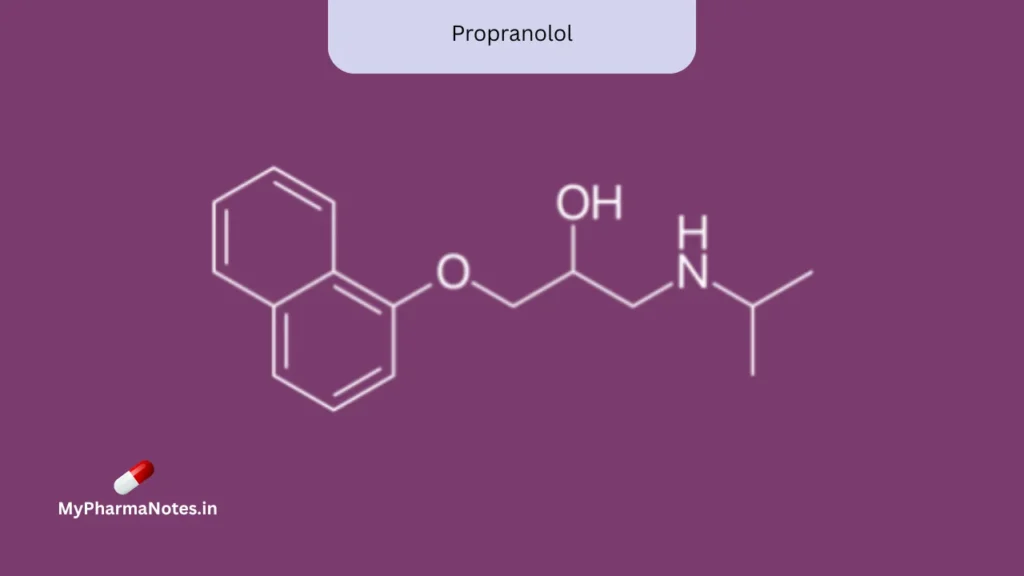
IUPAC Name: 1-(isopropylamino)-3-(1-naphthyloxy)propan-2-ol
Receptor Action: Non-selective beta-1 and beta-2 blocker
Uses: Treats hypertension, angina, and cardiac arrhythmias. Also used for migraine prevention, essential tremor, hyperthyroidism (symptom control), and performance anxiety. One of the few beta blockers used in non-cardiac conditions.
Formulations: Capsules, Tablet
Brand Names: Inderal LA, Innopran XL, Inderal XL
Note for exams: Propranolol is contraindicated in asthma because beta-2 blockade causes bronchoconstriction. This is why cardioselective agents like atenolol are preferred in patients with respiratory issues.
2. Atenolol
Atenolol was developed specifically to overcome propranolol’s bronchoconstriction problem. By selectively blocking beta-1 receptors in the heart, it lowers heart rate and blood pressure with less risk of airway complications.
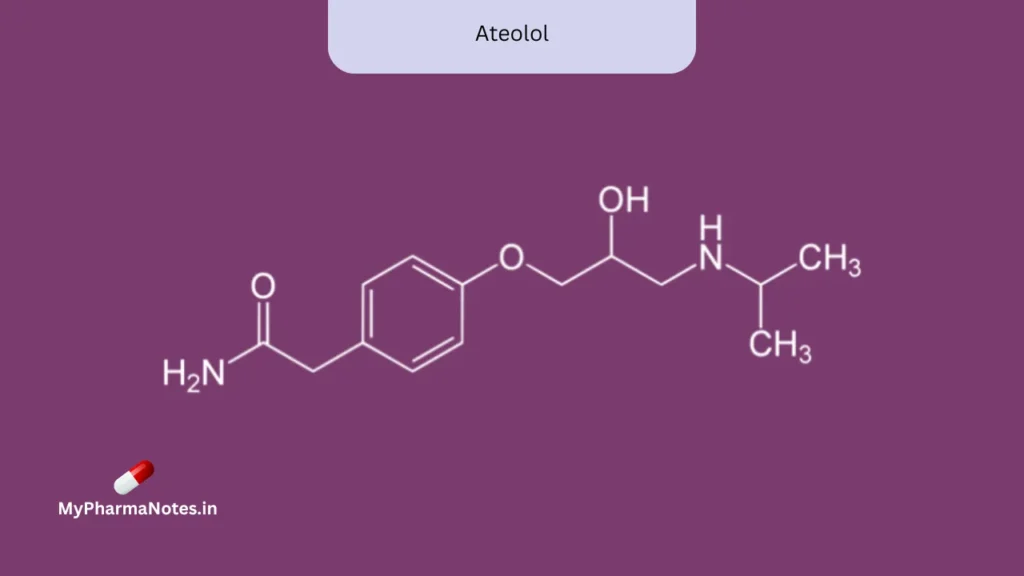
IUPAC Name: [4-[2-hydroxy-3-isopropyl-aminopropoxy]-phenyl-acetamide]
Receptor Action: Cardioselective beta-1 blocker
Uses: Used alone or combined with other drugs to treat hypertension. Also used to prevent angina (chest pain on exertion) and to improve survival after myocardial infarction. Unlike propranolol, it is not used for migraines or anxiety.
Formulations: Capsule, Tablet
Brand Names: Tenormin
3. Carvedilol
Carvedilol is a third-generation beta blocker with an additional mechanism that sets it apart — it also blocks alpha-1 receptors. This dual action means it lowers blood pressure both by reducing cardiac output (beta blockade) and by dilating blood vessels (alpha-1 blockade). It also has antioxidant properties not seen in other beta blockers.
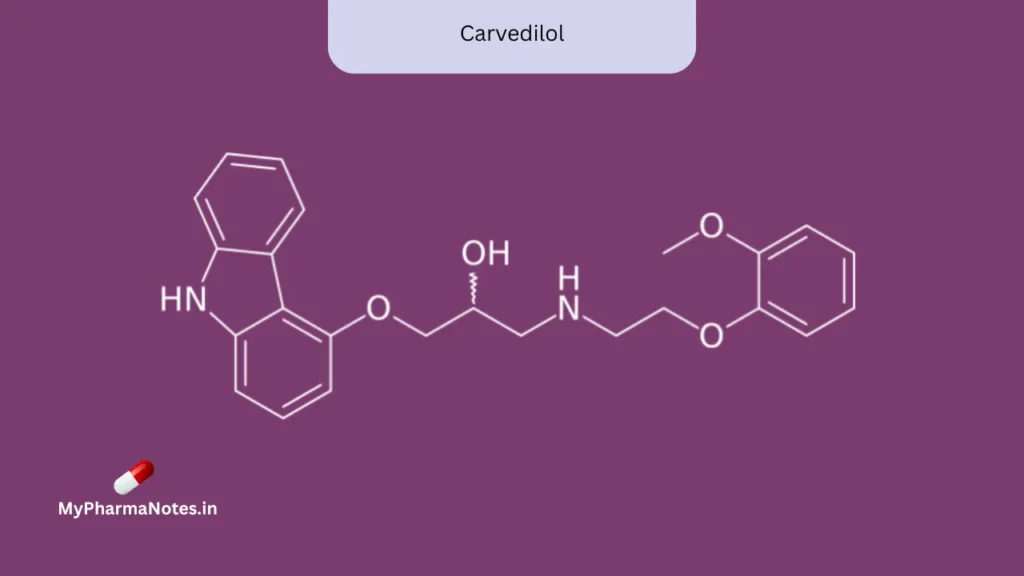
IUPAC Name: (2RS)-1-(9H-carbazol-4-yloxy)-3-[[2-(2-methoxyphenoxy)ethyl]amino]propan-2-ol
Receptor Action: Non-selective beta blocker + alpha-1 blocker
Uses: Treatment of hypertension, congestive heart failure, and left ventricular dysfunction in otherwise stable patients. Particularly valuable in heart failure because vasodilation reduces the workload on the failing heart.
Formulations: Tablet
Brand Names: Coreg
Beta Blockers at a Glance
| Drug | Selectivity | Extra Mechanism | Key Use |
|---|---|---|---|
| Propranolol | Non-selective (β1+β2) | None | Hypertension, Migraine, Anxiety |
| Atenolol | Cardioselective (β1) | None | Hypertension, Post-MI |
| Carvedilol | Non-selective (β1+β2) | Also blocks alpha-1 | Heart failure, Hypertension |
Cholinergic Drugs and Related Agents (Parasympathomimetics)
Cholinergic drugs mimic the actions of acetylcholine on the parasympathetic nervous system. The parasympathetic system is often described by the phrase “rest and digest” — it slows the heart, increases gut motility, constricts the pupils, and promotes salivation and glandular secretion.
Cholinergic receptors are classified as:
Muscarinic receptors — found on smooth muscle, cardiac muscle, and glands. Respond to the drug muscarine. Nicotinic receptors — found at the neuromuscular junction and in autonomic ganglia. Respond to nicotine.
Most clinically used cholinergic drugs act on muscarinic receptors. Direct acting agents bind directly to these receptors.
4. Acetylcholine
Acetylcholine (ACh) is the prototype cholinergic agent — the actual neurotransmitter that all other cholinergic drugs are trying to mimic. It activates both muscarinic and nicotinic receptors. The reason it is not used widely as a drug is that it breaks down almost instantly in the body due to rapid hydrolysis by acetylcholinesterase.
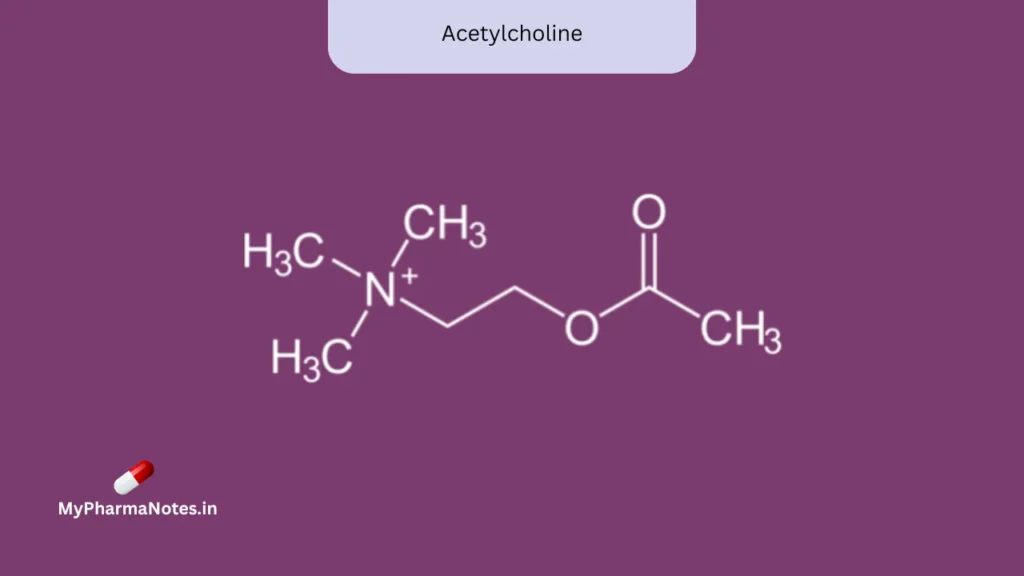
IUPAC Name: 2-Acetoxy-N,N,N-trimethylethanaminium
Receptor Action: Both muscarinic and nicotinic (non-selective)
Uses: Used medically as an ophthalmic agent to cause rapid miosis (pupil constriction) during cataract surgery. Plays a role in memory, learning, attention, and voluntary muscle movement in physiology.
Formulations: Powder for injection, Gels, Lozenges
Brand Names: Miochol-E, Miochol, Miochol Plus
5. Carbachol
Carbachol solves acetylcholine’s main weakness — its short duration of action. Structurally, it has a carbamate group instead of an acetate group, which makes it resistant to hydrolysis by cholinesterases. This gives it a much longer and more sustained effect.
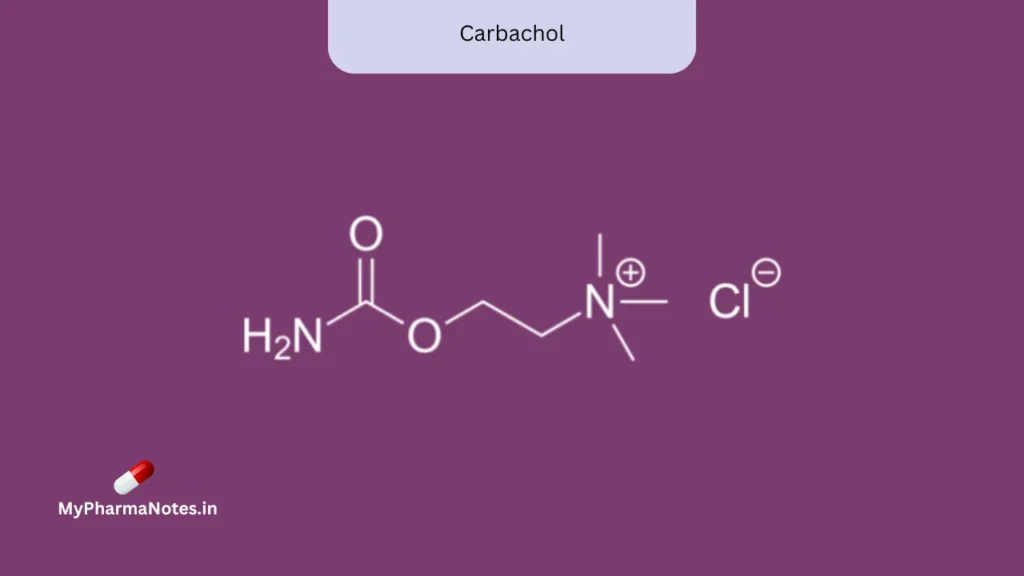
IUPAC Name: 2-[(Aminocarbonyl)oxy]-N,N,N-trimethylethanaminium chloride
Receptor Action: Muscarinic and nicotinic agonist (resistant to cholinesterase hydrolysis)
Uses: Primary use is in glaucoma treatment, where it reduces intraocular pressure by increasing aqueous humor outflow. Also used during cataract surgery to constrict the pupil. Unlike pilocarpine, it is rarely used systemically due to its potency.
Formulations: Tablet, Solution
Brand Names: Miostat
6. Pilocarpine
Pilocarpine is a naturally occurring alkaloid extracted from the leaves of Pilocarpus jaborandi, a shrub native to South America. It is a pure muscarinic agonist with no nicotinic activity, which makes it more selective and predictable than acetylcholine or carbachol.
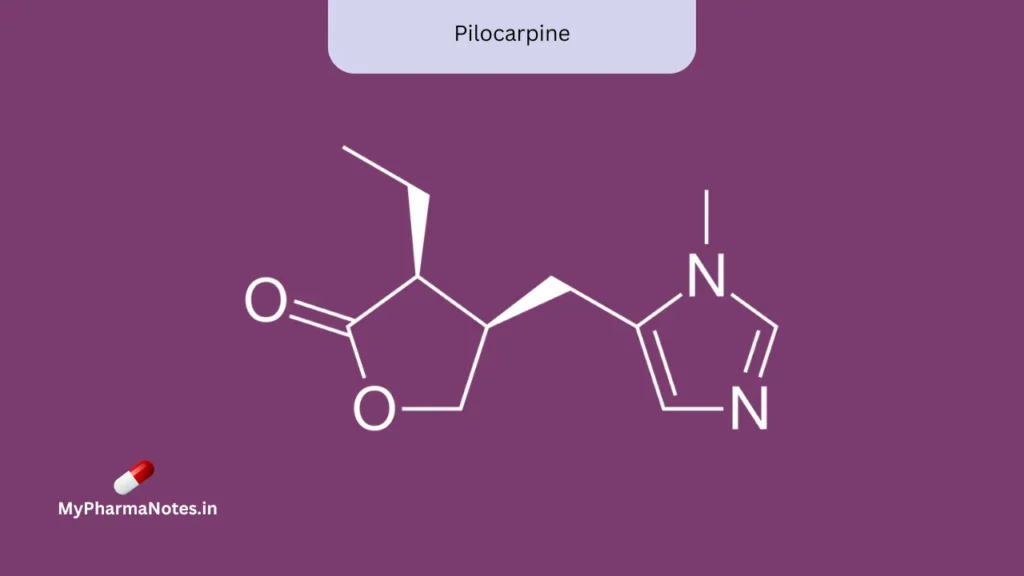
IUPAC Name: (3S,4R)-3-Ethyl-4-((1-methyl-1H-imidazol-5-yl)methyl)dihydrofuran-2(3H)-one
Receptor Action: Direct acting muscarinic receptor agonist
Uses: Two distinct clinical uses. First, as eye drops or gel in open-angle glaucoma to reduce intraocular pressure. Second, as an oral tablet to treat xerostomia (severe dry mouth) caused by Sjögren’s syndrome or radiation therapy to the head and neck.
Formulations: Tablet, Ophthalmic Solution
Brand Names: Isopto Carpine (eye), Salagen (oral for dry mouth)
Key Point: Why Are So Many Cholinergic Drugs Used in the Eye?
Looking at carbachol, pilocarpine, and acetylcholine, a pattern emerges — all three are used in ophthalmology. This is because muscarinic receptor stimulation in the eye causes miosis (pupil constriction) and contraction of the ciliary muscle, which opens the trabecular meshwork and allows aqueous humor to drain. This reduces intraocular pressure, which is the core treatment goal in glaucoma.
Remember this mechanism for your exams — cholinergic agents are miotics (they constrict the pupil), while anticholinergic agents are mydriatics (they dilate the pupil).
FAQ – Beta Adrenergic Blockers and Cholinergic Drugs (Direct Acting)
Why is propranolol contraindicated in asthma?
Propranolol blocks beta-2 receptors in bronchial smooth muscle, causing bronchoconstriction. This can trigger or worsen asthma attacks. Cardioselective agents like atenolol are safer alternatives for patients with both hypertension and asthma.
What makes carvedilol different from other beta blockers?
Carvedilol also blocks alpha-1 receptors in addition to beta-1 and beta-2. This gives it a vasodilatory effect not seen with propranolol or atenolol, making it especially useful in congestive heart failure.
Why is acetylcholine not used as a long-acting drug?
It is rapidly hydrolyzed by acetylcholinesterase and butyrylcholinesterase, giving it a half-life of only a few seconds in the body. This is why longer-acting synthetic analogs like carbachol and pilocarpine are preferred.
What is the difference between carbachol and pilocarpine in glaucoma?
Both reduce intraocular pressure, but carbachol is more potent and resistant to cholinesterase. Pilocarpine is the more commonly used first-line agent for open-angle glaucoma because it is better tolerated for long-term use.
What is xerostomia and which drug treats it?
Xerostomia is abnormal dryness of the mouth. Pilocarpine (brand: Salagen) stimulates salivary glands via muscarinic receptors and is used to manage this condition in patients who have undergone radiation therapy for head and neck cancers.
D.Pharma 1st Year — All Subjects Notes
D.Pharma 2nd Year — All Subjects Notes
