Table of Contents
Cancer is one of the leading causes of death worldwide. Anti-neoplastic agents — also called anticancer drugs or chemotherapy agents — are medications specifically designed to fight cancer by targeting and destroying rapidly dividing cancer cells.
As a D.Pharma student, this is one of the most important chapters in Pharmaceutical Chemistry. Understanding how these drugs work, their chemical structures, and their clinical uses is essential both for your exams and your future pharmacy practice.
PCI ER 2020 Syllabus Coverage: You are required to study each anti-neoplastic agent with respect to its IUPAC name, chemical structure (starred compounds*), uses, stability & storage conditions, types of formulations, and popular brand names.
What Are Anti-Neoplastic Agents?
Anti-neoplastic agents are medications used to treat cancer (neoplasms). They work by targeting and killing rapidly dividing cancerous cells or by stopping them from multiplying further.
These drugs can be used:
- As the primary (sole) treatment for certain cancers, or
- In combination with other therapies such as surgery, radiation therapy, or immunotherapy
Classification of Anti-Neoplastic Agents
By mechanism of action and chemical nature, anti-neoplastic agents are classified as follows:
| Class | Examples | How They Work |
|---|---|---|
| Alkylating Agents | Cyclophosphamide, Busulfan, Chlorambucil | Cross-link DNA strands, preventing replication |
| Antimetabolites | Methotrexate, Fluorouracil, Mercaptopurine | Interfere with DNA/RNA synthesis by mimicking normal metabolites |
| Natural Products (Vinca Alkaloids) | Vincristine, Vinblastine, Paclitaxel | Inhibit mitosis by disrupting microtubule formation |
| Antibiotics (Antitumour) | Dactinomycin, Doxorubicin | Intercalate DNA, block transcription |
| Platinum Coordination Compounds | Cisplatin | Cross-link DNA, trigger cell death |
| Hormonal Agents | Dromostanolone Propionate, Tamoxifen | Modulate hormone-driven tumour growth |
| Immunomodulatory Agents | Rituximab, Ipilimumab, Pembrolizumab | Activate immune system to fight cancer |
Syllabus Drug List (PCI ER 2020 — Chapter 13)
Cyclophosphamide*, Busulfan, Mercaptopurine, Fluorouracil*, Methotrexate, Dactinomycin, Doxorubicin Hydrochloride, Vinblastine Sulphate, Cisplatin*, Dromostanolone Propionate
(Compounds marked with * require chemical structure knowledge for exams)
Alkylating Agents
Alkylating agents work by attaching alkyl groups to DNA strands, causing cross-linking between DNA chains. This prevents the cancer cell from replicating its DNA, ultimately triggering cell death. They are some of the oldest and most widely used chemotherapy drugs.
1. Cyclophosphamide* (Structure Important for Exam)
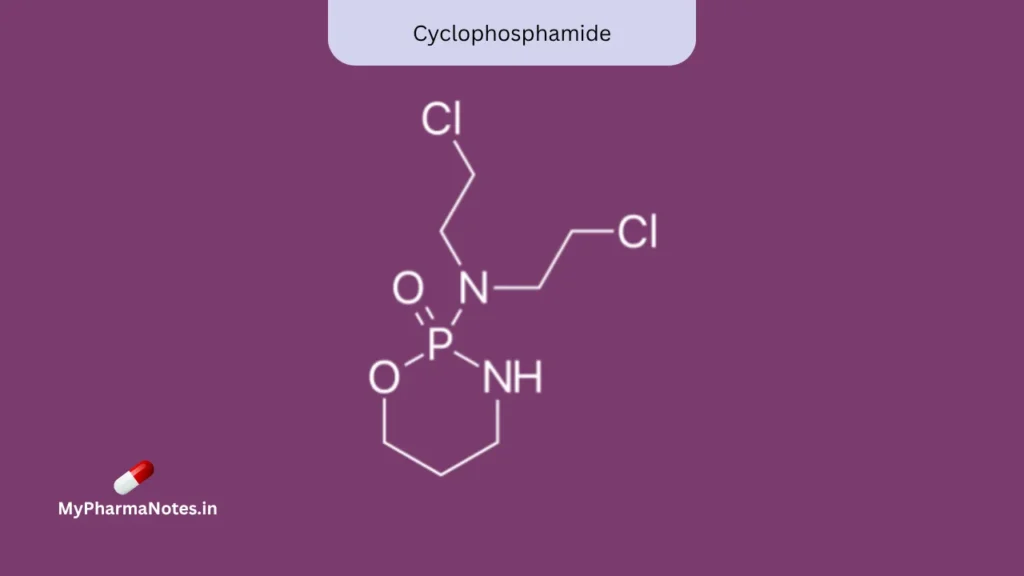
Cyclophosphamide’s IUPAC name is (RS)-N,N-bis(2-chloroethyl)-1,3,2-oxazaphosphinan-2-amine 2-oxide. It belongs to the alkylating agent class and is one of the most widely used chemotherapy drugs.
It is used to treat a wide range of cancers including lymphoma, multiple myeloma, leukemia, ovarian cancer, breast cancer, small cell lung cancer, neuroblastoma, and sarcoma. Beyond cancer, it is also used as an immunosuppressant in conditions such as nephrotic syndrome, granulomatosis with polyangiitis, and following organ transplantation.
Cyclophosphamide is stable at room temperature but must be protected from light and moisture. It is available as tablets. Popular brand names include Cytoxan, Endoxan, and Neosar.
Exam Tip: Cyclophosphamide is a prodrug — it is inactive until metabolized in the liver into its active forms (phosphoramide mustard and acrolein). The two chloroethyl groups in its structure are responsible for the DNA cross-linking action.
2. Busulfan
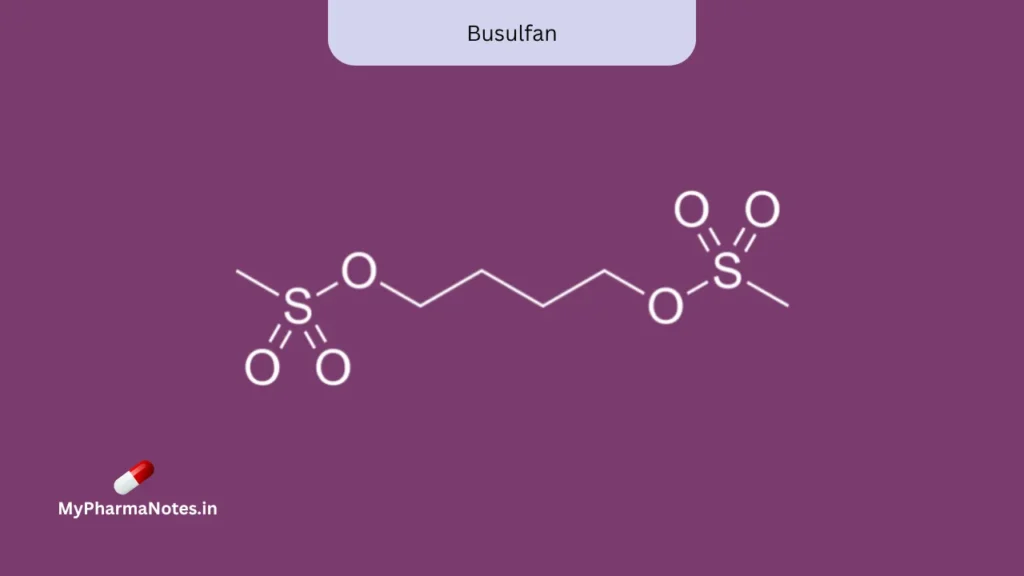
Busulfan’s IUPAC name is 1,4-Butanediol dimethanesulfonate. It is an alkylating agent belonging to the alkyl sulfonate subclass.
It is primarily used to treat chronic myelogenous leukemia (CML). It is also used as part of a conditioning regimen before bone marrow transplantation to destroy the existing bone marrow before a transplant.
Busulfan is stable at room temperature and must be protected from light and moisture. It is available as tablets. Popular brand names include Myleran and Busulfex.
Exam Tip: Busulfan’s structure has two methanesulfonate (mesylate) leaving groups on a four-carbon chain — this is what allows it to alkylate DNA. It is specific to the myeloid cell line, which is why it is particularly effective in CML.
3. Mercaptopurine
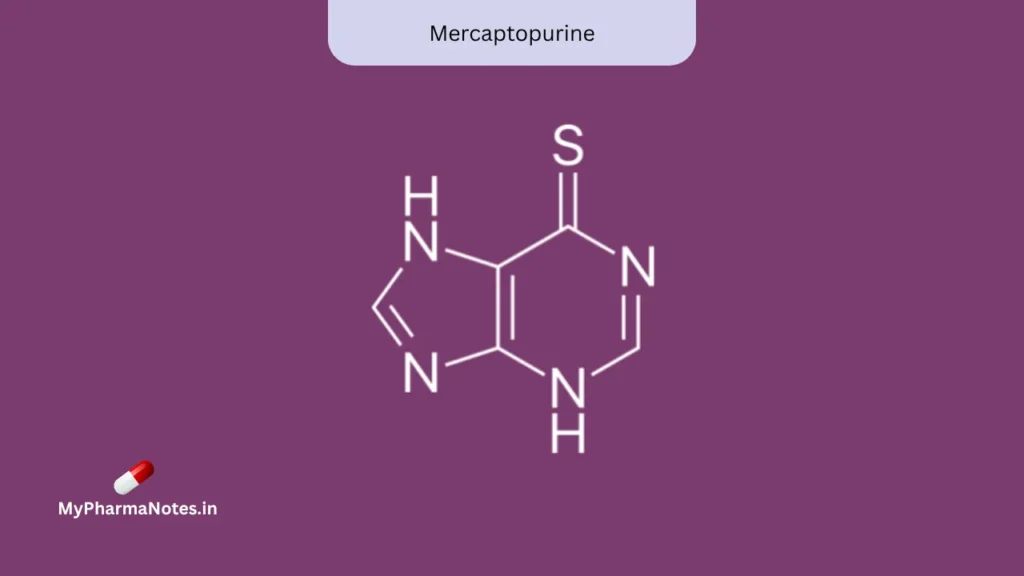
Mercaptopurine’s IUPAC name is 3,7-dihydropurine-6-thione. It belongs to the antimetabolite class (purine analogue subgroup), not alkylating agents, though it is listed in this section of the syllabus.
It is used to treat acute lymphocytic leukemia (ALL) and acute promyelocytic leukemia (APL). It is also used for inflammatory bowel conditions such as Crohn’s disease and ulcerative colitis, and sometimes for chronic lymphocytic leukemia (CLL) and lymphoma.
Mercaptopurine is stable at room temperature but must be protected from light and moisture. It is available as tablets. The popular brand name is Purinethol.
Exam Tip: Mercaptopurine is a purine analogue — it mimics the natural purine bases (adenine, guanine) but when incorporated into DNA, it disrupts replication. Note the thiol (–SH) group at C-6 position replacing the normal oxygen — this is the key structural feature.
Antimetabolites
Antimetabolites are drugs that mimic natural substances (metabolites) needed for DNA and RNA synthesis. When a cancer cell mistakenly uses these fake metabolites, the process of DNA synthesis is blocked, and the cell cannot divide.
4. Fluorouracil* (Structure Important for Exam)
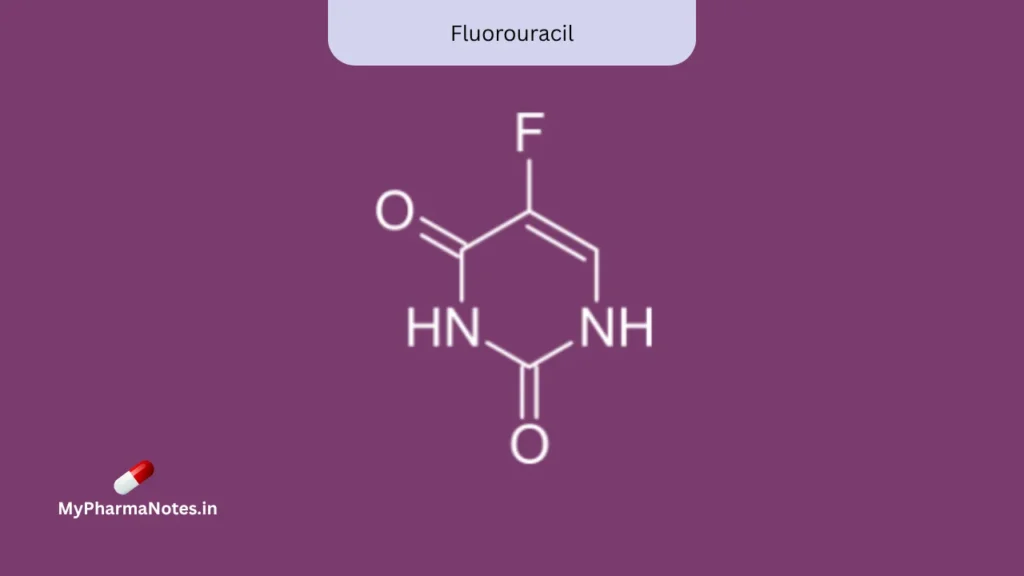
Fluorouracil’s IUPAC name is 5-Fluoro-1H,3H-pyrimidine-2,4-dione. It is a pyrimidine antimetabolite — it mimics the natural base uracil but has a fluorine atom at the C-5 position instead of hydrogen.
It is used to treat breast cancer, colorectal cancer, head and neck cancer, and lung cancer. It is one of the most commonly used chemotherapy drugs globally.
Fluorouracil is stable at room temperature but must be protected from light and moisture. It is available as tablets, capsules, and injections. Popular brand names include Adrucil, Carac, and Efudex.
Exam Tip: The key structural difference between Fluorouracil and natural Uracil is the fluorine atom at C-5 (replacing hydrogen). This fluorine atom makes the molecule resistant to the enzyme thymidylate synthase, blocking DNA synthesis. Remember: 5-FU = 5-Fluorouracil.
5. Methotrexate
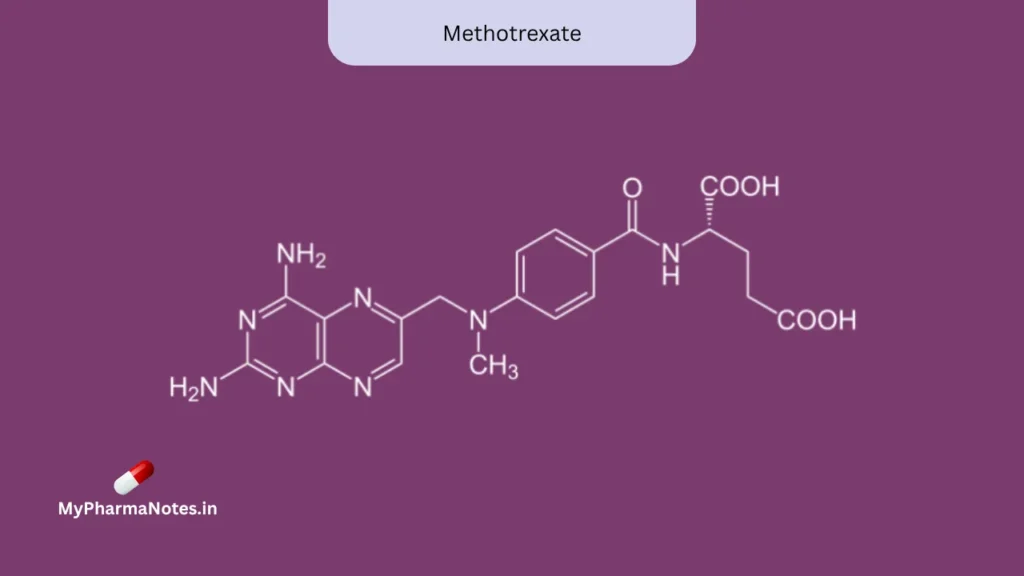
Methotrexate’s IUPAC name is (2S)-2-[(4-{(2,4-Diaminopteridin-6-yl)methylamino}benzoyl)amino]pentanedioic acid. It is a folate antimetabolite that inhibits the enzyme dihydrofolate reductase (DHFR), blocking the synthesis of purines and thymidylate needed for DNA production.
It is used to treat cancer (by slowing cancer cell growth), autoimmune diseases such as rheumatoid arthritis and psoriasis (by reducing immune system activity), and ectopic pregnancies (by stopping growth of the fertilized egg outside the uterus).
Methotrexate is stable at room temperature and must be protected from light and moisture. It is available as tablets. Popular brand names include Rheumatrex and Trexall.
Exam Tip: Methotrexate structurally resembles folic acid but with key differences — an amino group at C-4 instead of a hydroxyl group, and a methyl group on the nitrogen. This structural similarity allows it to competitively inhibit DHFR.
Anti-tumour Antibiotics
These are natural products derived from microorganisms (mainly Streptomyces bacteria) that have anticancer activity. They work by intercalating into DNA or blocking the enzymes responsible for DNA transcription.
6. Dactinomycin
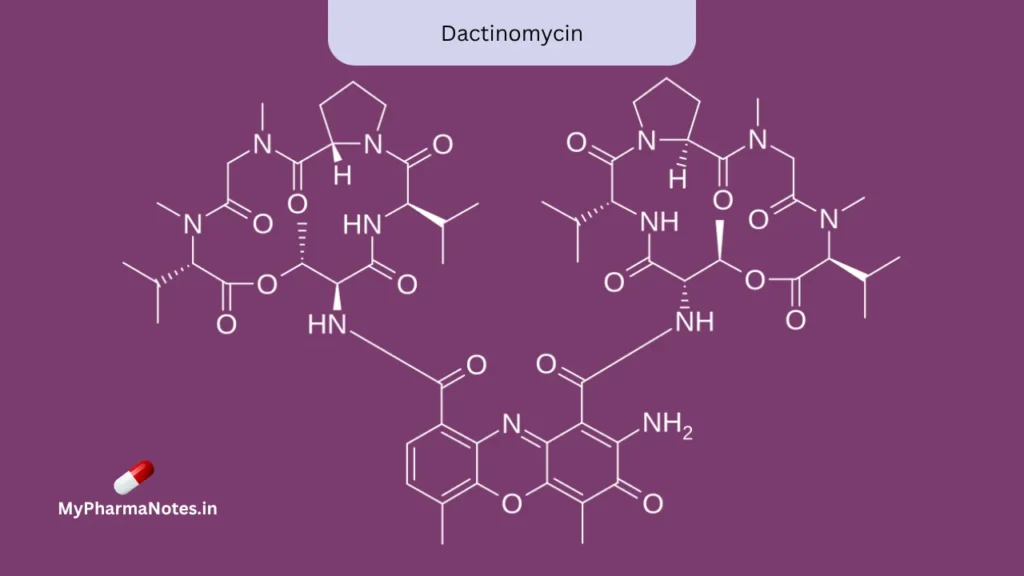
Dactinomycin’s IUPAC name is 2-Amino-N,N′-bis[(6S,9R,10S,13R,18aS)-6,13-diisopropyl-2,5,9-trimethyl-1,4,7,11,14-pentaoxohexadecahydro-1H-pyrrolo[2,1-i][1,4,7,10,13]oxatetraazacyclohexadecin-10-yl]-4,6-dimethyl-3-oxo-3H-phenoxazine-1,9-dicarboxamide. It is also known as Actinomycin D and belongs to the anti-tumour antibiotic class. It works by intercalating between DNA base pairs and inhibiting RNA polymerase, thereby blocking transcription.
It is used to treat Wilms tumor (a kidney cancer in children), rhabdomyosarcoma, Ewing’s sarcoma, trophoblastic neoplasm, testicular cancer, certain types of ovarian cancer, and acute lymphoblastic leukemia (ALL).
Dactinomycin is stable at room temperature but must be protected from light and moisture. It is available as tablets. The popular brand name is Cosmegen.
Exam Tip: Dactinomycin is particularly important in pediatric oncology — it is a key drug for Wilms tumor (nephroblastoma). Its phenoxazine ring system intercalates into the DNA double helix.
7. Doxorubicin Hydrochloride
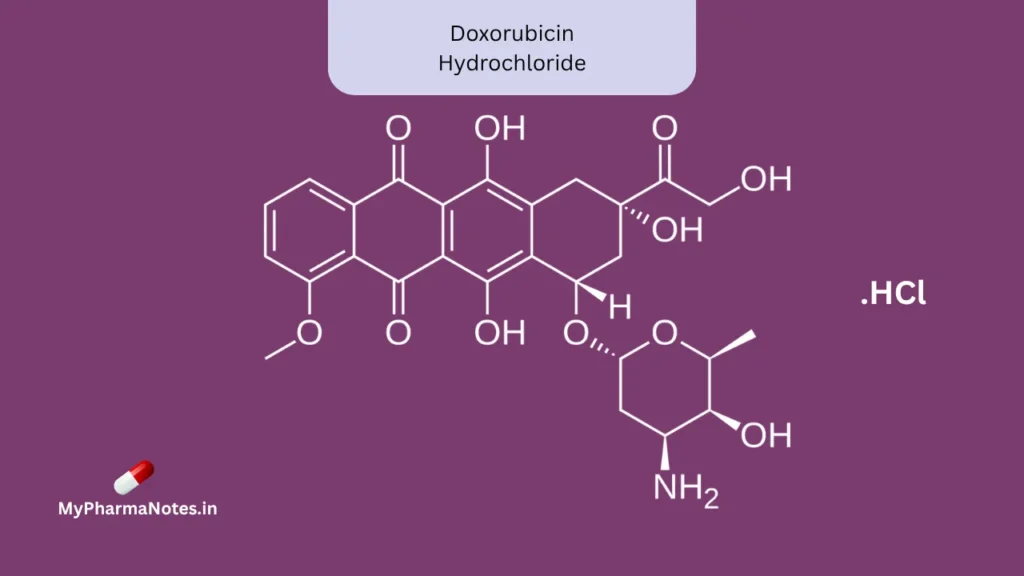
Doxorubicin Hydrochloride’s IUPAC name is (7S,9S)-7-[(2R,4S,5S,6S)-4-amino-5-hydroxy-6-methyloxan-2-yl]oxy-6,9,11-trihydroxy-9-(2-hydroxyacetyl)-4-methoxy-8,10-dihydro-7H-tetracene-5,12-dione hydrochloride. It is an anthracycline antibiotic derived from Streptomyces peucetius. It works by intercalating into DNA and inhibiting topoisomerase II, preventing DNA replication and transcription.
It is used to treat breast cancer, bladder cancer, Kaposi’s sarcoma, lymphoma, and acute lymphocytic leukemia. It is often used in combination chemotherapy regimens.
Doxorubicin Hydrochloride is stable at room temperature but must be protected from light and moisture. It is available as injectable solutions, oral capsules, and topical creams. Popular brand names include Adriamycin, Rubex, and Doxil.
Exam Tip: Doxorubicin (also called Adriamycin) is one of the most important and widely used anticancer drugs. A key side effect to remember is cardiotoxicity (heart damage) — this is a common exam question. Its characteristic red colour is also distinctive.
Vinca Alkaloids (Natural Products)
Vinca alkaloids are derived from the periwinkle plant (Catharanthus roseus). They work by binding to tubulin and inhibiting microtubule polymerization, thereby arresting cell division at the metaphase stage of mitosis.
8. Vinblastine Sulphate
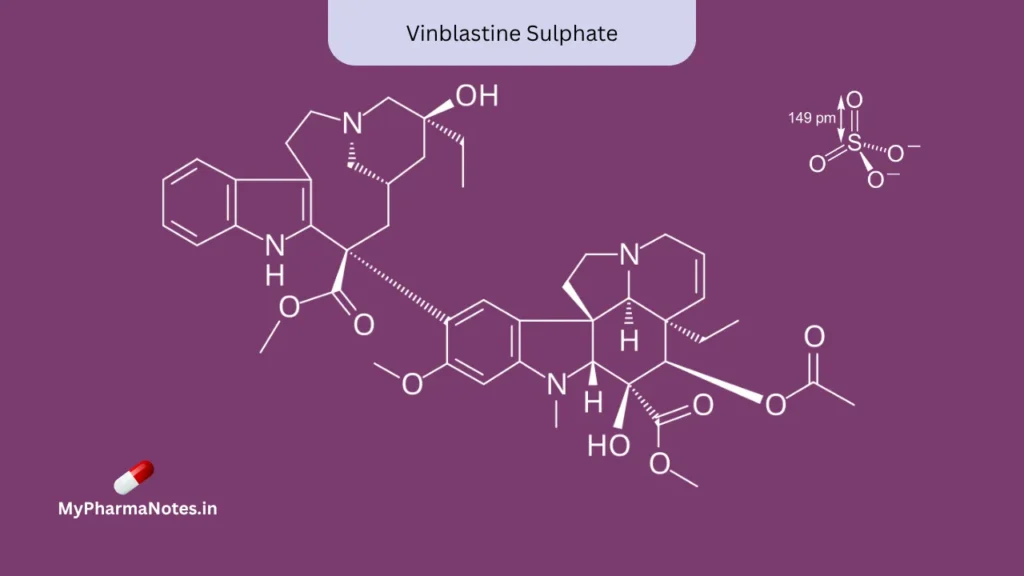
Vinblastine Sulphate’s IUPAC name is methyl (1R,9R,10S,11R,12R,19R)-11-acetyloxy-12-ethyl-4-[(13S,15R,17S)-17-ethyl-17-hydroxy-13-methoxycarbonyl-1,11-diazatetracyclo[13.3.1.04,12.05,10]nonadeca-4(12),5,7,9-tetraen-13-yl]-10-hydroxy-5-methoxy-8-methyl-8,16-diazapentacyclo[10.6.1.01,9.02,7.016,19]nonadeca-2,4,6,13-tetraene-10-carboxylate sulfuric acid. It is a naturally derived Vinca alkaloid that inhibits mitosis by preventing microtubule assembly.
It is used to treat Hodgkin’s lymphoma, Non-Hodgkin’s lymphoma, breast cancer, and testicular cancer.
Vinblastine Sulphate is stable at room temperature but must be protected from light and moisture. It is administered only as an intravenous (IV) injection. Popular brand names include Alkaban-AQ and Velban.
Exam Tip: Do not confuse Vinblastine with Vincristine — both are Vinca alkaloids from the same plant, but they differ slightly in structure and have different primary uses. Vinblastine → lymphomas; Vincristine → leukemias. Both are NEVER given orally — IV only.
Platinum Coordination Compounds
These are a unique class of anticancer drugs containing platinum metal at their centre. They work by forming covalent bonds with DNA, causing cross-links that prevent DNA replication and trigger cell death.
9. Cisplatin* (Structure Important for Exam)
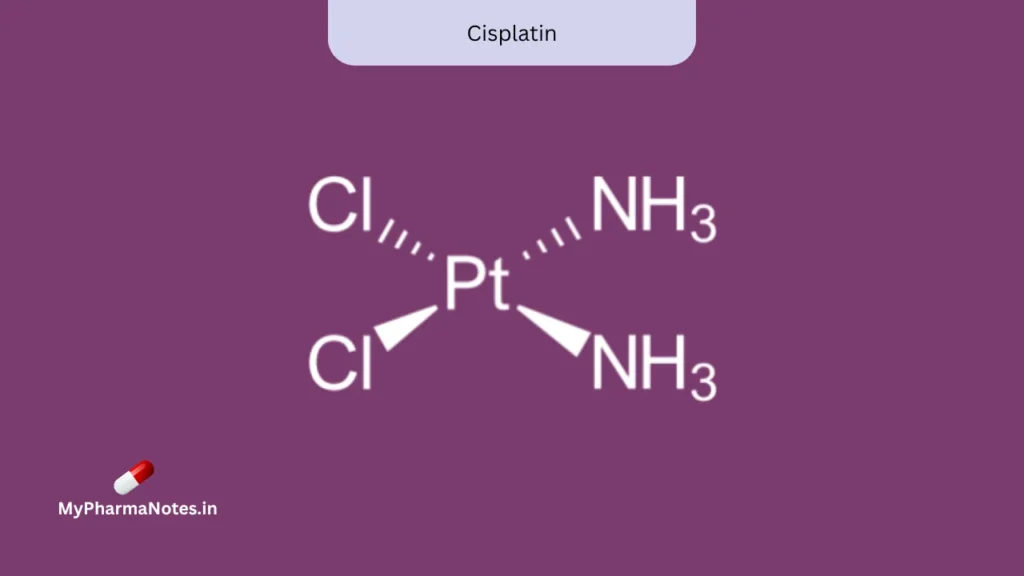
Cisplatin’s IUPAC name is cis-diamminedichloroplatinum(II). It is a platinum coordination compound — one of the most important and widely studied anticancer drugs. The “cis” configuration (both chloride groups on the same side of the platinum centre) is essential for its anticancer activity — the trans isomer is inactive.
It is used to treat bladder cancer, head and neck cancer, lung cancer, ovarian cancer, testicular cancer, and germ cell tumors.
Cisplatin is stable at room temperature but must be protected from light and moisture. It is available as tablets and intravenous injection. Popular brand names include Platinol and Platinol-AQ.
Exam Tip: Cisplatin’s structure is one of the simplest among all anti-neoplastic agents — a central Platinum (Pt) atom bonded to two chloride (Cl) ions and two ammonia (NH₃) groups in a square planar arrangement. The cis configuration is crucial — always remember this for exams. Key side effects: nephrotoxicity (kidney damage) and ototoxicity (hearing damage).
Hormonal Anti-Neoplastic Agents
Hormonal agents are used for cancers whose growth is driven or influenced by hormones. They work by either blocking hormone receptors or altering hormone levels in the body.
10. Dromostanolone Propionate
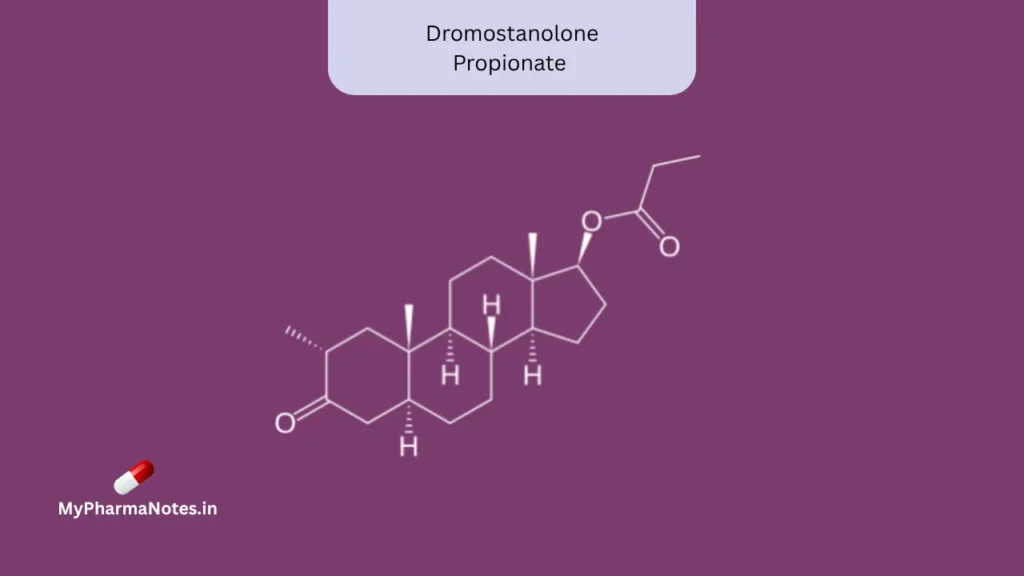
Dromostanolone Propionate’s IUPAC name is (2R,5S,8R,9S,10S,13S,14S,17S)-17-hydroxy-2,10,13-trimethyl-1,2,4,5,6,7,8,9,11,12,14,15,16,17-tetradecahydrocyclopenta[a]phenanthren-3-one. It is an androgen and anabolic steroid (AAS) medication. It belongs to the hormonal anti-neoplastic class and was historically used in breast cancer treatment in women by opposing the effects of estrogen on tumour growth.
It was used to treat breast cancer in women, particularly hormone-receptor-positive breast cancer. However, it is no longer commercially marketed due to the availability of better alternatives.
Dromostanolone Propionate is stable at room temperature but must be protected from light and moisture. It was available as tablets. Historical brand names include Drolban and Masteril.
Exam Tip: Dromostanolone Propionate has a classic steroid (cyclopenta[a]phenanthrene) ring structure — four fused rings (three cyclohexane + one cyclopentane). Recognize this as a steroidal structure in exams. Note that it is no longer marketed — an important clinical fact.
Quick Revision Table — All Chapter 13 Anti-Neoplastic Agents
| Drug | Class | Mechanism | Key Cancer Treated | Brand Name |
|---|---|---|---|---|
| Cyclophosphamide | Alkylating Agent | DNA cross-linking (prodrug) | Lymphoma, Leukemia, Breast cancer | Cytoxan |
| Busulfan | Alkylating Agent | DNA alkylation | Chronic Myelogenous Leukemia (CML) | Myleran |
| Mercaptopurine | Antimetabolite (Purine analogue) | Blocks purine synthesis | Acute Lymphocytic Leukemia (ALL) | Purinethol |
| Fluorouracil | Antimetabolite (Pyrimidine analogue) | Blocks thymidylate synthase | Colorectal, Breast, Head & Neck cancer | Adrucil |
| Methotrexate | Antimetabolite (Folate antagonist) | Inhibits DHFR, blocks DNA synthesis | Cancer, Autoimmune diseases | Rheumatrex |
| Dactinomycin | Anti-tumour Antibiotic | DNA intercalation, blocks transcription | Wilms tumor, Rhabdomyosarcoma | Cosmegen |
| Doxorubicin HCl | Anti-tumour Antibiotic (Anthracycline) | DNA intercalation, Topo II inhibition | Breast, Bladder, Lymphoma | Adriamycin |
| Vinblastine Sulphate | Vinca Alkaloid (Natural Product) | Inhibits microtubule assembly | Hodgkin’s Lymphoma, Testicular cancer | Velban |
| Cisplatin | Platinum Coordination Compound | DNA cross-linking | Testicular, Ovarian, Lung, Bladder cancer | Platinol |
| Dromostanolone Propionate | Hormonal Agent (Androgen/AAS) | Anti-estrogenic tumour suppression | Breast cancer (historical) | Drolban |
FAQ – Anti-Neoplastic Agents
What are anti-neoplastic agents?
Anti-neoplastic agents are drugs used to treat cancer (neoplasms). They work by targeting and destroying rapidly dividing cancer cells or by blocking the processes cancer cells need to grow and divide.
Which anti-neoplastic agents require chemical structure knowledge for the D.Pharma exam?
As per PCI ER 2020, the starred compounds are Cyclophosphamide*, Fluorouracil*, and Cisplatin*. These three structures are most important for your exam.
What is the difference between alkylating agents and antimetabolites?
Alkylating agents (Cyclophosphamide, Busulfan) directly damage DNA by forming cross-links between DNA strands. Antimetabolites (Fluorouracil, Methotrexate, Mercaptopurine) mimic normal cellular building blocks and interfere with DNA/RNA synthesis by blocking the enzymes that make them.
Why is the cis configuration of Cisplatin important?
Only the cis isomer of cisplatin is pharmacologically active. The trans isomer cannot form the same intrastrand DNA cross-links because of geometric differences, making it biologically inactive as an anticancer drug.
What is the source of Vinca alkaloids?
Vinca alkaloids like Vinblastine are derived from the periwinkle plant (Catharanthus roseus, formerly Vinca rosea) — hence the name.
Why is Cyclophosphamide called a prodrug?
Cyclophosphamide itself is inactive. It must first be metabolized in the liver by cytochrome P450 enzymes to produce its active metabolite, phosphoramide mustard, which then alkylates and cross-links DNA. A drug that requires metabolic conversion to become active is called a prodrug.
What is the key side effect of Doxorubicin?
The most important adverse effect of Doxorubicin is cardiotoxicity (dose-dependent heart damage). The total cumulative dose must be carefully monitored.
Why is Dromostanolone Propionate no longer used?
While it was historically effective for hormone-receptor-positive breast cancer in women, it has been withdrawn from the market because safer and more effective hormonal treatments (such as Tamoxifen and Aromatase inhibitors) are now available.
D.Pharma 1st Year — All Subjects Notes
D.Pharma 2nd Year — All Subjects Notes
