Table of Contents
Antibiotics are one of the most important discoveries in the history of medicine. They are chemical substances — produced naturally by microorganisms or synthesized in a laboratory — that kill bacteria or inhibit their growth.
As a D.Pharma student, understanding antibiotics is critical not just for your exams but also for your future role as a pharmacy professional.
PCI ER 2020 Syllabus Coverage: This chapter requires you to study each antibiotic with respect to its IUPAC name, chemical structure (starred compounds*), uses, stability & storage conditions, types of formulations, and popular brand names.
What Are Antibiotics?
- Antibiotics are medications used to treat bacterial infections.
- They work either by killing bacteria (bactericidal) or by preventing bacteria from multiplying (bacteriostatic).
- Antibiotics are NOT effective against viral infections such as the common cold or flu.
Classification of Antibiotics
By chemical structure, antibiotics are classified into the following major groups:
| Class | Examples | Mechanism of Action |
|---|---|---|
| Beta-lactams | Penicillins, Cephalosporins, Carbapenems, Monobactams | Inhibit bacterial cell wall synthesis |
| Macrolides | Erythromycin, Clarithromycin, Azithromycin | Inhibit protein synthesis |
| Tetracyclines | Tetracycline, Doxycycline, Minocycline | Inhibit protein synthesis |
| Aminoglycosides | Gentamicin, Tobramycin, Amikacin | Inhibit protein synthesis |
| Fluoroquinolones | Ciprofloxacin, Levofloxacin, Moxifloxacin | Inhibit DNA replication |
| Miscellaneous | Chloramphenicol, Clindamycin | Various mechanisms |
Syllabus Drug List (PCI ER 2020 — Chapter 12)
- Beta-lactam Antibiotics: Penicillin G, Amoxicillin*, Cloxacillin, Streptomycin
- Tetracyclines: Doxycycline, Minocycline
- Macrolides: Erythromycin, Azithromycin
- Miscellaneous: Chloramphenicol*, Clindamycin
(Compounds marked with * require chemical structure knowledge for exams)
Beta-Lactam Antibiotics
Beta-lactam antibiotics all share a beta-lactam ring in their chemical structure. They work by inhibiting cell wall synthesis in bacteria, ultimately causing bacterial cell death.
1. Penicillin G (Benzylpenicillin)
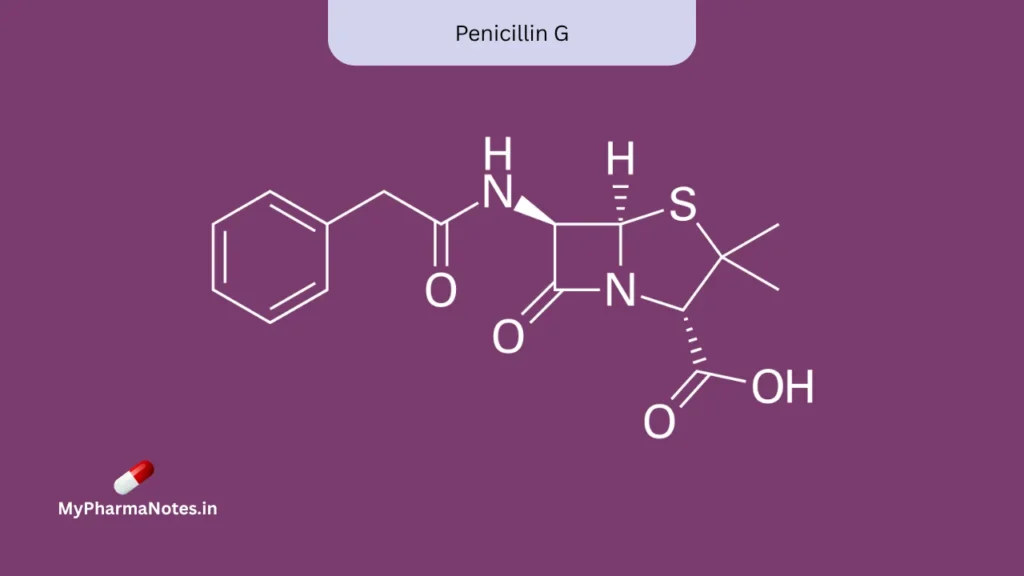
IUPAC / Chemical Name: Benzylpenicillin
Classification: Narrow-spectrum Beta-lactam antibiotic
Uses: Penicillin G is effective against infections caused by susceptible gram-positive bacteria, including:
- Streptococcus pneumoniae → strep throat, pneumonia
- Staphylococcus aureus → boils, cellulitis
- Neisseria gonorrhoeae → gonorrhea
- Treponema pallidum → syphilis
Stability and Storage Conditions
- Stable at room temperature
- Must be protected from light and moisture
Types of Formulations
- Oral tablets
- Intramuscular (IM) injections
- Intravenous (IV) injections
Popular Brand Names
- Pfizerpen
- Pen-Vee K
- Bicillin L-A
2. Amoxicillin* (Structure Important for Exam)
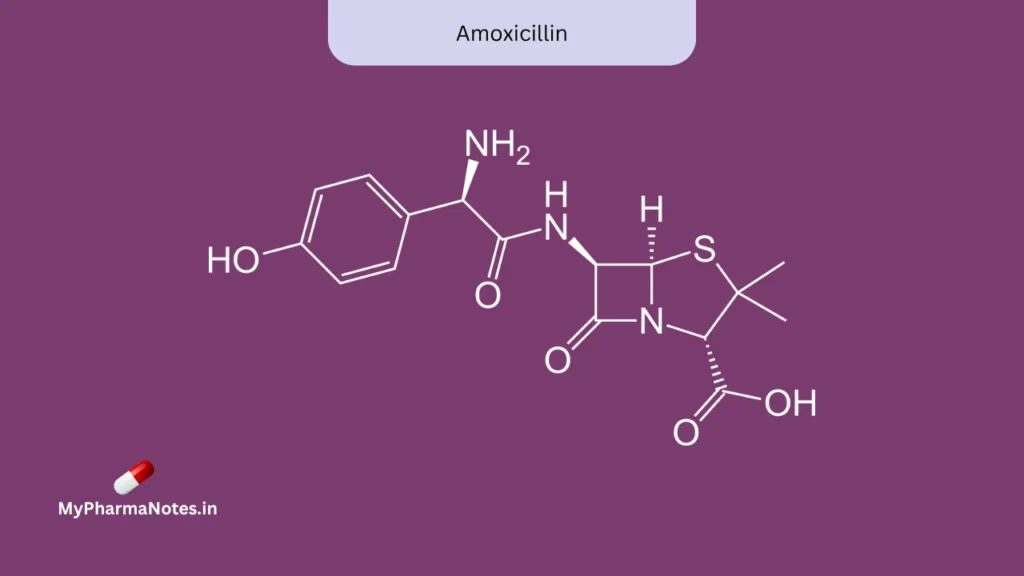
IUPAC / Chemical Name: 6-[D(−)β-amino-p-hydroxyphenyl-acetamido]-3-hydroxy-7-oxo-4-thia-1-azabicyclo[3.2.0]heptane-2-carboxylic acid
Classification: Broad-spectrum Beta-lactam antibiotic (aminopenicillin group)
Key Features of Chemical Structure: Amoxicillin has the classic beta-lactam + thiazolidine ring system (same as all penicillins) with an additional para-hydroxyphenyl group and a free amino (–NH₂) group at the alpha position of the side chain. These two additions make it broader spectrum than Penicillin G.
Uses: Amoxicillin treats a wide range of bacterial infections:
- Upper respiratory tract infections (sinusitis, bronchitis, pneumonia)
- Lower respiratory tract infections (acute otitis media, chronic bronchitis exacerbations)
- Skin and soft tissue infections
- Urinary tract infections (UTIs)
- Gonorrhea
Stability and Storage Conditions: Stable at room temperature
- Protect from light and moisture
Types of Formulations:
- Capsules
- Tablets
- Oral suspension
Popular Brand Names:
- Amoxil
- Polymox
- Trimox
Exam Tip: Amoxicillin is the most commonly prescribed antibiotic worldwide. Remember the –NH₂ group on the side chain — it’s what makes it broader spectrum than Penicillin G.
3. Cloxacillin
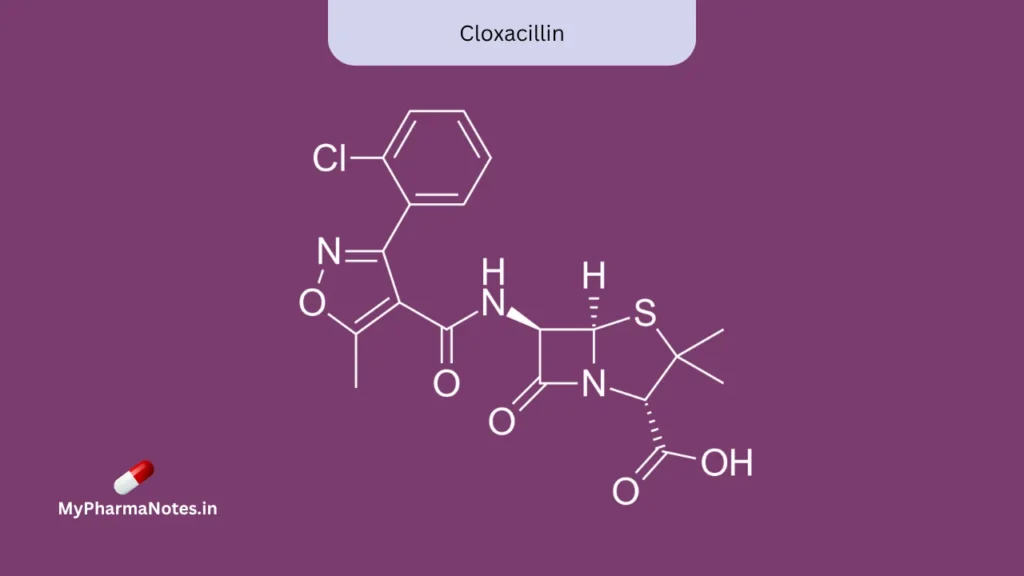
IUPAC / Chemical Name: (2S,5R,6R)-6-[[3-(2-chlorophenyl)-5-methyl-1,2-oxazole-4-carbonyl]amino]-3,3-dimethyl-7-oxo-4-thia-1-azabicyclo[3.2.0]heptane-2-carboxylic acid
Classification: Narrow-spectrum, penicillinase-resistant Beta-lactam antibiotic (isoxazolyl penicillin group)
Key Feature: Cloxacillin is resistant to beta-lactamase (penicillinase), making it effective against beta-lactamase-producing Staphylococci — bacteria that destroy ordinary penicillins.
Uses:
- Skin infections
- Bone infections (osteomyelitis)
- Respiratory infections
- Gonorrhea
- Sepsis
Stability and Storage Conditions
- Stable at room temperature
- Protect from light and moisture
Types of Formulations
- Capsules
- Tablets
- Injection
Popular Brand Names
- Cloxapen
- Cloxacap
4. Streptomycin
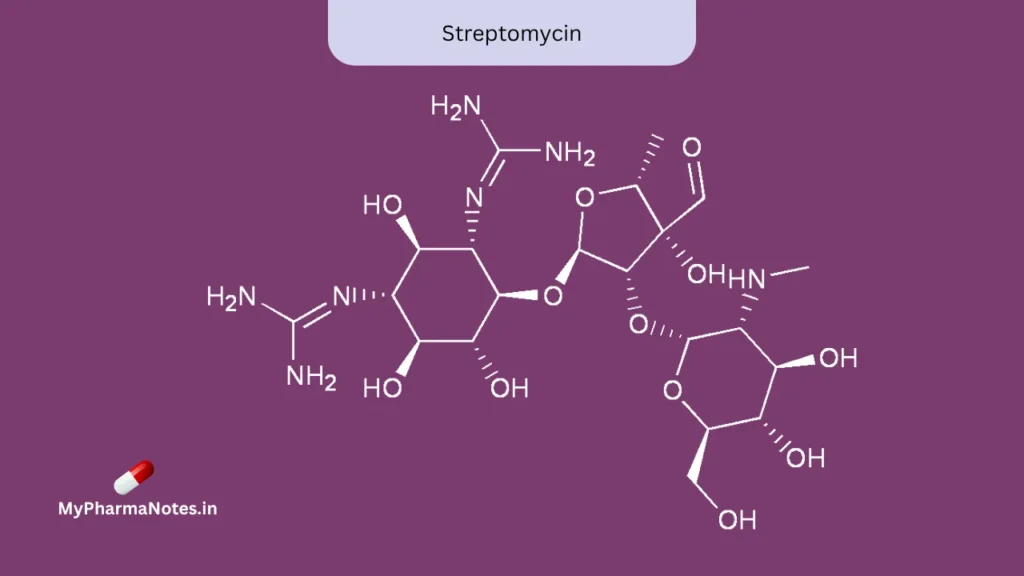
IUPAC / Chemical Name: O-2-deoxy-2-methylamino-A-L-glucopyranosyl-(1→2)-O-5-deoxy-3-C-formyl-beta-L-lyxopentanofuranoside
Classification: Aminoglycoside antibiotic (Note: Although listed under the Beta-lactam/antibiotic section in the syllabus, Streptomycin belongs to the Aminoglycoside class)
Key Feature: Streptomycin was the first antibiotic effective against tuberculosis (TB). It inhibits protein synthesis by binding to the 30S ribosomal subunit.
Uses:
- Tuberculosis (TB) — first-line drug
- Tularemia
- Plague
- Gram-negative bacterial infections: E. coli, Salmonella
Stability and Storage Conditions
- Stable at room temperature
- Protect from light and moisture
Types of Formulations
- Injection (most common)
- Oral suspension
- Ophthalmic ointment
- Topical cream
Popular Brand Names:
- Plantomycin
Exam Tip: Streptomycin is given only by injection for TB treatment because it is poorly absorbed orally.
Tetracyclines
Tetracyclines are broad-spectrum antibiotics that work by inhibiting protein synthesis. They bind to the 30S ribosomal subunit, blocking the attachment of aminoacyl-tRNA to the mRNA-ribosome complex.
They are called tetracyclines because of their four fused ring (tetracyclic) structure.
5. Doxycycline
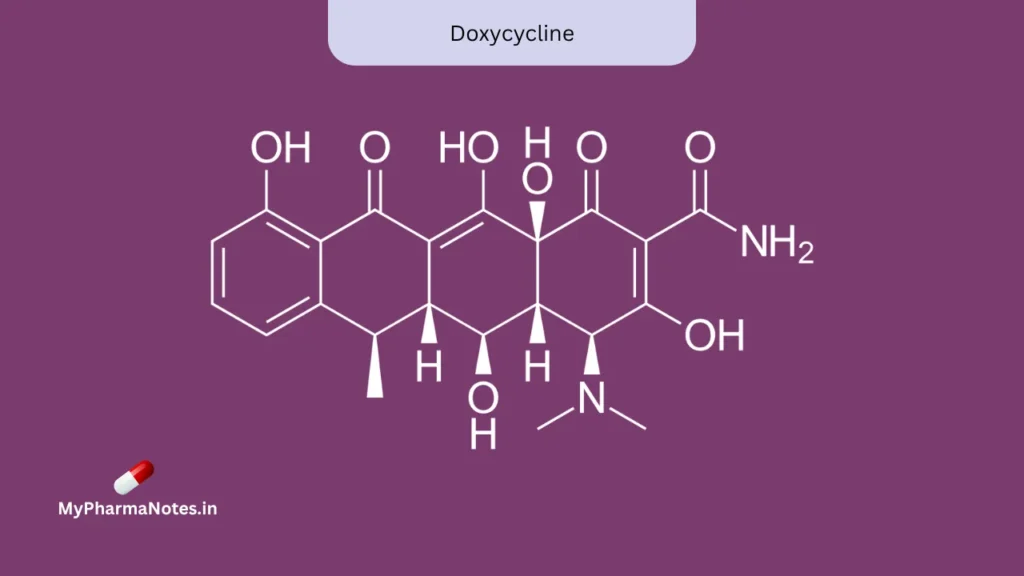
IUPAC / Chemical Name: (4S,4aR,5S,5aR,6R,12aS)-4-(dimethylamino)-3,5,10,12,12a-pentahydroxy-6-methyl-1,11-dioxo-1,4,4a,5,5a,6,11,12a-octahydrotetracene-2-carboxamide
Classification: Second-generation Tetracycline antibiotic
Uses: Doxycycline is one of the most versatile antibiotics and is used to treat:
- Acne
- Lyme disease
- Malaria (prophylaxis and treatment)
- Rocky Mountain spotted fever
- Typhus
Stability and Storage Conditions
- Stable at room temperature
- Store in a cool, dry place, away from direct sunlight
Types of Formulations
- Capsules
- Tablets
Popular Brand Names
- Vibramycin-D
- Efracea
Exam Tip: Doxycycline is preferred over older tetracyclines because it has better oral bioavailability and a longer half-life, requiring only once or twice daily dosing.
6. Minocycline
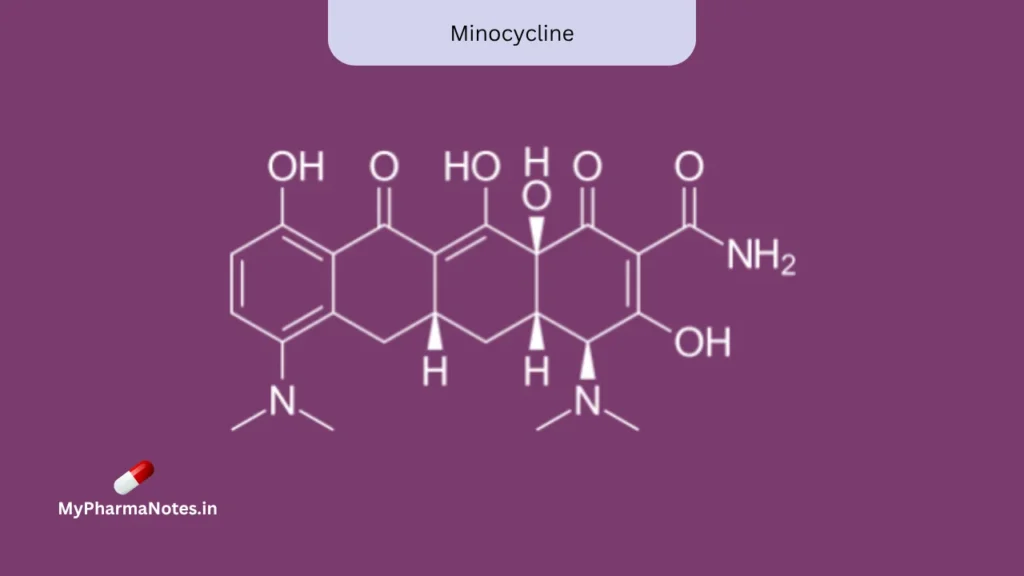
IUPAC / Chemical Name: (2E,4S,4aR,5aS,12aR)-2-(Amino-hydroxy-methylidene)-4,7-bis(dimethylamino)-10,11,12a-trihydroxy-4a,5,5a,6-tetrahydro-4H-tetracene-1,3,12-trione
Classification: Second-generation Tetracycline antibiotic
Key Difference from Doxycycline: Minocycline has an additional dimethylamino group at C-7 position, giving it a broader spectrum and higher lipid solubility, making it penetrate tissues better.
Uses:
- Acne (very commonly used)
- Lyme disease
- Gonorrhea
- Syphilis
- Rocky Mountain spotted fever
Stability and Storage Conditions
- Store at room temperature in a cool, dry place
- Protect from light and moisture
Types of Formulations
- Capsules
- Tablets
- Injectable suspension
Popular Brand Names
- Minocin
- Dynacin
- Solodyn
Macrolides
Macrolides are characterized by a large macrocyclic lactone ring (14–16 membered) with attached sugars. They inhibit bacterial protein synthesis by binding to the 50S ribosomal subunit, blocking translocation.
They are typically used as alternatives for patients allergic to penicillin.
7. Erythromycin
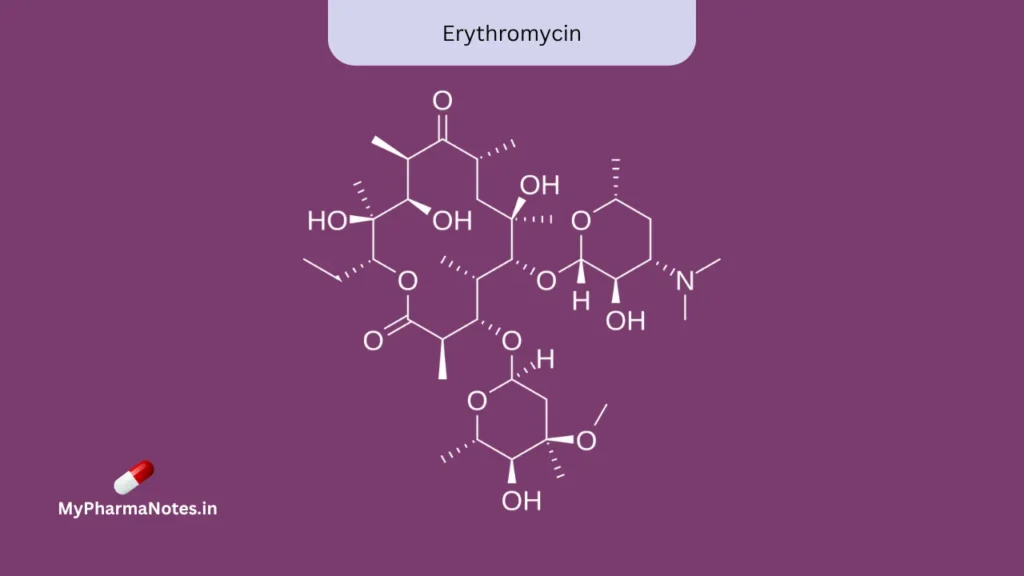
IUPAC / Chemical Name: (3R,4S,5S,6R,7R,9R,11R,12R,13S,14R)-6-{[(2S,3R,4S,6R)-4-(Dimethylamino)-3-hydroxy-6-methyloxan-2-yl]oxy}-14-ethyl-7,12,13-trihydroxy-4-{[(2R,4R,5S,6S)-5-hydroxy-4-methoxy-4,6-dimethyloxan-2-yl]oxy}-3,5,7,9,11,13-hexamethyl-1-oxacyclotetradecane-2,10-dione
Classification: First-generation Macrolide antibiotic (14-membered ring)
Uses:
- Strep throat
- Pneumonia
- Ear infections
- Gonorrhea
- Used in penicillin-allergic patients
Stability and Storage Conditions
- Stable at room temperature
- Store in a cool, dry place to prevent degradation
Types of Formulations
- Tablets
- Capsules
- Oral suspension
Popular Brand Names
- E-Mycin
- Ery-Tab
- Erythrocin
Exam Tip: Erythromycin is the prototype macrolide antibiotic — the one from which all other macrolides (azithromycin, clarithromycin) were developed.
8. Azithromycin
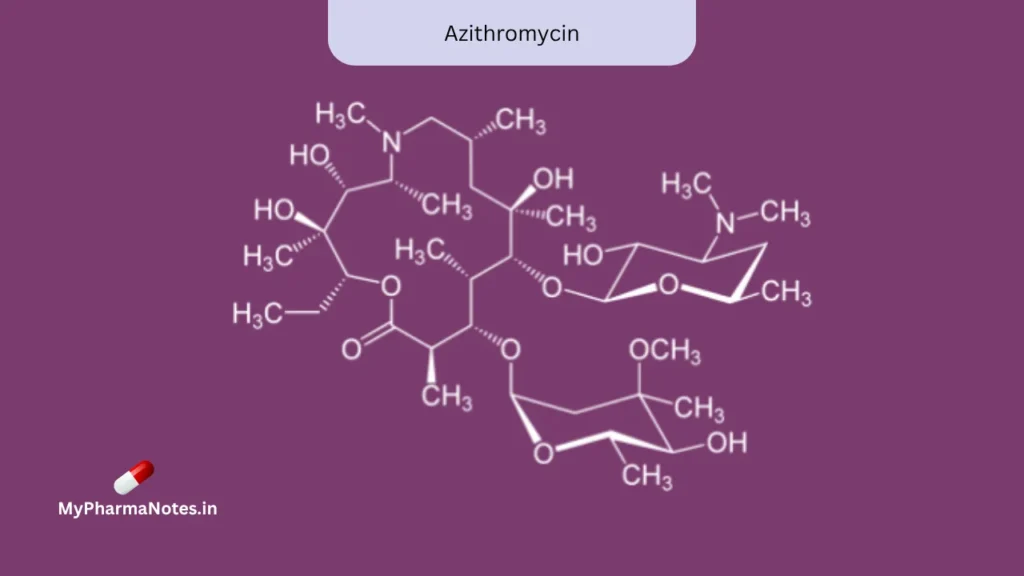
IUPAC / Chemical Name: (2R,3S,4R,5R,8R,10R,11R,12S,13S,14R)-2-ethyl-3,4,10-trihydroxy-3,5,6,8,10,12,14-heptamethyl-15-oxo-11-{[3,4,6-trideoxy-3-(dimethylamino)-β-D-xylo-hexopyranosyl]oxy}-1-oxa-6-azacyclopentadec-13-yl 2,6-dideoxy-3C-methyl-3-O-methyl-α-L-ribo-hexopyranoside
Classification: Second-generation Macrolide antibiotic (15-membered ring — also called an azalide)
Key Difference from Erythromycin: Azithromycin has a 15-membered ring (one nitrogen atom inserted into the lactone ring), unlike erythromycin’s 14-membered ring. This gives it:
- Longer half-life (allows once-daily dosing and short 3–5 day courses)
- Better tissue penetration
- Broader spectrum
Uses:
- Respiratory infections: pneumonia, bronchitis, sinusitis
- Ear infections
- Skin infections
Stability and Storage Conditions
- Stable at room temperature
- Store in a cool, dry place, away from direct sunlight
Types of Formulations:
- Tablets
- Oral suspension
- Intravenous (IV) infusion
Popular Brand Names
- Zithromax
- Sumamed
- Hemomycin
Exam Tip: Azithromycin is popularly known as the “Z-Pack.” Its 5-day course is effective because it accumulates in tissues and releases slowly.
Miscellaneous Antibiotics
9. Chloramphenicol* (Structure Important for Exam)
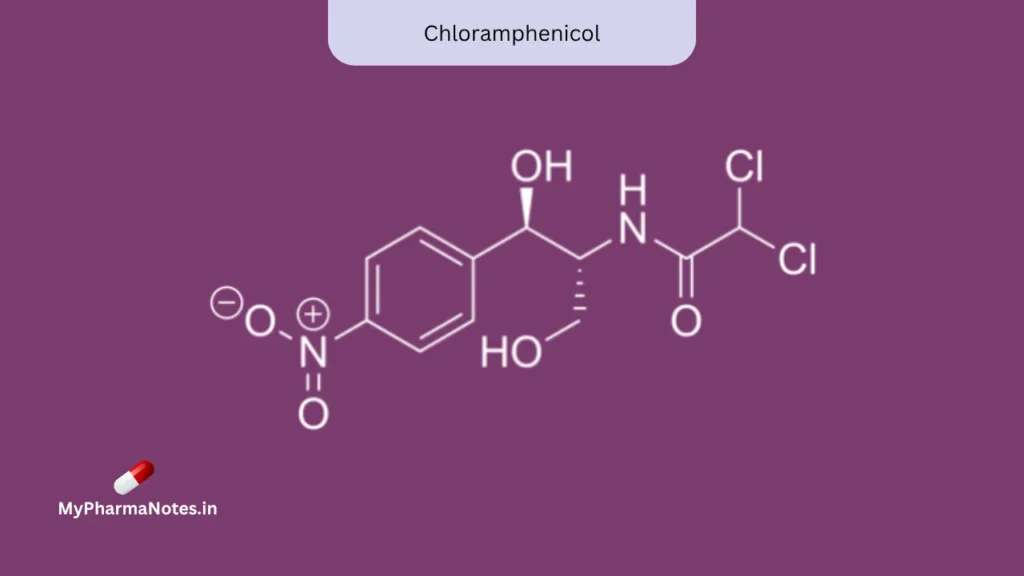
IUPAC / Chemical Name: 2,2-Dichloro-N-[(1R,2R)-1,3-dihydroxy-1-(4-nitrophenyl)propan-2-yl]acetamide
Classification: Miscellaneous broad-spectrum antibiotic
Key Features of Chemical Structure: Chloramphenicol has a unique structure with:
- A para-nitrophenyl group
- A dichloroacetamide group (the two chlorine atoms are characteristic)
- Two hydroxyl (–OH) groups
This structure enables it to bind to the 50S ribosomal subunit, inhibiting protein synthesis.
Uses: Chloramphenicol is a broad-spectrum antibiotic used mainly for serious infections:
- Meningitis
- Typhoid fever
- Ear infections
Note: Due to the risk of serious side effects (aplastic anaemia), Chloramphenicol use is now restricted to life-threatening infections where alternatives are not suitable.
Stability and Storage Conditions
- Stable at room temperature
- Store in a cool, dry place, protected from light
Types of Formulations
- Capsules
- Oral suspension
- Eye drops (very commonly used)
- Injection
Popular Brand Names
- Chloromycetin
- Ak-Chlor
10. Clindamycin
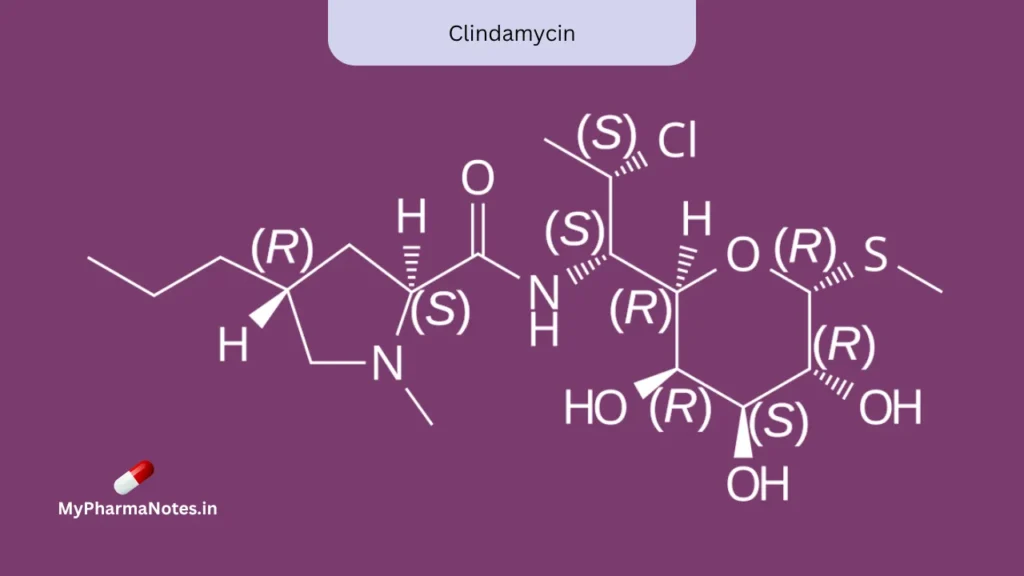
IUPAC / Chemical Name: methyl 7-chloro-6,7,8-trideoxy-6-{[(4R)-1-methyl-4-propyl-L-prolyl]amino}-1-thio-L-threo-α-D-galacto-octopyranoside
Classification: Lincosamide antibiotic (Miscellaneous group)
Key Feature: Clindamycin inhibits protein synthesis by binding to the 50S ribosomal subunit — same target as macrolides. It is particularly effective against anaerobic bacteria and is a key drug for skin and soft tissue infections.
Uses
- Skin infections: acne, impetigo
- Respiratory infections: pneumonia, bronchitis
- Genital infections: pelvic inflammatory disease (PID), gonorrhea
- Bone and joint infections
Stability and Storage Conditions
- Stable at room temperature up to 25°C (77°F)
- Store in a cool, dry place, protected from light
Types of Formulations
- Capsules
- Tablets
Popular Brand Names
- Cleocin
- Dalacin
Quick Revision Table — All Chapter 12 Antibiotics
| Drug | Class | Mechanism | Key Use | Brand Name |
|---|---|---|---|---|
| Penicillin G | Beta-lactam | Cell wall inhibition | Strep throat, Syphilis | Pfizerpen |
| Amoxicillin | Beta-lactam | Cell wall inhibition | UTI, Respiratory infections | Amoxil |
| Cloxacillin | Beta-lactam (penicillinase-resistant) | Cell wall inhibition | Staph skin/bone infections | Cloxapen |
| Streptomycin | Aminoglycoside | 30S ribosome inhibition | Tuberculosis | Plantomycin |
| Doxycycline | Tetracycline | 30S ribosome inhibition | Acne, Malaria, Lyme disease | Vibramycin-D |
| Minocycline | Tetracycline | 30S ribosome inhibition | Acne, Gonorrhea | Minocin |
| Erythromycin | Macrolide | 50S ribosome inhibition | Strep throat, Pneumonia | E-Mycin |
| Azithromycin | Macrolide (Azalide) | 50S ribosome inhibition | Respiratory infections | Zithromax |
| Chloramphenicol | Miscellaneous | 50S ribosome inhibition | Typhoid fever, Meningitis | Chloromycetin |
| Clindamycin | Lincosamide | 50S ribosome inhibition | Anaerobic infections, Acne | Cleocin |
FAQ – Antibiotics
What is the difference between Amoxicillin and Penicillin G?
Penicillin G is a narrow-spectrum antibiotic, while Amoxicillin is broad-spectrum due to the additional –NH₂ group on its side chain. Amoxicillin is also better absorbed orally.
Why is Cloxacillin preferred over Penicillin G for Staphylococcal infections?
Many Staphylococci produce beta-lactamase (penicillinase) that destroys Penicillin G. Cloxacillin is resistant to this enzyme, making it effective where Penicillin G fails.
What is the difference between Erythromycin and Azithromycin?
Azithromycin has a 15-membered ring (azalide) vs Erythromycin’s 14-membered ring. Azithromycin has a longer half-life, better tissue penetration, and a shorter treatment course.
Which antibiotics target the 30S ribosomal subunit?
Tetracyclines (Doxycycline, Minocycline) and Aminoglycosides (Streptomycin) inhibit the 30S ribosomal subunit.
Which antibiotics target the 50S ribosomal subunit?
Macrolides (Erythromycin, Azithromycin), Chloramphenicol, and Clindamycin all target the 50S ribosomal subunit.
Why is Chloramphenicol use restricted?
Chloramphenicol can cause aplastic anaemia — a rare but potentially fatal bone marrow suppression. It is now reserved for life-threatening infections only.
D.Pharma 1st Year — All Subjects Notes
D.Pharma 2nd Year — All Subjects Notes
