
Table of Contents
Cholinesterase Inhibitors (Indirect Acting Cholinergic Agents)
Cholinesterase inhibitors (ChEIs) take a different approach to boosting cholinergic activity. Rather than directly activating receptors, they block the enzyme that breaks down acetylcholine — acetylcholinesterase. The result is that acetylcholine accumulates at the synapse and continues stimulating both muscarinic and nicotinic receptors for longer.
ChEIs are broadly used in three clinical areas:
- Neuromuscular disorders (myasthenia gravis)
- Post-surgical reversal of muscle relaxants
- Alzheimer’s disease and other dementias
They also divide into reversible and irreversible types. Reversible inhibitors are used therapeutically. Irreversible inhibitors (organophosphates) are used in glaucoma eye drops but are also the basis of certain insecticides and nerve agents.
1. Neostigmine
Neostigmine is the most tested ChEI in pharmacy exams. It is a quaternary ammonium compound — the positive charge on nitrogen prevents it from crossing the blood-brain barrier, so all its effects are peripheral (outside the CNS).
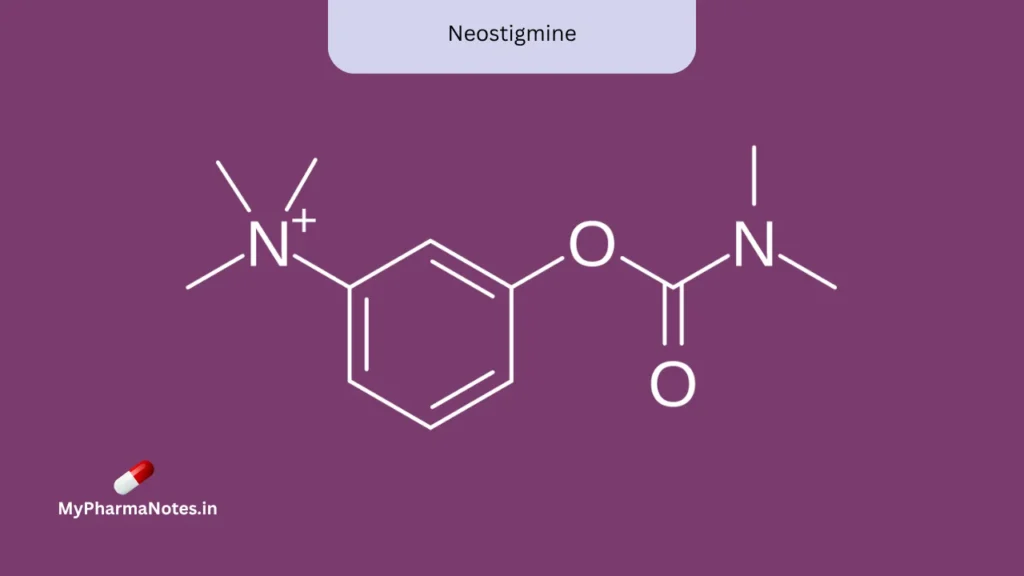
IUPAC Name: 3-{[(Dimethylamino)carbonyl]oxy}-N,N,N-trimethylbenzenaminium
Mechanism: Reversible inhibitor of acetylcholinesterase (peripherally acting)
Uses: Treatment of myasthenia gravis — a condition where the immune system attacks nicotinic receptors at the neuromuscular junction, causing muscle weakness. Also used after surgery to reverse non-depolarizing neuromuscular blockers (such as pancuronium or vecuronium). Additionally used for urinary retention and post-operative intestinal ileus.
Formulations: Tablet
Brand Names: Bloxiverz, Prostigmin, Vagostigmin
2. Edrophonium Chloride
Edrophonium is unique because of its extremely short duration of action — effects last only about 5 to 10 minutes. This makes it useless as a treatment drug but perfect as a diagnostic tool.
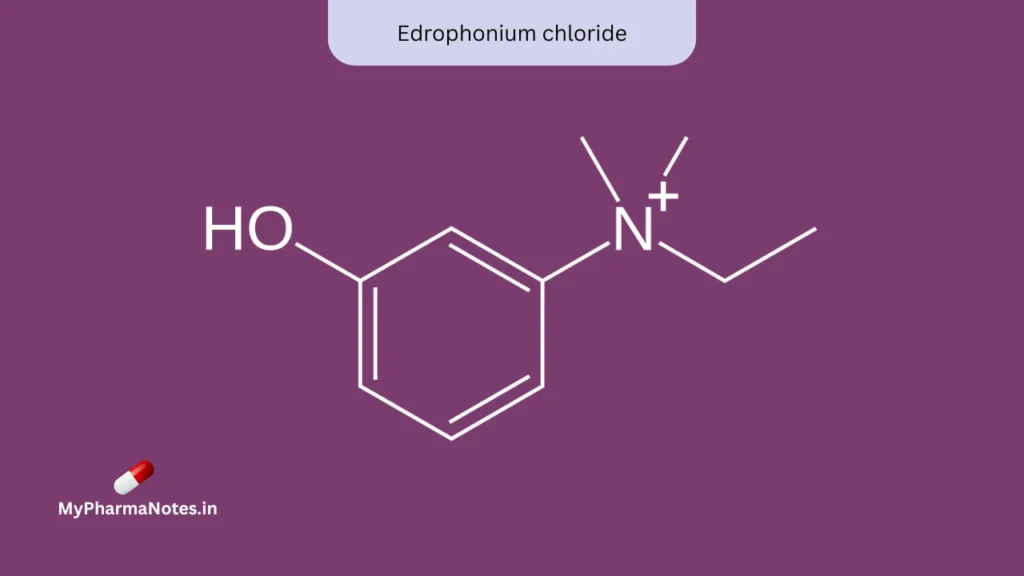
IUPAC Name: N-ethyl-3-hydroxy-N,N-dimethylbenzenaminium chloride
Mechanism: Reversible, ultra-short acting acetylcholinesterase inhibitor
Uses: The Tensilon test — a diagnostic procedure where edrophonium is injected intravenously. If a patient has myasthenia gravis, their muscle strength improves dramatically within seconds and then returns to baseline within minutes. This rapid, transient improvement confirms the diagnosis. Also used in glaucoma and ophthalmic preparations.
Formulations: Tablet, Eye Drops
Brand Names: Tensilon, Enlon
3. Tacrine Hydrochloride
Tacrine holds an important place in medical history as the first centrally acting cholinesterase inhibitor approved for Alzheimer’s disease. Unlike neostigmine and edrophonium, tacrine crosses the blood-brain barrier and acts in the CNS. However, it was later largely replaced by safer drugs like donepezil and rivastigmine due to hepatotoxicity concerns.
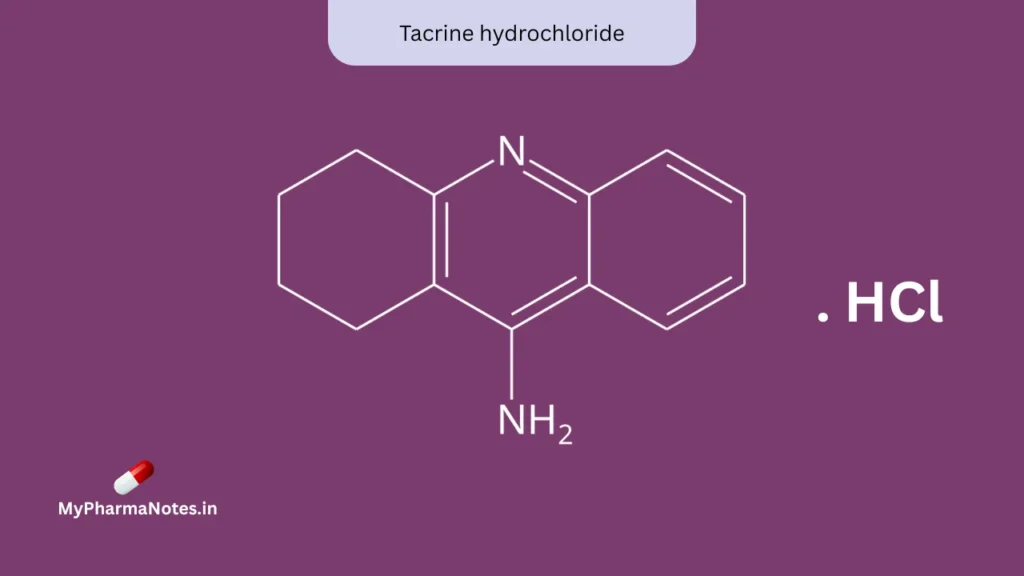
IUPAC Name: 1,2,3,4-Tetrahydroacridin-9-amine hydrochloride
Mechanism: Reversible, centrally acting acetylcholinesterase inhibitor
Uses: Management of mild to moderate Alzheimer’s disease by improving cholinergic neurotransmission in the brain.
Formulations: Tablet
Brand Names: Cognex
4. Echothiophate Iodide
Echothiophate is fundamentally different from the three drugs above — it is an organophosphate compound and an irreversible acetylcholinesterase inhibitor. Once it binds to the enzyme, the enzyme is permanently inactivated (a process called aging). The body must synthesize new enzyme molecules to restore function.
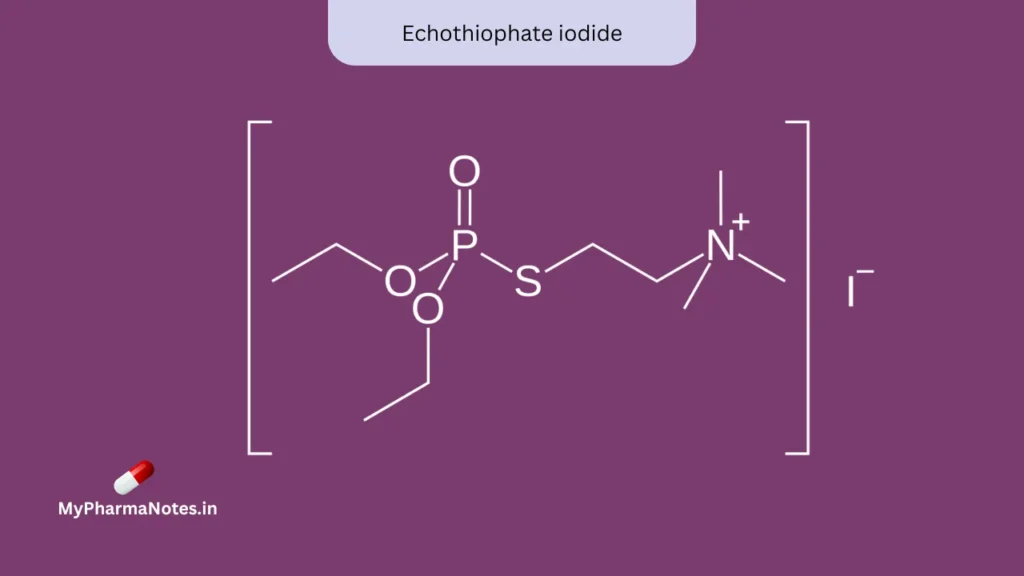
IUPAC Name: 2-(Diethoxyphosphorylsulfanyl)ethyl-N,N,N-trimethylazanium iodide
Mechanism: Irreversible organophosphate acetylcholinesterase inhibitor
Uses: Used as eye drops to treat elevated intraocular pressure in certain types of glaucoma (particularly aphakic glaucoma) and accommodative esotropia — a form of crossed eyes caused by uncorrected farsightedness.
Formulations: Tablet, Eye Drops
Brand Names: Phospholine Iodide
Note: Because it is irreversible, echothiophate has a much longer duration than reversible ChEIs. However, it carries a risk of systemic absorption and cholinergic toxicity with prolonged use.
Comparison of Cholinesterase Inhibitors
| Drug | Reversibility | CNS Action | Main Use |
|---|---|---|---|
| Neostigmine | Reversible | No (peripheral only) | Myasthenia gravis, reversal of muscle relaxants |
| Edrophonium | Reversible (ultra-short) | No | Diagnosis of myasthenia gravis |
| Tacrine | Reversible | Yes (crosses BBB) | Alzheimer’s disease |
| Echothiophate | Irreversible | No (topical eye use) | Glaucoma |
Cholinergic Blocking Agents (Anticholinergics)
Cholinergic blocking agents do the opposite of cholinergic drugs — they block muscarinic receptors and prevent acetylcholine from producing its effects. The classic anticholinergic effects are remembered by the mnemonic: Dry as a bone, Blind as a bat, Red as a beet, Hot as a hare, Mad as a hatter (dry mouth, blurred vision, flushed skin, fever, confusion).
These drugs are divided into natural agents (derived from plants) and synthetic agents.
Natural Cholinergic Blocking Agents
5. Atropine Sulphate
Atropine comes from Atropa belladonna — the deadly nightshade plant. The name belladonna (Italian for “beautiful lady”) comes from the historical use of the plant extract to dilate pupils for cosmetic effect. It is a classic and essential drug in every pharmacy curriculum.
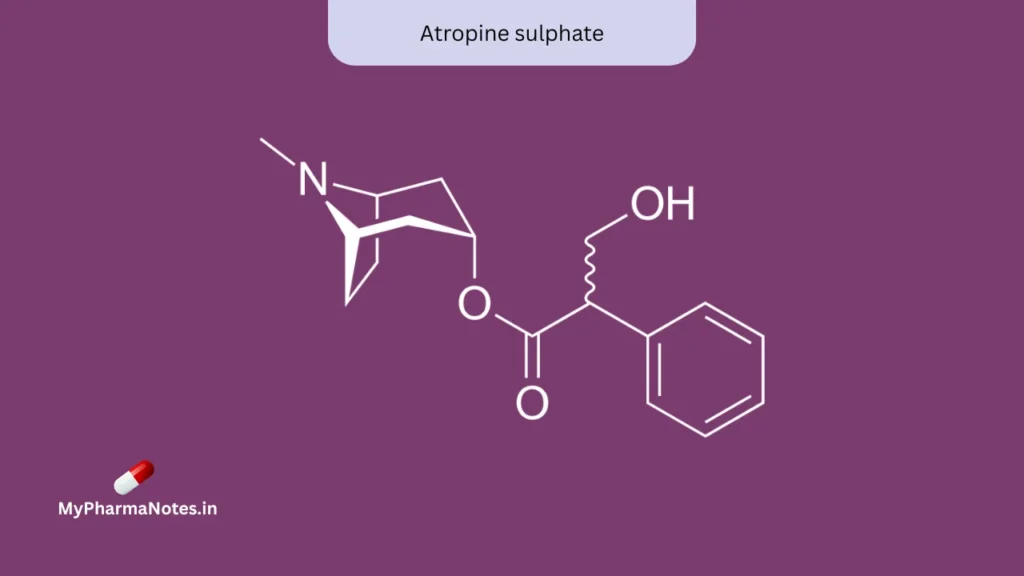
IUPAC Name: (RS)-(8-Methyl-8-azabicyclo[3.2.1]oct-3-yl) 3-hydroxy-2-phenylpropanoate sulphate
Mechanism: Competitive muscarinic receptor antagonist (blocks M1, M2, M3)
Uses: As eye drops — dilates the pupil (mydriasis) before eye examinations and treats amblyopia (lazy eye) and cycloplegia. Systemically — used in bradycardia to increase heart rate, in organophosphate poisoning as the antidote, and before surgery to reduce secretions.
Formulations: Tablet, Eye Drops
Brand Names: Isopto Atropine
6. Ipratropium Bromide
Ipratropium is essentially atropine modified for inhalation use. It is a quaternary ammonium compound (like neostigmine), which means it does not cross the blood-brain barrier or the bronchial mucosa significantly — its action is almost entirely local in the lungs.
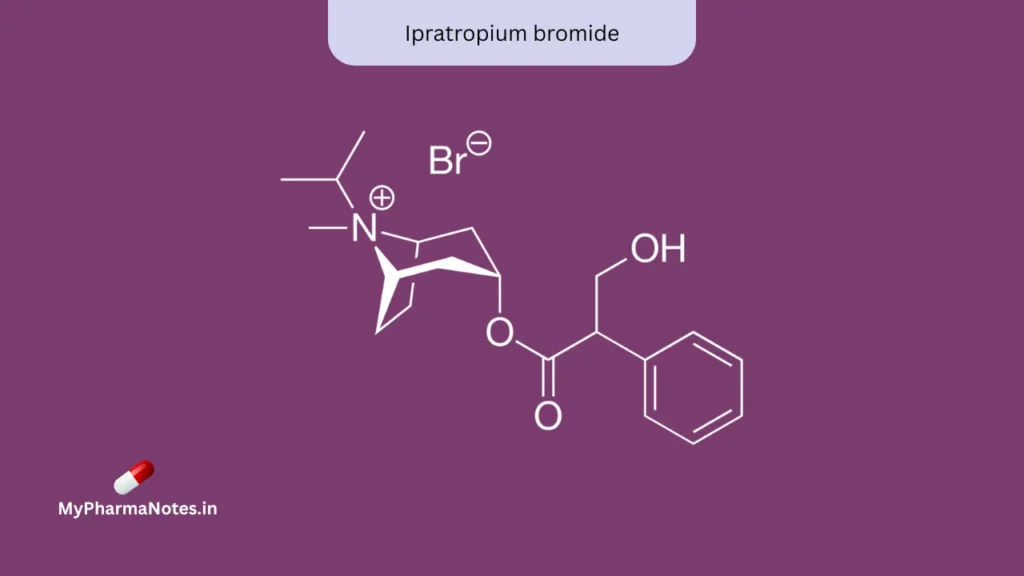
IUPAC Name: [8-methyl-8-(1-methylethyl)-8-azoniabicyclo[3.2.1]oct-3-yl] 3-hydroxy-2-phenylpropanoate
Mechanism: Competitive muscarinic antagonist — blocks bronchial smooth muscle contraction
Uses: First-line bronchodilator for COPD maintenance therapy. Prevents wheezing, breathlessness, coughing, and chest tightness. Unlike salbutamol (which works via beta-2 stimulation), ipratropium works by blocking the parasympathetic bronchoconstriction that is prominent in COPD.
Formulations: Syrup, Inhaler, Tablet
Brand Names: Atrovent
Synthetic Cholinergic Blocking Agents
7. Tropicamide
Tropicamide is the most commonly used mydriatic in modern ophthalmology, largely because its effects wear off faster than atropine — within 4 to 6 hours compared to atropine’s 7 to 14 days.
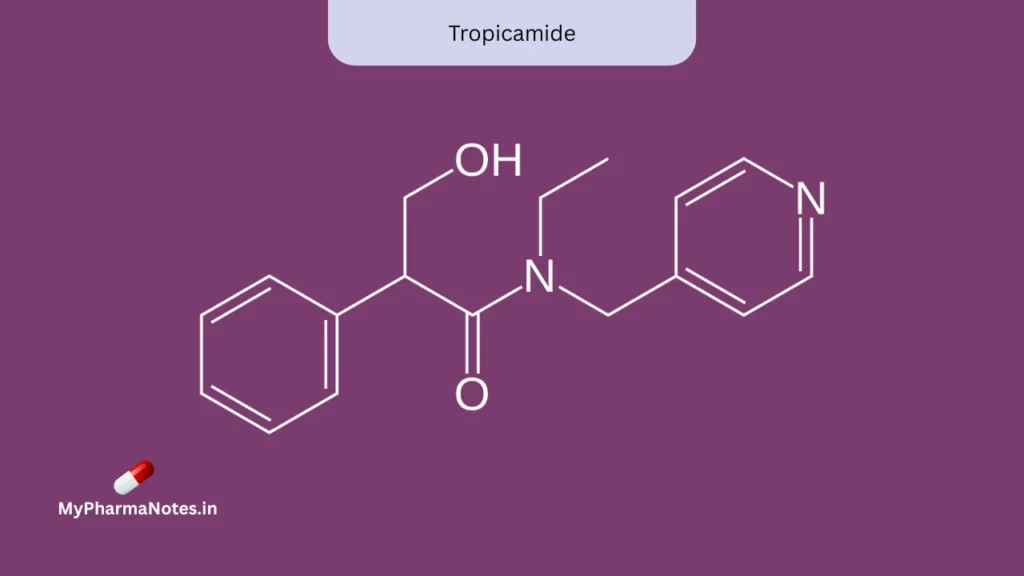
IUPAC Name: Benzeneacetamide, N-ethyl-α-(hydroxymethyl)-N-(4-pyridinylmethyl)-
Mechanism: Short-acting muscarinic antagonist (topical ophthalmic)
Uses: Dilates the pupil for fundus examination, cycloplegic refraction, and ophthalmoscopy. Also used before and after certain eye surgeries. Its short duration of action is a practical advantage in outpatient settings.
Formulations: Eye Drops (though listed with syrup/inhaler/tablet in some references)
Brand Names: Mydriacyl
8. Cyclopentolate Hydrochloride
Cyclopentolate is intermediate in duration between tropicamide (short) and atropine (very long). It is particularly preferred in children for cycloplegic refraction because it provides good cycloplegia without the prolonged effects of atropine.
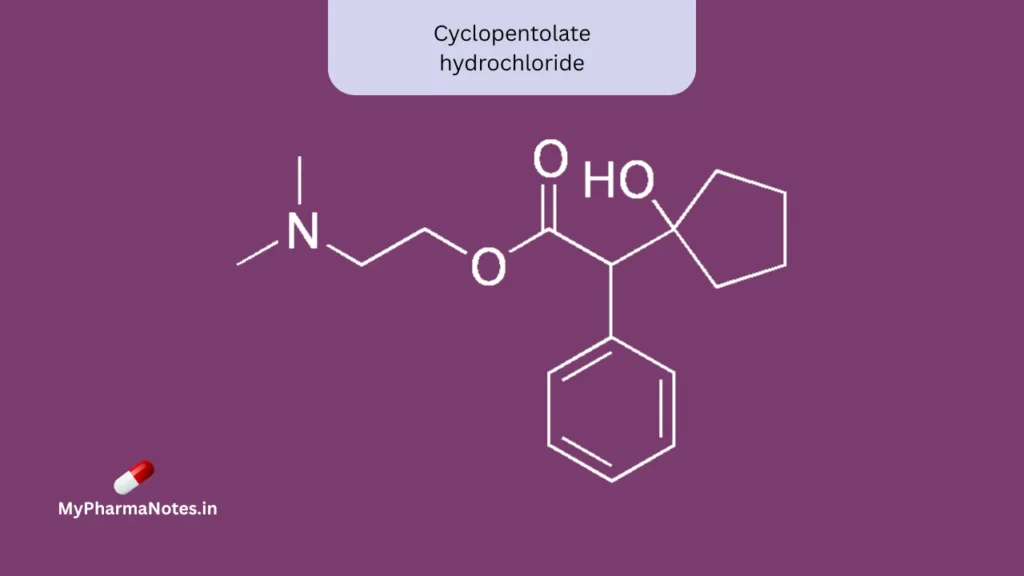
IUPAC Name: (RS)-2-(dimethylamino)ethyl (1-hydroxycyclopentyl)(phenyl)acetate
Mechanism: Competitive muscarinic antagonist (ophthalmic)
Uses: Used to dilate the pupil before eye examination. Especially useful in detecting refractive errors in children who tend to over-accommodate, masking the true prescription.
Formulations: Eye Drops, Tablet
Brand Names: Cyclogyl, Cylate, Mydrilate, Pentolair
9. Clidinium Bromide
Clidinium shifts the focus from ophthalmology to gastroenterology. It is a quaternary anticholinergic used in combination with the benzodiazepine chlordiazepoxide (the combination is sold as Librax) for gastrointestinal disorders.
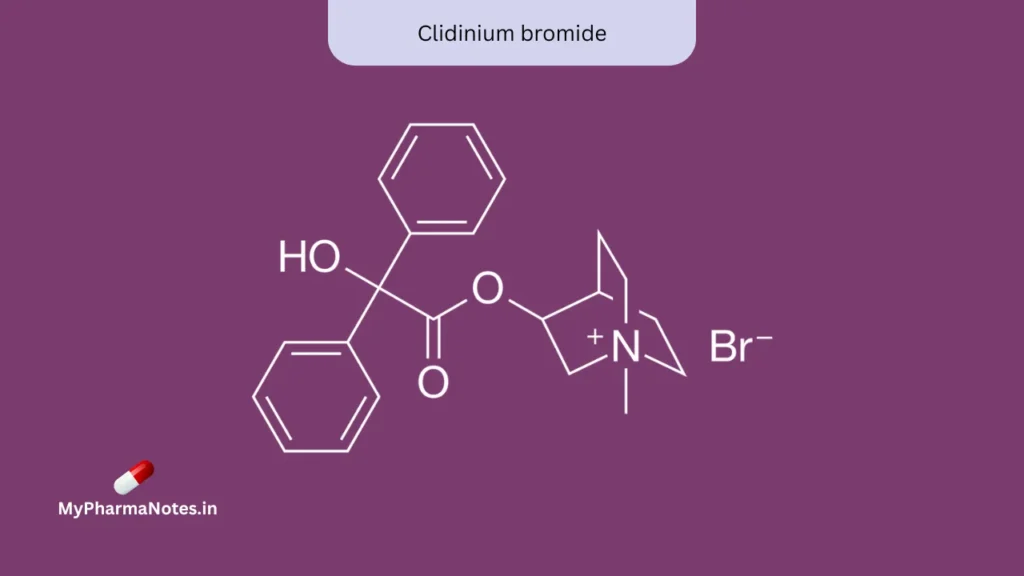
IUPAC Name: 3-[(2-hydroxy-2,2-diphenylacetyl)oxy]-1-methyl-1-azabicyclo[2.2.2]octan-1-ium bromide
Mechanism: Quaternary muscarinic antagonist — reduces gastrointestinal secretions and motility
Uses: Symptomatic treatment of peptic ulcer disease and relief of abdominal cramps due to irritable bowel syndrome, diverticulitis, and colicky abdominal pain.
Formulations: Syrup, Tablet
Brand Names: Librax
10. Dicyclomine Hydrochloride
Dicyclomine is an antispasmodic that acts by a dual mechanism — it has mild anticholinergic activity but its primary action is a direct relaxant effect on smooth muscle. This makes it relatively selective for the gut without the strong systemic anticholinergic side effects of atropine.
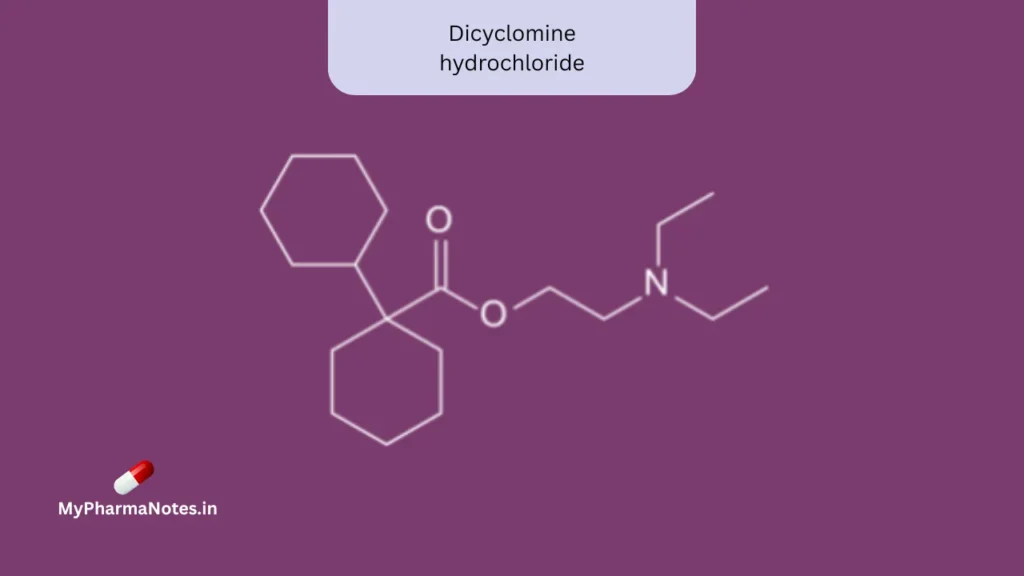
IUPAC Name: 2-(diethylamino)ethyl 1-cyclohexylcyclohexanecarboxylate
Mechanism: Direct smooth muscle relaxant + mild anticholinergic
Uses: Treatment of irritable bowel syndrome (IBS). Relaxes the spasms in the colon that cause cramping and pain.
Formulations: Syrup, Inhaler, Tablet
Brand Names: Bentyl
Anticholinergic Drugs – Quick Reference by Use
| Drug | Primary Use Area | Duration of Action |
|---|---|---|
| Atropine sulphate | Eye exam, Emergency, Pre-op | Long (eye: 7–14 days) |
| Ipratropium bromide | COPD inhalation therapy | 4–6 hours |
| Tropicamide | Routine eye examination | 4–6 hours |
| Cyclopentolate | Paediatric refraction | 6–24 hours |
| Clidinium bromide | Peptic ulcer, IBS | Oral dosing schedule |
| Dicyclomine HCl | Irritable bowel syndrome | Oral dosing schedule |
FAQ – Cholinesterase Inhibitors and Cholinergic Blocking Agents
What is the Tensilon test?
The Tensilon test uses edrophonium (Tensilon) as a diagnostic tool. It is injected intravenously in a patient suspected of myasthenia gravis. If muscle strength improves dramatically within seconds, the test is positive for MG.
Why is neostigmine used after surgery?
Certain anaesthetic agents used during surgery block nicotinic receptors at the neuromuscular junction (non-depolarizing muscle relaxants). After surgery, neostigmine is given to inhibit acetylcholinesterase, increasing acetylcholine levels, which outcompetes the relaxant and restores normal muscle function.
What is the difference between atropine and tropicamide in eye examinations?
Both dilate the pupil, but tropicamide wears off in 4 to 6 hours, making it practical for outpatient eye exams. Atropine lasts 7 to 14 days when applied to the eye, which is useful for lazy eye treatment but impractical for routine examinations.
Which cholinesterase inhibitor is used in Alzheimer’s disease?
Tacrine hydrochloride (Cognex) was the first approved drug for Alzheimer’s. It crosses the blood-brain barrier and improves cholinergic transmission in the brain. It has largely been replaced by newer agents like donepezil.
What makes Echothiophate different from neostigmine?
Echothiophate is an irreversible organophosphate inhibitor — it permanently inactivates acetylcholinesterase until new enzyme is synthesized. Neostigmine is reversible and its inhibition naturally wears off.
D.Pharma 1st Year — All Subjects Notes
D.Pharma 2nd Year — All Subjects Notes
