
Table of Contents
Anti-Hypertensive Agents
Antihypertensive agents are drugs used to treat hypertension (high blood pressure), a major risk factor for heart disease, stroke, and kidney disease. Different classes work through different mechanisms to lower blood pressure.
Classification of Anti-Hypertensive Agents
- Diuretics: Hydrochlorothiazide, Furosemide
- Beta-Blockers: Atenolol, Metoprolol, Propranolol
- Calcium Channel Blockers: Amlodipine, Diltiazem, Verapamil
- ACE Inhibitors: Captopril, Lisinopril, Ramipril
- ARBs (Angiotensin Receptor Blockers): Candesartan, Losartan, Valsartan
1. Propranolol
Classification: Beta-Adrenergic Receptor Antagonist (Beta-Blocker) — Class II Anti-Arrhythmic
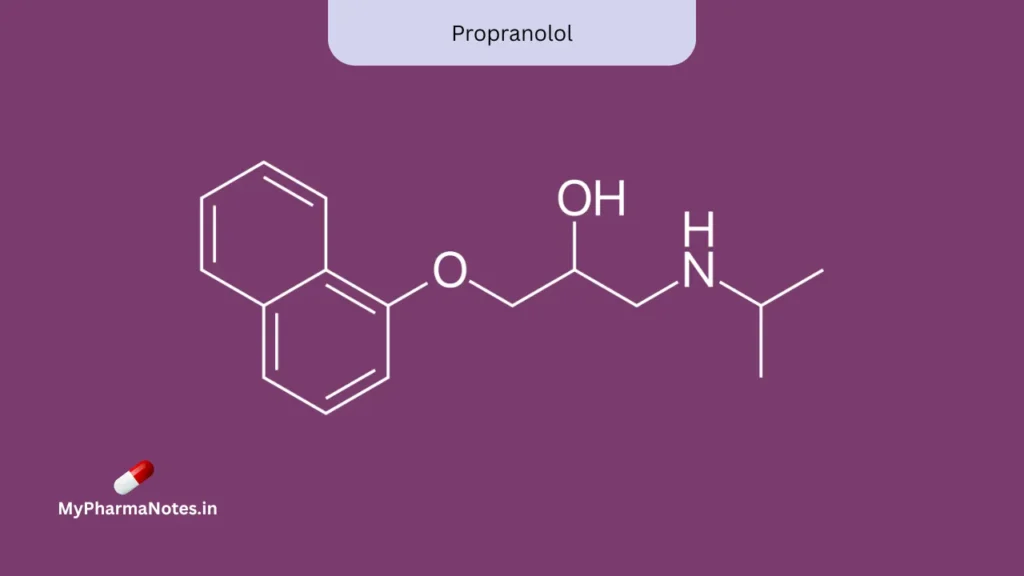
IUPAC/Chemical Name: 1-(Isopropylamino)-3-(1-naphthoxy)-2-propanol
Uses:
- High blood pressure (hypertension)
- Angina (chest pain)
- Arrhythmias (irregular heartbeats)
- Hyperthyroidism (overactive thyroid)
- Proliferating infantile hemangioma (a type of birthmark)
Stability and Storage: Stable at room temperature. Store in a cool, dry place away from direct sunlight.
Formulations: Tablets, Capsules, Extended-release tablets, Oral solution, Injection
Brand Names: Inderal, Inderal LA, Avlocardyl
2. Captopril
Classification: ACE Inhibitor (Angiotensin-Converting Enzyme Inhibitor)
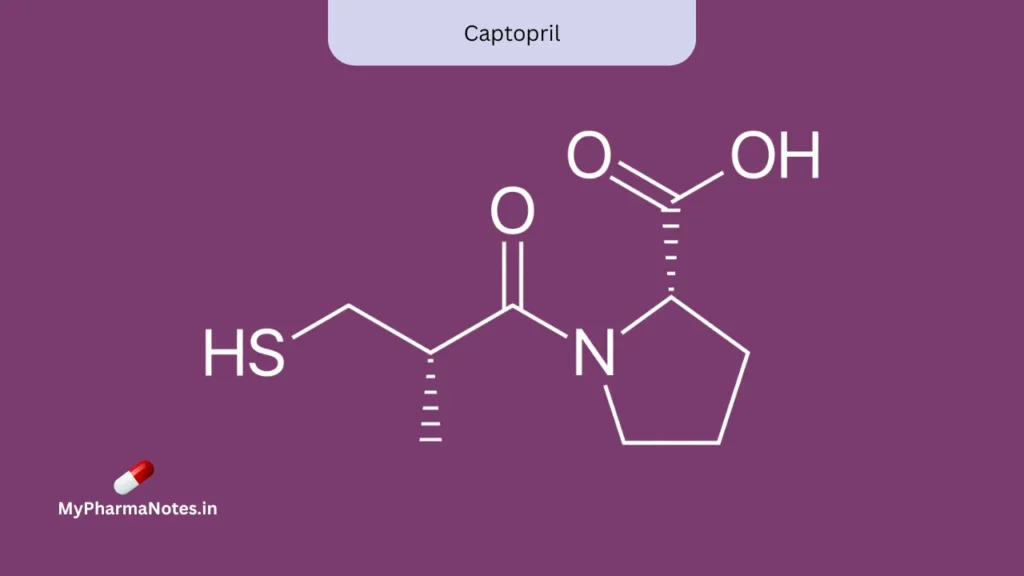
IUPAC/Chemical Name: (2S)-1-[(2S)-2-methyl-3-sulfanylpropanoyl]pyrrolidine-2-carboxylic acid
Chemical Description: Captopril is an L-proline derivative in which L-proline is substituted on nitrogen with a (2S)-2-methyl-3-sulfanylpropanoyl group.
Mechanism of Action: ACE inhibitors block the production of angiotensin II, a powerful vasoconstrictor that causes blood vessels to narrow. By blocking angiotensin II, captopril relaxes blood vessels and lowers blood pressure.
Uses:
- Treatment of high blood pressure (hypertension)
- Heart failure management
Stability and Storage: Store at room temperature in a cool, dry place. Protect from direct sunlight.
Formulations: Tablets, Capsules, Oral solution, Intravenous solution
Brand Names: Capoten, Capozide, Aceon, Accupril
3. Ramipril
Classification: ACE Inhibitor
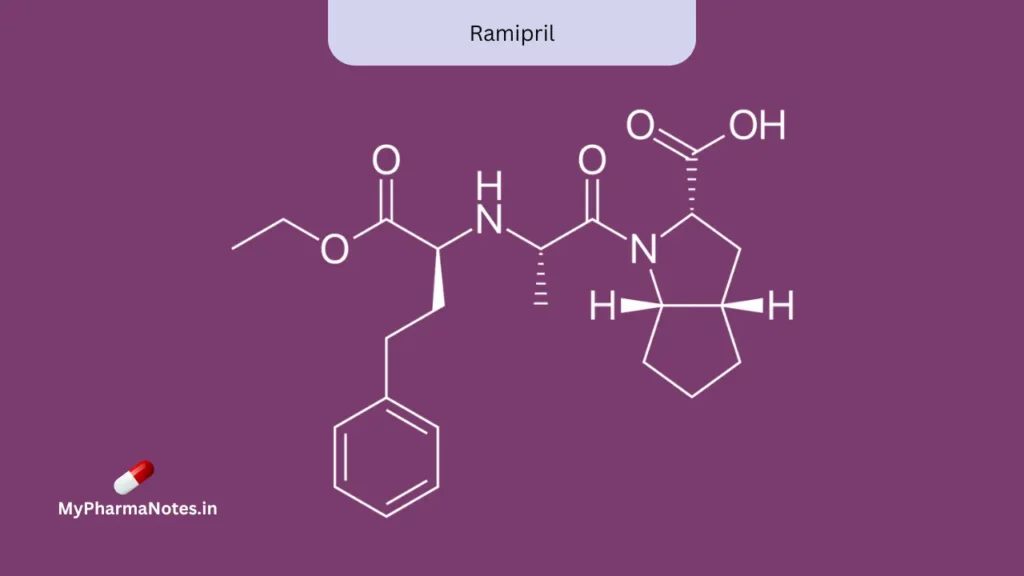
IUPAC/Chemical Name: (2S,3aS,6aS)-1[(S)-N-[(S)-1-Carboxy-3-phenylpropyl]alanyl]octahydrocyclopenta[b]pyrrole-2-carboxylic acid, 1-ethyl ester
Uses:
- Treatment of high blood pressure (hypertension) and heart failure
- Prescribed after a heart attack
- Prevention of future strokes, heart attacks, and kidney problems
- Improves survival in patients with heart failure or post-heart attack
Stability and Storage: Store at room temperature in a cool, dry place. Protect from direct sunlight.
Formulations: Tablets, Capsules, Injectables
Brand Names: Altace, Prinivil, Zestril
4. Methyldopate Hydrochloride
Classification: Centrally Acting Anti-Hypertensive
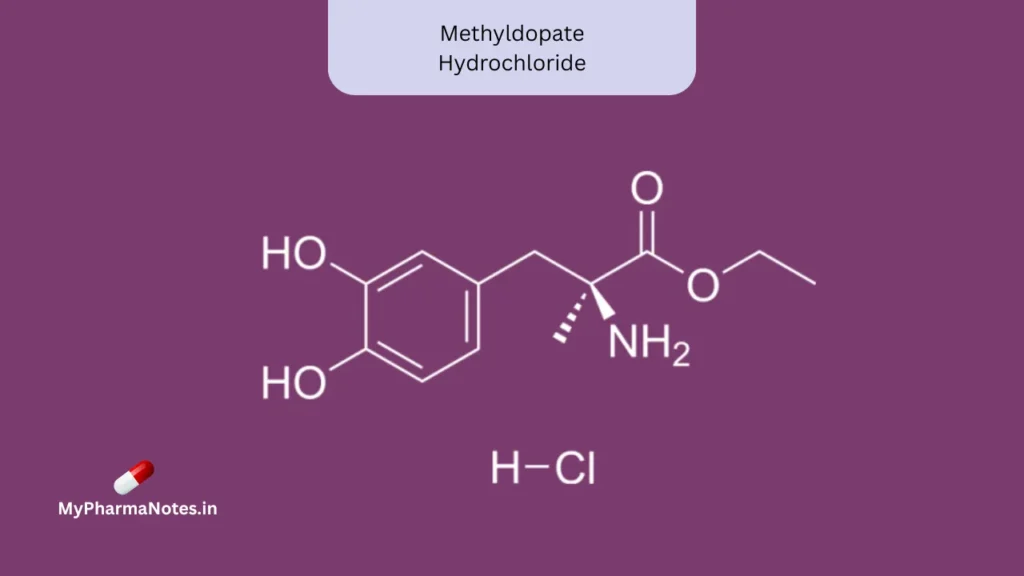
IUPAC/Chemical Name: Levo-3-(3,4-dihydroxyphenyl)-2-methylalanine, ethyl ester hydrochloride
Uses:
- Treatment of high blood pressure (hypertension)
- Some cases of Parkinson’s disease
Stability and Storage: Stable at room temperature. Store in a cool, dry place.
Formulations: Tablets, Capsules
Brand Names: Aldomet, Dopar, Parcopa
5. Clonidine Hydrochloride
Classification: Centrally Acting Alpha-2 Agonist / Anti-Hypertensive
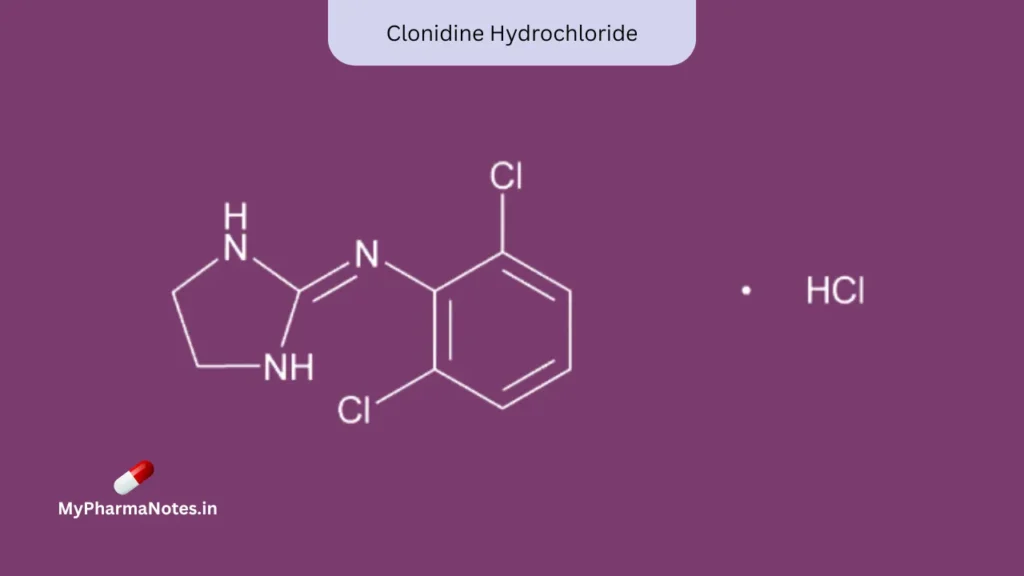
IUPAC/Chemical Name: N-(2,6-dichlorophenyl)-4,5-dihydro-1H-imidazol-2-amine hydrochloride
Uses:
- High blood pressure (hypertension)
- Attention Deficit Hyperactivity Disorder (ADHD)
- Drug withdrawal (alcohol, opioids, smoking)
- Menopausal flushing
- Diarrhea, spasticity, and certain pain conditions
Onset of action is typically within one hour, with blood pressure effects lasting up to eight hours.
Stability and Storage: Store at room temperature in a cool, dry place. Protect from direct sunlight.
Formulations: Tablets, Capsules, Liquid, Patches, Injectable solution
Brand Names: Catapres, Kapvay, Duraclon
6. Hydralazine Hydrochloride
Classification: Direct-Acting Vasodilator / Anti-Hypertensive
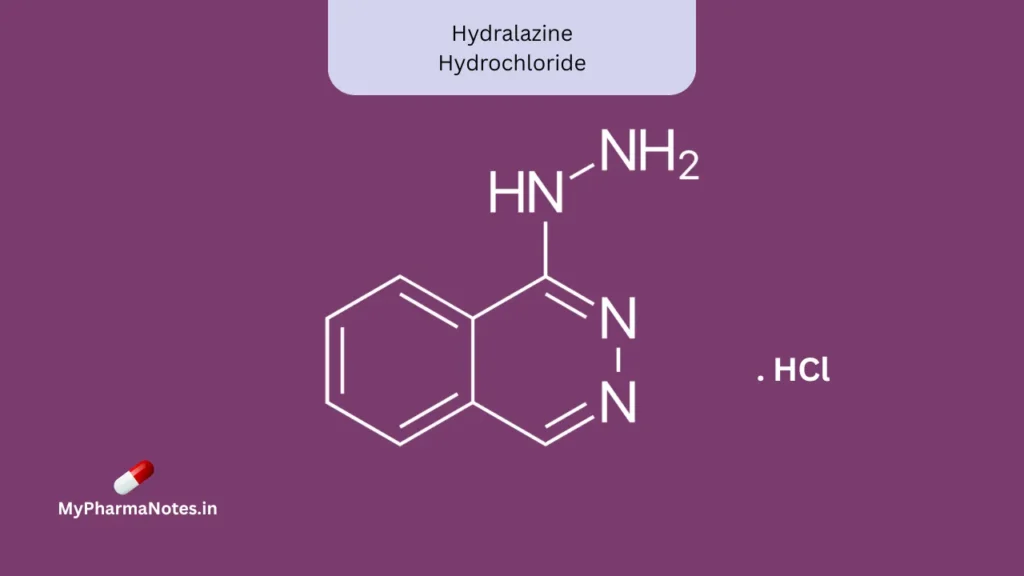
IUPAC/Chemical Name: Phthalazin-1-ylhydrazine hydrochloride
Uses:
- Treatment of high blood pressure (hypertension)
- Control of high blood pressure during pregnancy (pre-eclampsia or eclampsia)
- Hypertensive crisis (emergency situations with extremely high blood pressure)
Stability and Storage: Store at room temperature in a cool, dry place. Protect from direct sunlight.
Formulations: Tablets, Capsules, Injectable
Brand Names: Apresoline, Hydrex, Unipril
7. Nifedipine
Classification: Calcium Channel Blocker / Anti-Hypertensive
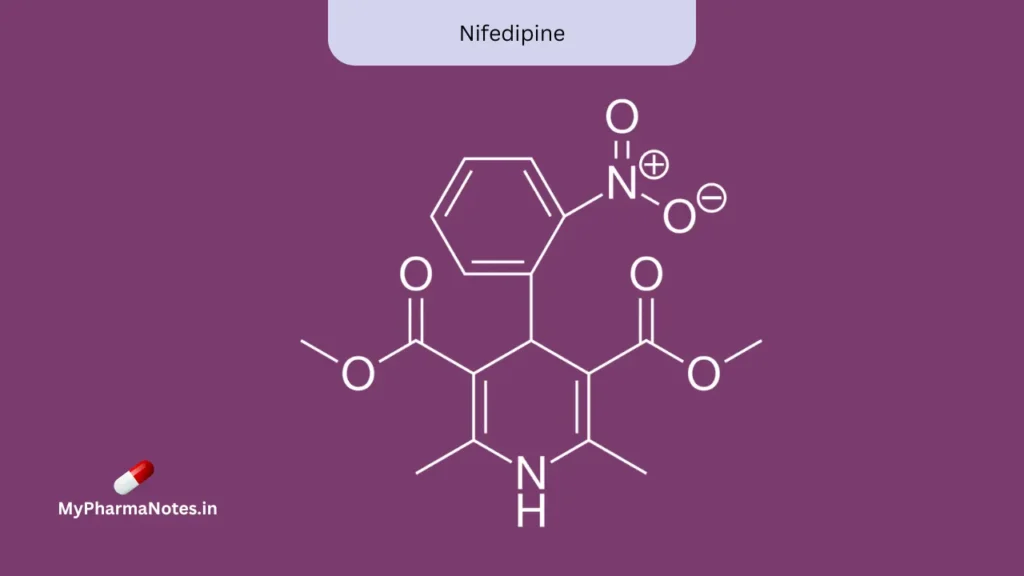
IUPAC/Chemical Name: 3,5-dimethyl 2,6-dimethyl-4-(2-nitrophenyl)-1,4-dihydropyridine-3,5-dicarboxylate
Uses:
- High blood pressure (hypertension)
- Angina (chest pain)
- Preterm labor
- Raynaud’s phenomenon (a condition causing blood vessels in fingers and toes to narrow, resulting in cold and numbness)
Stability and Storage: Store at room temperature in a cool, dry place. Protect from direct sunlight.
Formulations: Tablets, Capsules, Transdermal patch
Brand Names: Adalat
Antianginal Agents
Antianginal agents treat angina pectoris — chest pain caused by reduced oxygen supply to the heart.
Classification of Antianginal Agents
Nitrates: Relax blood vessels to increase blood flow to the heart. Examples: Nitroglycerin, Isosorbide Dinitrate, Isosorbide Mononitrate.
Beta Blockers: Slow the heart rate and reduce the force of contractions, decreasing the heart’s oxygen demand. Examples: Atenolol, Metoprolol, Propranolol.
Calcium Channel Blockers: Relax muscles in blood vessel walls to increase blood flow to the heart. Examples: Diltiazem, Nifedipine, Verapamil.
8. Isosorbide Dinitrate
Classification: Nitrate / Antianginal Agent
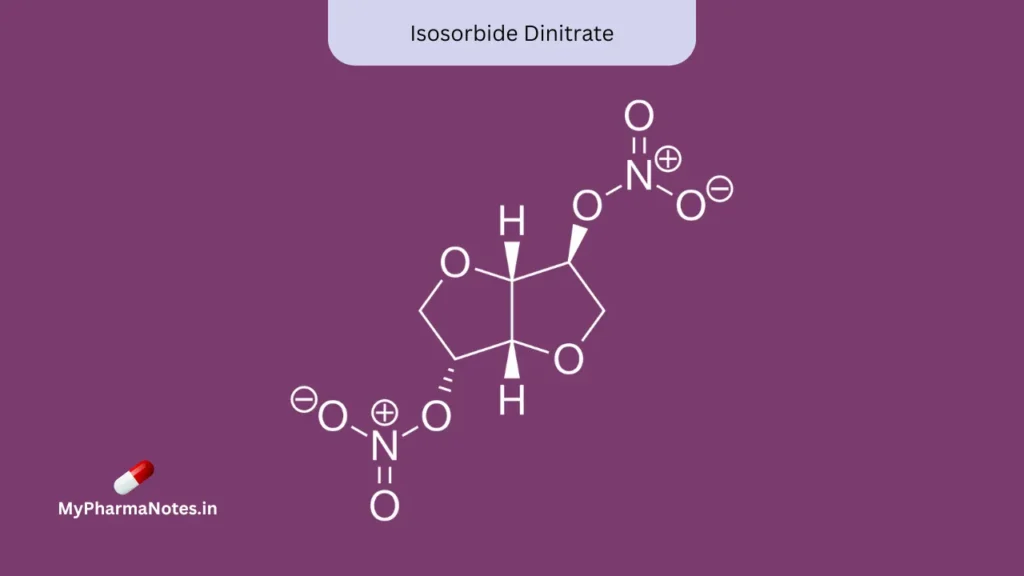
IUPAC/Chemical Name: 1,4-Dioxane-3,5-diyl dinitrate
Mechanism of Action: Works by relaxing blood vessels, which increases blood flow to the heart.
Uses:
- Treatment of angina pectoris (chest pain)
Stability and Storage: Store in a closed container at room temperature, away from heat, moisture, and direct light. Keep from freezing.
Formulations: Tablets, Capsules, Sublingual
Brand Names: Dilatrate-SR, Isordil, Isordil Titradose, ISDN
D.Pharma 1st Year — All Subjects Notes
D.Pharma 2nd Year — All Subjects Notes
