Table of Contents
Antidepressants treat depression and related mood disorders by increasing the availability of monoamine neurotransmitters — serotonin, norepinephrine, and dopamine — in the synaptic cleft.
Classification:
| Class | Mechanism | Examples |
|---|---|---|
| TCAs | Block NA + 5-HT reuptake | Amitriptyline, Imipramine |
| SSRIs | Selectively block 5-HT reuptake | Fluoxetine, Sertraline, Citalopram, Escitalopram, Fluvoxamine, Paroxetine |
| SNRIs | Block both 5-HT and NA reuptake | Venlafaxine, Duloxetine |
| MAOIs | Inhibit MAO enzyme | Phenelzine, Tranylcypromine |
| RIMAs | Reversible MAO-A inhibitors | Moclobemide |
| Atypical | Various mechanisms | Mirtazapine, Bupropion, Trazodone |
Amitriptyline Hydrochloride ⭐
IUPAC Name: 3-(10,11-dihydro-5H-dibenzo[a,d]cycloheptene-5-ylidene)-N,N-dimethylpropan-1-amine
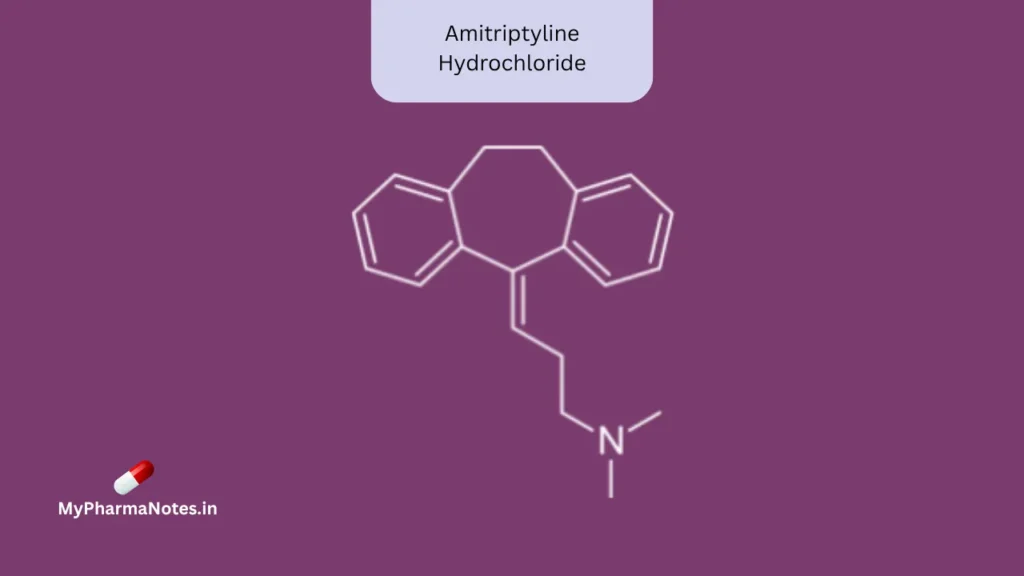
About: Tricyclic antidepressant (TCA). One of the oldest antidepressants, now more commonly used for pain conditions and migraine prevention than for depression due to its side effect burden.
Mechanism: Blocks reuptake of both norepinephrine and serotonin → increases synaptic levels of both neurotransmitters → antidepressant effect. Also blocks muscarinic, histamine H1, and alpha-1 receptors → responsible for side effects.
Uses: Depression; neuropathic pain (postherpetic neuralgia, diabetic neuropathy); migraine prevention; tension headache; fibromyalgia; irritable bowel syndrome.
Side Effects: Anticholinergic effects — dry mouth, constipation, urinary retention, blurred vision, confusion (especially in elderly); sedation (due to H1 blockade); orthostatic hypotension (alpha-1 blockade); cardiac arrhythmias and QT prolongation; weight gain; fatal in overdose (cardiotoxicity — major risk with TCA overdose).
Contraindications: Recent myocardial infarction, arrhythmias, concurrent MAOI use (risk of serotonin syndrome), acute closed-angle glaucoma, urinary retention.
Drug Interactions: MAOIs — serotonin syndrome (dangerous, potentially fatal); SSRIs increase amitriptyline levels and increase serotonin syndrome risk; additive QT prolongation with antiarrhythmics; anticholinergic effects additive with antihistamines and atropine.
Clinical Pearl: TCA overdose is life-threatening. The classic triad is: (1) anticholinergic effects, (2) cardiac arrhythmias (wide QRS, QT prolongation), and (3) CNS toxicity (seizures, coma). Treatment with sodium bicarbonate reverses cardiac toxicity.
Stability & Storage: Cool, dry place at room temperature. No direct sunlight.
Formulations: Tablet, Capsule, Oral suspension
Brand Names: Elavil
Imipramine Hydrochloride ⭐
IUPAC Name: 3-(10,11-dihydro-5H-dibenzo[b,f]azepin-5-yl)-N,N-dimethylpropan-1-amine
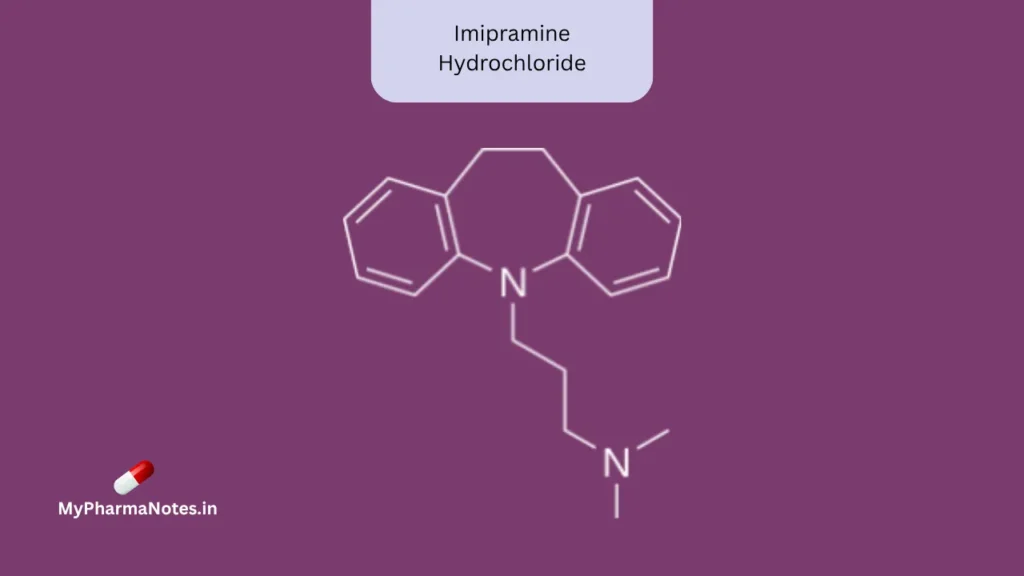
About: The first tricyclic antidepressant ever developed (1958). Its discovery marked the beginning of modern psychopharmacology. Imipramine is the parent compound of the TCA class.
Mechanism: Blocks reuptake of norepinephrine (primarily) and serotonin → increases synaptic monoamine levels. Also blocks muscarinic, H1, and alpha-1 receptors.
Uses: Depression; anxiety disorders; enuresis (bedwetting in children — unique indication); panic disorder.
Side Effects: Same TCA class effects as amitriptyline — anticholinergic, sedation, orthostatic hypotension, cardiac toxicity in overdose.
Contraindications: Same as amitriptyline — recent MI, concurrent MAOIs, arrhythmias, glaucoma.
Drug Interactions: MAOIs (serotonin syndrome); additive cardiotoxicity with antiarrhythmics; CYP2D6 inhibitors increase levels.
Stability & Storage: Cool, dry place at room temperature. No direct sunlight.
Formulations: Tablet, Capsule, Oral suspension
Brand Names: Tofranil
Fluoxetine ⭐
IUPAC Name: N-methyl-3-phenyl-3-[4-(trifluoromethyl)phenoxy]propan-1-amine
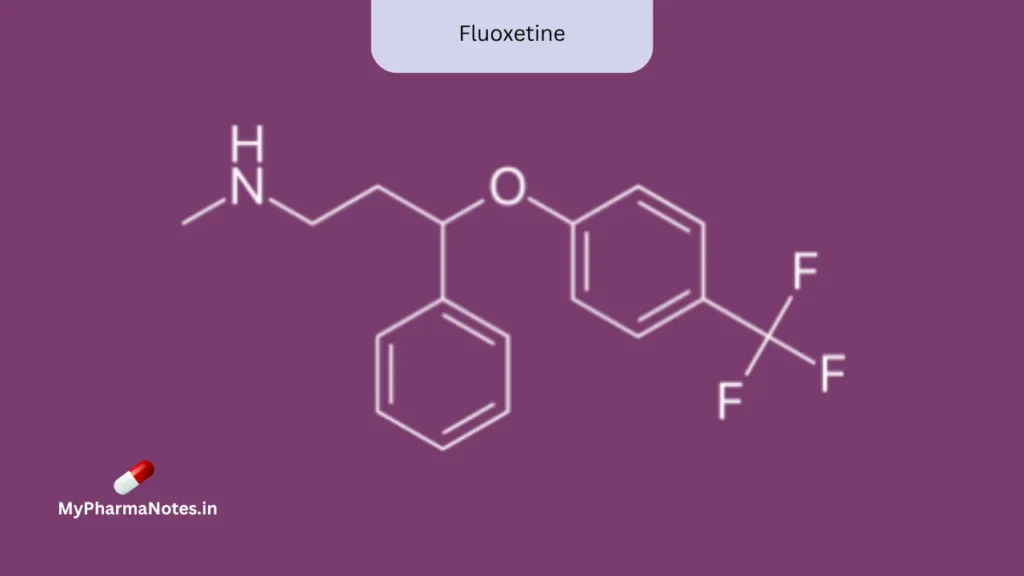
About: The first SSRI to be widely used. Revolutionized depression treatment when introduced in 1988 due to far better tolerability and safety in overdose compared to TCAs. The longest half-life of all SSRIs (1–4 days, active metabolite norfluoxetine 4–16 days) — making it the most forgiving SSRI for missed doses and easiest to discontinue without withdrawal.
Mechanism: Selectively inhibits serotonin reuptake transporter (SERT) → increases synaptic serotonin levels. Minimal effects on norepinephrine, dopamine, muscarinic, or histamine receptors.
Uses: Major depressive disorder; OCD; bulimia nervosa; premenstrual dysphoric disorder (PMDD); panic disorder; borderline personality disorder; attention-deficit disorder; treatment-resistant depression (combined with olanzapine).
Side Effects: Nausea (most common, usually transient); insomnia; sexual dysfunction (decreased libido, delayed orgasm — class effect of SSRIs); headache; agitation; weight changes (initial loss, possible long-term gain); serotonin syndrome risk (with MAOIs or other serotonergic drugs); QT prolongation at high doses; increased suicidal ideation in adolescents (black box warning).
Contraindications: Concurrent use with MAOIs (minimum 14-day washout required); concurrent thioridazine or pimozide use; known hypersensitivity.
Drug Interactions: Potent CYP2D6 inhibitor — increases levels of TCAs, antipsychotics, codeine (reduces codeine to morphine conversion); MAOIs — serotonin syndrome (can be fatal); increases bleeding risk with NSAIDs and warfarin (serotonin reduces platelet aggregation).
Clinical Pearl: Due to its extremely long half-life, fluoxetine is the only SSRI that does not require gradual tapering on discontinuation — it essentially tapers itself. It is the preferred SSRI in patients with poor compliance.
Stability & Storage: Cool, dry place at room temperature. No direct sunlight.
Formulations: Tablet, Capsule, Oral suspension
Brand Names: Prozac
Venlafaxine
IUPAC Name: 1-[2-(dimethylamino)-1-(4-methoxyphenyl)ethyl]cyclohexanol
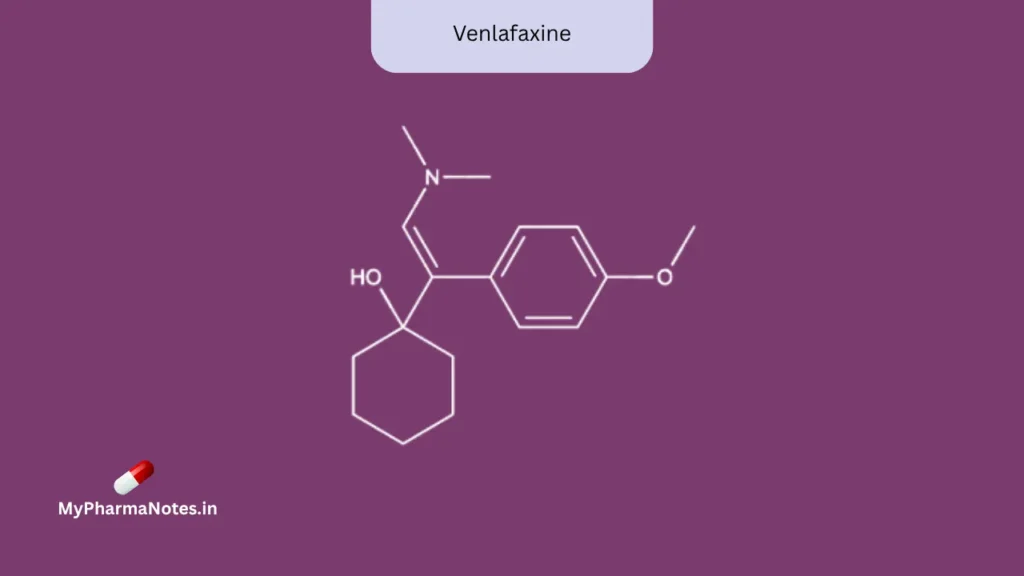
About: First SNRI (serotonin-norepinephrine reuptake inhibitor). At low doses primarily acts as an SSRI; norepinephrine reuptake inhibition only becomes significant at higher doses (≥150 mg/day). This dose-dependent dual mechanism is a key pharmacological feature.
Mechanism: Inhibits both serotonin (SERT) and norepinephrine (NET) reuptake transporters. Dose-dependent: serotonergic at low doses, dual action at higher doses.
Uses: Major depressive disorder; generalized anxiety disorder; social anxiety disorder; panic disorder; neuropathic pain; hot flashes (off-label); ADHD (off-label).
Side Effects: Nausea (very common, especially on initiation); dose-dependent hypertension (norepinephrine effect); increased heart rate; sexual dysfunction; insomnia; discontinuation syndrome (very pronounced — must be tapered slowly); diaphoresis; dizziness.
Contraindications: Concurrent MAOIs; uncontrolled hypertension; known hypersensitivity.
Drug Interactions: MAOIs — serotonin syndrome; CYP2D6 inhibitors increase levels; increases bleeding risk with NSAIDs and anticoagulants.
Clinical Pearl: Venlafaxine has one of the worst discontinuation syndromes of all antidepressants — patients experience electric shock sensations (“brain zaps”), dizziness, flu-like symptoms, and irritability. It must always be tapered slowly, especially the immediate-release formulation.
Stability & Storage: Cool, dry place at room temperature. No direct sunlight.
Formulations: Tablet, Capsule (extended-release)
Brand Names: Efexor, Vensir, Vencarm, Venlalix, Venlablue
Duloxetine
IUPAC Name: (3S)-N-methyl-3-naphthalen-1-yloxy-3-thiophen-2-ylpropan-1-amine hydrochloride
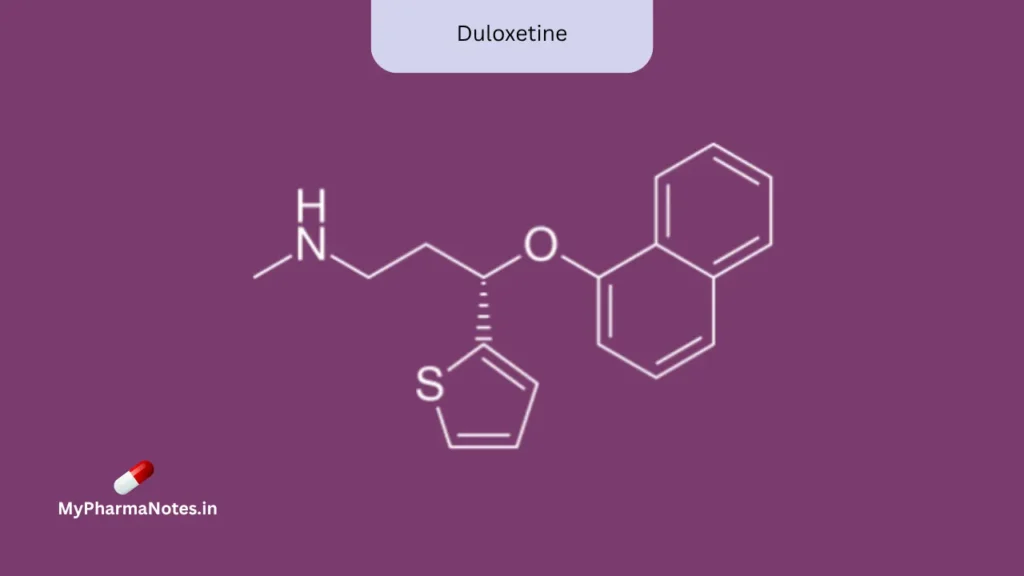
About: SNRI with balanced serotonin and norepinephrine reuptake inhibition even at low doses (unlike venlafaxine which is predominantly serotonergic at low doses). Approved for both psychiatric and pain indications.
Mechanism: Balanced inhibition of both SERT and NET across the full dose range → antidepressant, anxiolytic, and analgesic effects.
Uses: Major depressive disorder; generalized anxiety disorder; diabetic peripheral neuropathy; fibromyalgia; chronic musculoskeletal pain (low back pain, osteoarthritis); stress urinary incontinence.
Side Effects: Nausea (most common); dry mouth; constipation; insomnia; dizziness; sweating; sexual dysfunction; blood pressure elevation (less than venlafaxine); hepatotoxicity (avoid in liver disease); discontinuation syndrome.
Contraindications: Hepatic impairment, chronic alcohol use, concurrent MAOIs, uncontrolled narrow-angle glaucoma.
Drug Interactions: MAOIs — serotonin syndrome; CYP1A2 inhibitors (fluvoxamine, ciprofloxacin) significantly increase duloxetine levels; potent CYP2D6 inhibitor — increases TCA levels.
Clinical Pearl: Duloxetine is one of the few antidepressants with approved indications for chronic pain conditions — making it the preferred antidepressant when a patient has both depression and chronic pain (fibromyalgia, neuropathy, musculoskeletal pain).
Stability & Storage: Cool, dry place at room temperature. No direct sunlight.
Formulations: Tablet, Capsule
Brand Names: Cymbalta, Yentreve
Sertraline
IUPAC Name: (1S,4S)-4-(3,4-Dichlorophenyl)-N-methyl-1,2,3,4-tetrahydronaphthalen-1-amine
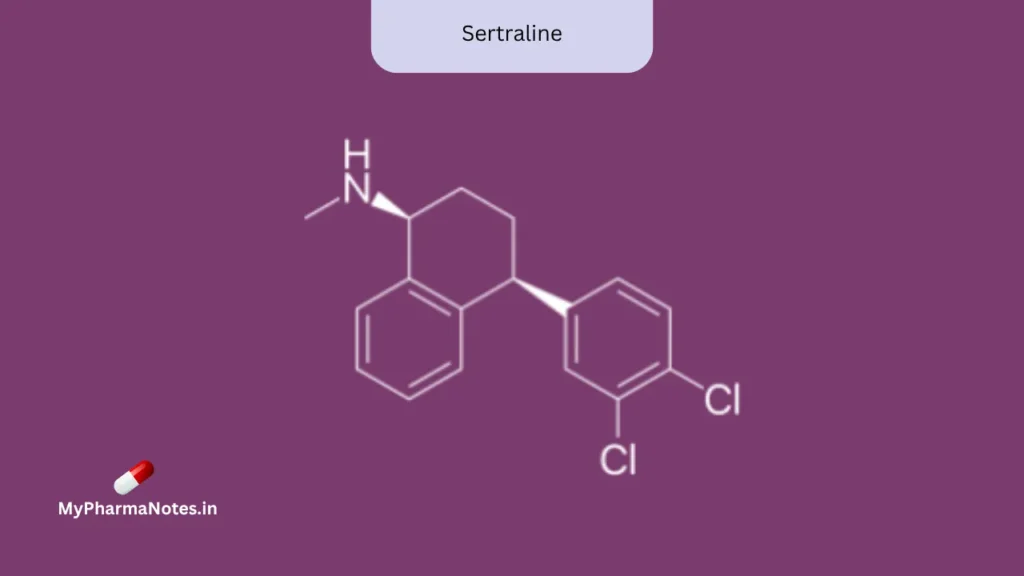
About: One of the most widely prescribed antidepressants worldwide. Considered among the best-tolerated SSRIs. Often cited as a first-choice antidepressant in large comparative trials (STAR*D, CANMAT guidelines).
Mechanism: Selective serotonin reuptake inhibitor (SERT inhibitor) → increases synaptic serotonin.
Uses: Major depressive disorder; OCD; panic disorder; PTSD; social anxiety disorder; premenstrual dysphoric disorder (PMDD).
Side Effects: Nausea (most common); diarrhea (more common than other SSRIs); sexual dysfunction; insomnia; headache; mild QT prolongation; increased bleeding tendency.
Contraindications: Concurrent MAOIs; concurrent pimozide use; known hypersensitivity.
Drug Interactions: MAOIs — serotonin syndrome; mild CYP2D6 inhibitor; increases bleeding risk with NSAIDs and warfarin; additive serotonergic effects with triptans and tramadol.
Clinical Pearl: Sertraline is considered the safest SSRI in cardiac patients (post-MI depression) and is well-studied in pregnancy — making it a preferred first-line choice in these populations.
Stability & Storage: Cool, dry place at room temperature. No direct sunlight.
Formulations: Tablet, Capsule
Brand Names: Zoloft
Citalopram
IUPAC Name: (RS)-1-[3-(Dimethylamino)propyl]-1-(4-fluorophenyl)-1,3-dihydroisobenzofuran-5-carbonitrile
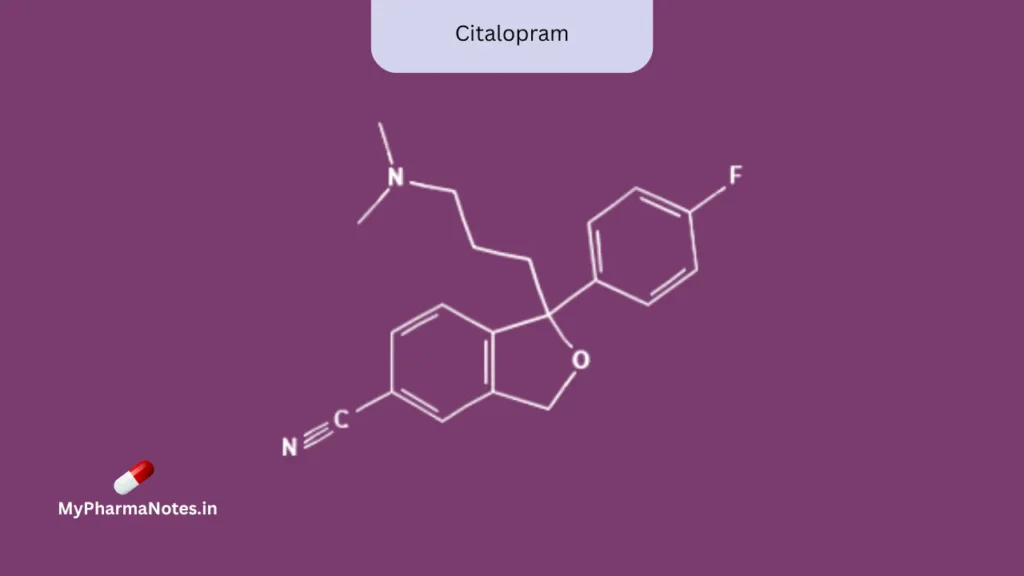
About: SSRI; the racemic mixture of R and S enantiomers. The S-enantiomer alone is escitalopram — more potent and better tolerated.
Mechanism: Selective serotonin reuptake inhibitor with minimal effects on other receptors — one of the “cleanest” SSRIs pharmacologically.
Uses: Major depressive disorder; OCD; panic disorder; social anxiety.
Side Effects: Nausea; insomnia; sexual dysfunction; dose-dependent QT prolongation (most pronounced QT effect among SSRIs — maximum recommended dose 40 mg/day in adults, 20 mg/day in elderly).
Contraindications: Concurrent MAOIs; concurrent drugs that prolong QT interval; doses above recommended maximum; known hypersensitivity.
Drug Interactions: MAOIs — serotonin syndrome; significant QT prolongation risk with antiarrhythmics, antipsychotics; CYP2C19 inhibitors (omeprazole) increase citalopram levels.
Clinical Pearl: Citalopram has a dose-dependent QT prolongation effect which has led regulatory agencies to cap the maximum dose. Escitalopram (the active S-enantiomer) achieves the same efficacy at half the dose with less QT effect.
Stability & Storage: Room temperature, away from high temperatures.
Formulations: Tablet, Oral solution
Brand Names: Celexa
Escitalopram
IUPAC Name: 1-[3-(dimethylamino)propyl]-1-(4-fluorophenyl)-1,3-dihydro-2-benzofuran-5-carbonitrile
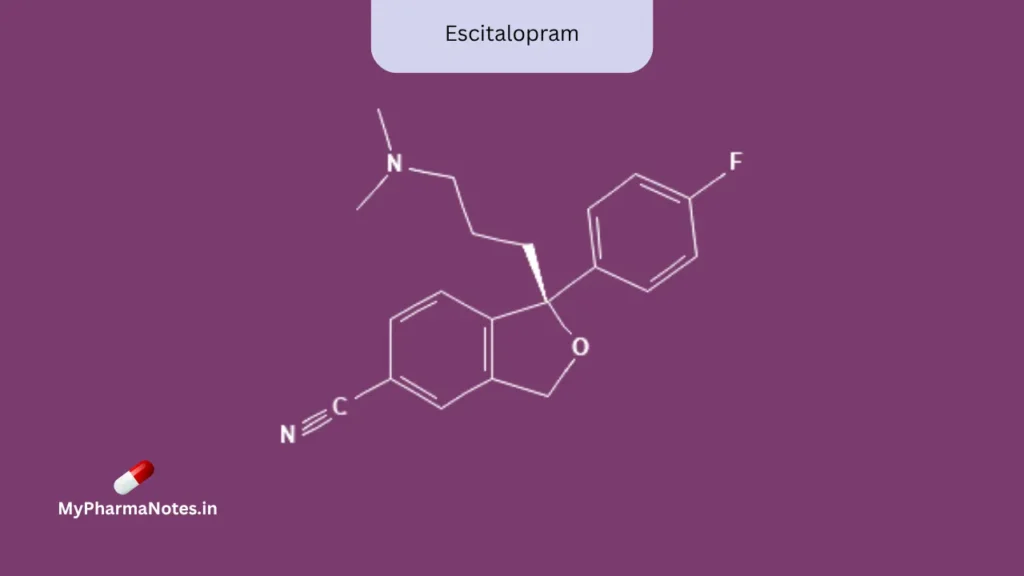
About: The S-enantiomer of citalopram. Considered the most selective SSRI available — binds only to the primary SERT binding site and allosteric site. Consistently ranks among the most effective and best-tolerated antidepressants in network meta-analyses.
Mechanism: Highly selective SERT inhibitor. Binds both primary and allosteric sites on the serotonin transporter — unique among SSRIs, explaining its superior efficacy at lower doses.
Uses: Major depressive disorder (adults and adolescents ≥12 years); generalized anxiety disorder (GAD).
Side Effects: Nausea; insomnia; sexual dysfunction; headache; less QT prolongation than racemic citalopram; generally the best tolerated SSRI.
Contraindications: Concurrent MAOIs; citalopram (additive QT risk); known hypersensitivity.
Drug Interactions: MAOIs — serotonin syndrome; CYP2C19 inhibitors increase escitalopram levels; additive QT prolongation (less than citalopram).
Clinical Pearl: A 2018 Lancet network meta-analysis comparing 21 antidepressants found escitalopram to have the best combination of efficacy and acceptability — making it one of the preferred first-line antidepressants in current clinical practice.
Stability & Storage: Cool, dry place at room temperature. No direct sunlight.
Formulations: Tablet, Capsule, Oral solution
Brand Names: Lexapro
Fluvoxamine
IUPAC Name: 2-{[(E)-{5-Methoxy-1-[4-(trifluoromethyl)phenyl]pentylidene}amino]oxy}ethanamine
About: SSRI with the most potent sigma-1 receptor agonist activity among SSRIs — a property being investigated for anti-inflammatory and neuroprotective effects. Has the most CYP enzyme inhibition of all SSRIs.
Mechanism: Selective serotonin reuptake inhibitor; also potent sigma-1 receptor agonist.
Uses: OCD (first-line); major depressive disorder; social anxiety disorder. Also being studied for COVID-19 outcomes (sigma-1 receptor pathway).
Side Effects: Nausea (highest rate among SSRIs); sedation; sexual dysfunction; significant drug interactions due to CYP inhibition.
Contraindications: Concurrent MAOIs; concurrent tizanidine, thioridazine, or alosetron use (serious drug interactions); concurrent ramelteon use.
Drug Interactions: Most significant CYP inhibitor among SSRIs — inhibits CYP1A2, 2C9, 2C19, 3A4. Dramatically increases levels of clozapine, theophylline, warfarin, olanzapine, and many others. Requires extreme caution with polypharmacy.
Clinical Pearl: Fluvoxamine is the preferred SSRI for OCD due to its established efficacy in this indication. However, its extensive CYP inhibition profile makes it the most interaction-prone SSRI — always review concomitant medications.
Stability & Storage: Cool, dry place at room temperature. No direct sunlight.
Formulations: Tablet, Capsule
Brand Names: Luvox
Paroxetine
IUPAC Name: (3S,4R)-3-[(2H-1,3-benzodioxol-5-yloxy)methyl]-4-(4-fluorophenyl)piperidine
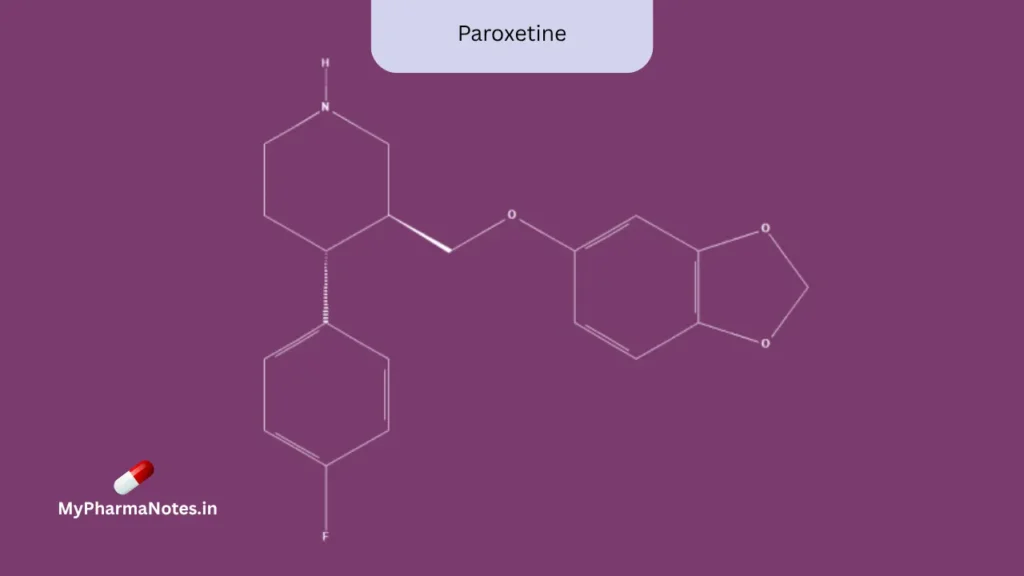
About: SSRI with additional muscarinic receptor blocking activity (most anticholinergic SSRI) and the most pronounced discontinuation syndrome. Shortest half-life among common SSRIs.
Mechanism: Selective serotonin reuptake inhibitor; also blocks muscarinic receptors and norepinephrine reuptake to a small extent.
Uses: Major depressive disorder; OCD; panic disorder; social anxiety disorder; PTSD; generalized anxiety disorder; premenstrual dysphoric disorder; hot flashes (menopause).
Side Effects: Nausea; significant sexual dysfunction (worst among SSRIs); weight gain; anticholinergic effects (dry mouth, constipation — due to muscarinic blockade); most severe discontinuation syndrome among SSRIs; sedation; teratogenicity concerns (cardiac defects in newborns — use with caution in pregnancy).
Contraindications: Concurrent MAOIs; concurrent thioridazine or pimozide; pregnancy (relative — cardiac defect risk); known hypersensitivity.
Drug Interactions: Potent CYP2D6 inhibitor — increases levels of TCAs, antipsychotics, codeine, tamoxifen (reduces tamoxifen efficacy in breast cancer — important clinical consideration); MAOIs — serotonin syndrome.
Clinical Pearl: Paroxetine significantly reduces the efficacy of tamoxifen (used in breast cancer treatment) by inhibiting its conversion to the active metabolite endoxifen via CYP2D6. This combination should be avoided in breast cancer patients on tamoxifen.
Stability & Storage: Cool, dry place at room temperature. No direct sunlight.
Formulations: Tablet, Capsule, Extended-release tablet
Brand Names: Paxil, Aropax, Pexeva, Seroxat, Brisdelle
Frequently Asked Questions
What is the difference between sedatives and hypnotics?
Sedatives reduce anxiety and produce calm at low doses. Hypnotics induce sleep at higher doses. Many benzodiazepines act as both depending on the dose given.
Which benzodiazepine is preferred for alcohol withdrawal?
Diazepam or chlordiazepoxide — their long half-lives provide smooth, self-tapering coverage reducing the risk of withdrawal seizures.
What is the safest antidepressant in overdose?
SSRIs are far safer than TCAs in overdose. TCA overdose causes fatal cardiac arrhythmias. Among SSRIs, citalopram has the highest overdose risk due to QT prolongation.
What is the difference between typical and atypical antipsychotics?
Typical antipsychotics (chlorpromazine, haloperidol) primarily block D2 receptors and have high extrapyramidal side effect risk. Atypical antipsychotics (risperidone, olanzapine) block both D2 and 5-HT2A receptors, have lower EPS risk but higher metabolic side effects.
What is tardive dyskinesia?
Irreversible involuntary movements (especially lip smacking, tongue protrusion, facial grimacing) caused by long-term D2 receptor blockade. Most common with typical antipsychotics. Can be treated with valbenazine or deutetrabenazine.
Which anticonvulsant is most teratogenic?
Valproate carries the highest risk of fetal malformations including neural tube defects and valproate syndrome (cognitive impairment). It should be avoided in pregnancy whenever possible.
What is serotonin syndrome?
A potentially life-threatening reaction from excess serotonergic activity — causes agitation, hyperthermia, tachycardia, muscle rigidity, and clonus. Most commonly caused by combining MAOIs with SSRIs, SNRIs, or tramadol. Treatment includes cyproheptadine (serotonin antagonist) and supportive care.
Which antidepressant has the worst discontinuation syndrome?
Venlafaxine and paroxetine — both cause severe discontinuation symptoms (“brain zaps,” dizziness, nausea, irritability) and must be tapered very slowly.
What is neuroleptic malignant syndrome (NMS)?
A rare but life-threatening reaction to antipsychotics — characterized by hyperthermia, muscle rigidity, altered consciousness, and autonomic instability. Managed by stopping the antipsychotic, supportive care, and dantrolene or bromocriptine.
D.Pharma 1st Year — All Subjects Notes
D.Pharma 2nd Year — All Subjects Notes
