Table of Contents
Also called neuroleptics, antipsychotics are used primarily for schizophrenia and other psychotic disorders. They are divided into first-generation (typical) and second-generation (atypical) antipsychotics based on their receptor profiles and side effect patterns.
Classification:
First-generation (Typical) antipsychotics — primarily block D2 dopamine receptors:
- Phenothiazines: Chlorpromazine, Triflupromazine, Thioridazine, Trifluoperazine
- Butyrophenones: Haloperidol, Trifluperidol
- Thioxanthenes: Flupenthixol
Second-generation (Atypical) antipsychotics — block both D2 and 5-HT2A receptors:
- Risperidone, Olanzapine, Quetiapine, Clozapine, Aripiprazole, Lurasidone
Typical vs Atypical Comparison:
| Feature | Typical (1st Gen) | Atypical (2nd Gen) |
|---|---|---|
| Primary receptor | D2 blocker | D2 + 5-HT2A blocker |
| Positive symptoms | Effective | Effective |
| Negative symptoms | Poor | Better |
| EPS risk | High | Low |
| Metabolic side effects | Low | High |
| Examples | Chlorpromazine, Haloperidol | Risperidone, Olanzapine |
Chlorpromazine Hydrochloride ⭐
IUPAC Name: 3-(2-chlorophenothiazin-10-yl)-N,N-dimethylpropan-1-amine hydrochloride
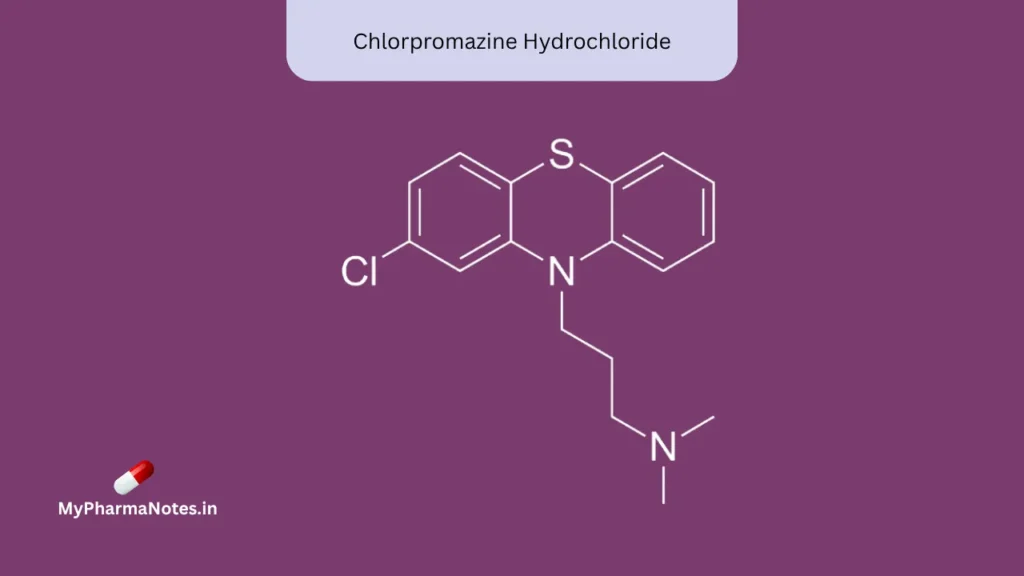
About: The first antipsychotic ever developed (1952). Its discovery revolutionized psychiatry and led to deinstitutionalization of psychiatric patients. It is the prototype phenothiazine.
Mechanism: Blocks D2 dopamine receptors in the mesolimbic pathway → reduces positive psychotic symptoms. Also blocks muscarinic, histamine H1, and alpha-1 adrenergic receptors → contributing to its wide side effect profile.
Uses: Schizophrenia; bipolar disorder (manic phase); acute psychosis; nausea and vomiting (blocks D2 in chemoreceptor trigger zone); pre-surgical anxiety; chronic hiccups; acute intermittent porphyria.
Side Effects: Extrapyramidal symptoms (EPS) — parkinsonism, dystonia, akathisia, tardive dyskinesia (with long-term use); sedation; orthostatic hypotension; anticholinergic effects (dry mouth, urinary retention, constipation); photosensitivity; neuroleptic malignant syndrome (NMS — rare but life-threatening); prolactin elevation causing galactorrhea and amenorrhea.
Contraindications: Comatose states, bone marrow depression, concurrent CNS depressants, pheochromocytoma.
Drug Interactions: Additive CNS depression with sedatives and alcohol; anticholinergic effects additive with atropine; reduces effects of levodopa; additive QT prolongation with other QT-prolonging drugs.
Clinical Pearl: Tardive dyskinesia (involuntary repetitive movements, especially of the face) is a serious long-term complication of typical antipsychotics. It may be irreversible. This is why atypical antipsychotics are now preferred for first-line treatment.
Stability & Storage: Store below 40°C.
Formulations: Tablets, Oral syrup, Injection
Brand Names: Thorazine, Largactil
Haloperidol ⭐
IUPAC Name: [4-(4-chlorophenyl)-1-[4-(4-fluorophenyl)-4-oxobutyl]piperidin-4-yl] decanoate
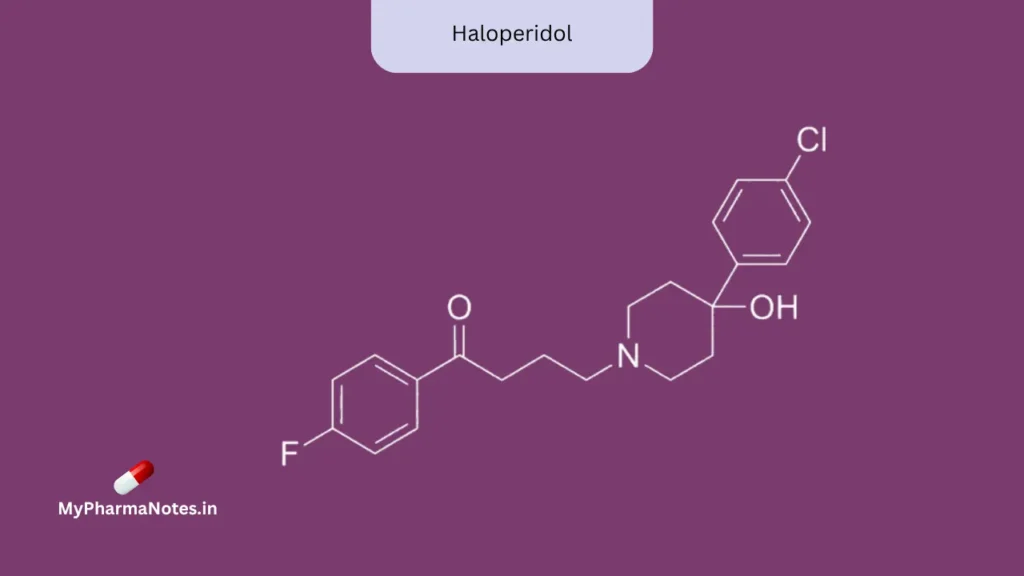
About: Potent typical antipsychotic of the butyrophenone class. One of the most widely used antipsychotics globally due to its efficacy, low cost, and availability as a long-acting injectable.
Mechanism: Potent D2 receptor blocker in mesolimbic and nigrostriatal pathways → strong antipsychotic effect but high EPS risk.
Uses: Schizophrenia; schizoaffective disorder; acute agitation and delirium (IV/IM routes); Tourette syndrome; behavioral problems in children.
Side Effects: High EPS risk (most common typical antipsychotic side effect) — akathisia, acute dystonia, drug-induced parkinsonism; tardive dyskinesia with long-term use; NMS; QT prolongation; less sedation and anticholinergic effects than chlorpromazine; prolactin elevation.
Contraindications: Parkinson’s disease, Lewy body dementia, CNS depression, QT prolongation.
Drug Interactions: Additive QT prolongation with amiodarone, quinidine, SSRIs; lithium combined with haloperidol may cause neurotoxicity; reduces effects of levodopa.
Clinical Pearl: Haloperidol decanoate is a long-acting injectable (LAI) formulation given every 4 weeks. It is invaluable for patients with poor medication adherence, which is one of the biggest challenges in schizophrenia management.
Stability & Storage: Store at 20–25°C. Protect from light. Do not refrigerate.
Formulations: Tablet, Oral solution, Injectable
Brand Names: Haldol, Haloperidol LA, Peridol
Risperidone ⭐
IUPAC Name: 3-[2-[4-(6-fluoro-1,2-benzisoxazol-3-yl)-1-piperidinyl]ethyl]-6,7,8,9-tetrahydro-2-methyl-4H-pyrido[1,2-a]pyrimidin-4-one
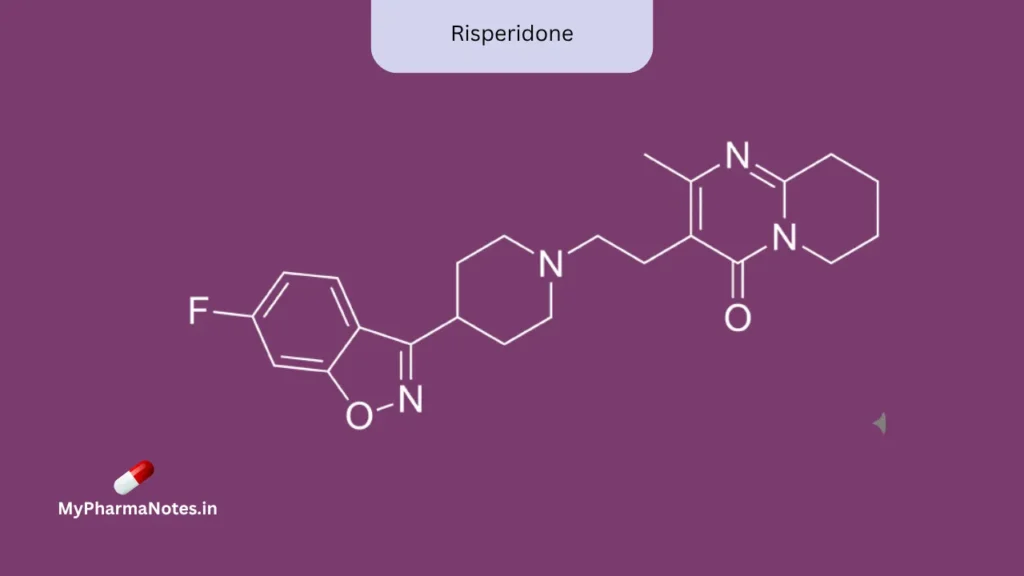
About: Second-generation (atypical) antipsychotic. Among the most prescribed antipsychotics worldwide. First atypical antipsychotic approved for autism-related irritability.
Mechanism: Blocks both D2 and 5-HT2A receptors. The 5-HT2A blockade in the nigrostriatal pathway reduces EPS risk compared to typical antipsychotics. Also improves negative symptoms of schizophrenia better than typical agents.
Uses: Schizophrenia; bipolar disorder; irritability associated with autism spectrum disorder.
Side Effects: EPS (lower than typicals but still present, especially at higher doses); weight gain; metabolic syndrome; prolactin elevation (highest among atypicals — causes gynecomastia, amenorrhea); sedation; QT prolongation.
Contraindications: Known hypersensitivity. Caution in cardiovascular disease, diabetes, Parkinson’s disease.
Drug Interactions: CYP2D6 inhibitors (fluoxetine, paroxetine) increase risperidone levels; additive QT prolongation with other QT-prolonging drugs; reduces levodopa effects.
Stability & Storage: Room temperature, away from light and moisture. Liquid form should not be refrigerated.
Formulations: Tablet, Oral solution, Long-acting injectable
Brand Names: Risperdal, APO-Risperidone
Sulpiride ⭐
IUPAC Name: N-[(1-ethylpyrrolidin-2-yl)methyl]-2-methoxy-5-sulfamoylbenzamide
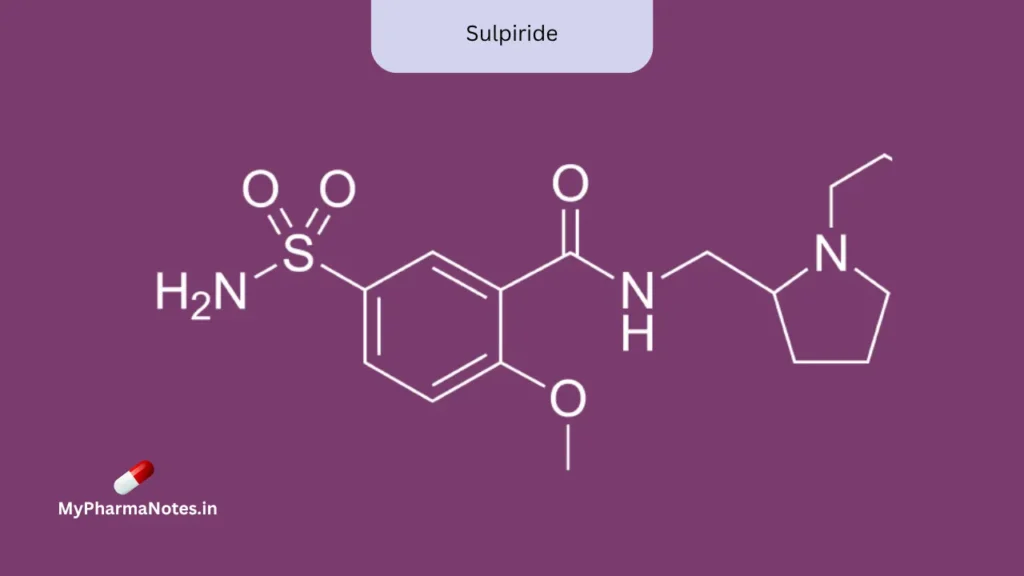
About: Selective D2/D3 dopamine receptor antagonist. Classified as atypical due to its selective limbic D2 blockade with minimal nigrostriatal effects.
Mechanism: Selective D2 and D3 receptor antagonist in limbic areas → antipsychotic effect with relatively low EPS risk.
Uses: Schizophrenia (both positive and negative symptoms); major depression with psychotic features; also used for stomach ulcers due to its gastroprokinetic effect.
Side Effects: Prolactin elevation (very high — sulpiride causes more hyperprolactinemia than most antipsychotics), weight gain, EPS at high doses, amenorrhea, galactorrhea.
Contraindications: Pheochromocytoma, prolactin-dependent tumors, concurrent use with levodopa.
Drug Interactions: Additive effects with other dopamine blockers; antacids reduce absorption; additive QT prolongation.
Stability & Storage: Cool and dry place, away from direct heat and light.
Formulations: Tablets, Capsules, Solutions
Brand Names: Dogmatil, Espiride, Sulpor, Dolmatil
Olanzapine
IUPAC Name: 2-Methyl-4-(4-methyl-1-piperazinyl)-10H-thieno[2,3-b][1,5]benzodiazepine
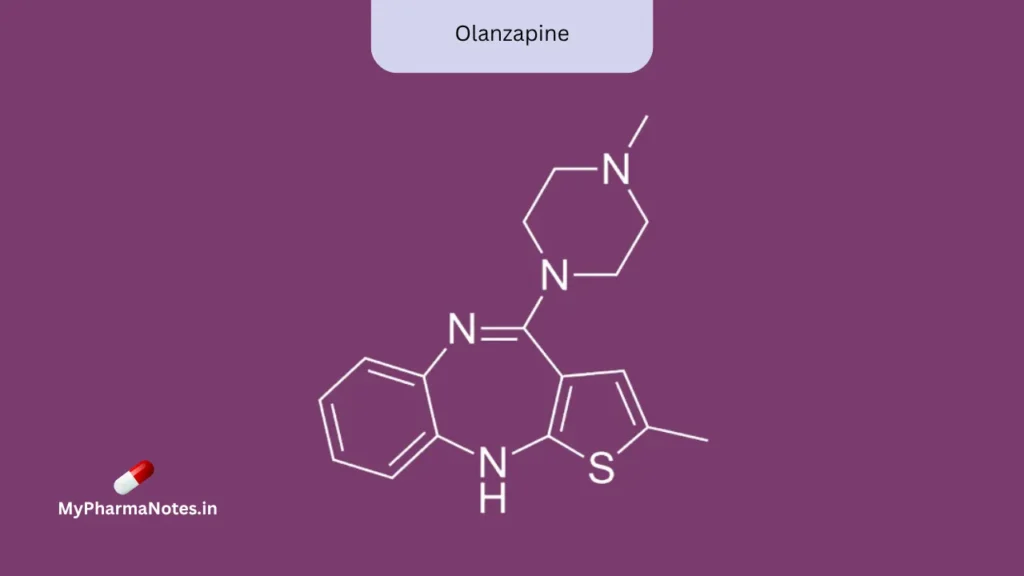
About: Atypical antipsychotic with broad receptor binding profile. Highly effective for both positive and negative symptoms but notorious for causing significant weight gain and metabolic syndrome.
Mechanism: Blocks D1, D2, D4, 5-HT2A, muscarinic, histamine H1, and alpha-1 receptors. Broad binding profile explains both efficacy and wide side effect spectrum.
Uses: Schizophrenia (adults and adolescents ≥13 years); bipolar disorder (manic episodes); treatment-resistant depression (combined with fluoxetine as Symbyax).
Side Effects: Significant weight gain (most pronounced of all antipsychotics), metabolic syndrome (diabetes, dyslipidemia), sedation, orthostatic hypotension, anticholinergic effects, low EPS risk.
Contraindications: Caution in diabetes, obesity, dyslipidemia, cardiovascular disease.
Drug Interactions: Fluvoxamine increases olanzapine levels significantly; smoking induces CYP1A2 reducing olanzapine levels (smoking cessation increases levels); additive CNS depression with alcohol.
Clinical Pearl: Olanzapine + fluoxetine combination (brand name Symbyax) is specifically approved for treatment-resistant bipolar depression — a unique indication not shared by other antipsychotics.
Stability & Storage: Cool, dry place. No direct sunlight.
Formulations: Tablets, Orally disintegrating tablets, Injectable
Brand Names: Zyprexa, Zyprexa Zydis, Lanopin
Quetiapine
IUPAC Name: 2-(2-(4-Dibenzo[b,f][1,4]thiazepine-11-yl-1-piperazinyl)ethoxy)ethanol
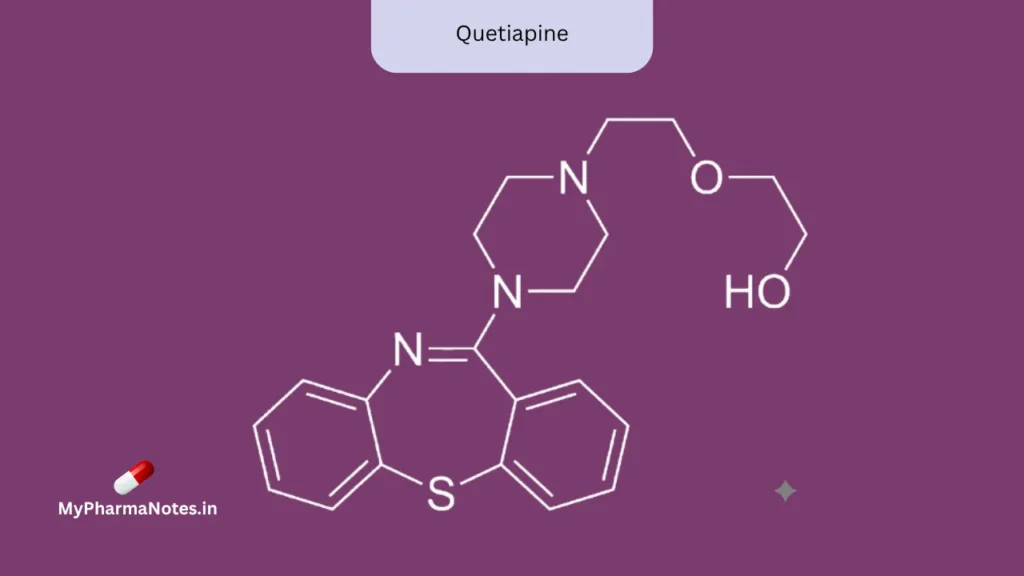
About: Atypical antipsychotic with relatively weak D2 binding and strong H1 antihistamine properties. Frequently used off-label as a sleep aid due to its potent sedative effect at low doses.
Mechanism: Blocks D2, 5-HT2A, H1, and alpha-1 receptors. Transient D2 blockade (due to fast receptor dissociation) explains its low EPS risk.
Uses: Schizophrenia; bipolar disorder (manic and depressive episodes); adjunctive treatment for major depressive disorder. Widely used off-label for insomnia and anxiety at low doses.
Side Effects: Sedation (most common), weight gain, metabolic syndrome, orthostatic hypotension, cataract formation (requires regular eye exams), QT prolongation, low EPS risk.
Contraindications: Caution in cardiovascular disease, diabetes, history of seizures.
Drug Interactions: CYP3A4 inhibitors increase quetiapine levels; CYP3A4 inducers (carbamazepine, phenytoin) dramatically reduce quetiapine levels requiring dose adjustment; additive QT prolongation.
Stability & Storage: Cool, dry place. No direct sunlight.
Formulations: Tablets, Extended-release tablets
Brand Names: Seroquel, Seroquel XR
Lurasidone
IUPAC Name: (3aR,4S,7R,7aS)-2-{[(1R,2R)-2-(piperazin-1-ylmethyl)cyclohexyl]methyl}hexahydro-1H-4,7-methanoisoindole-1,3(2H)-dione
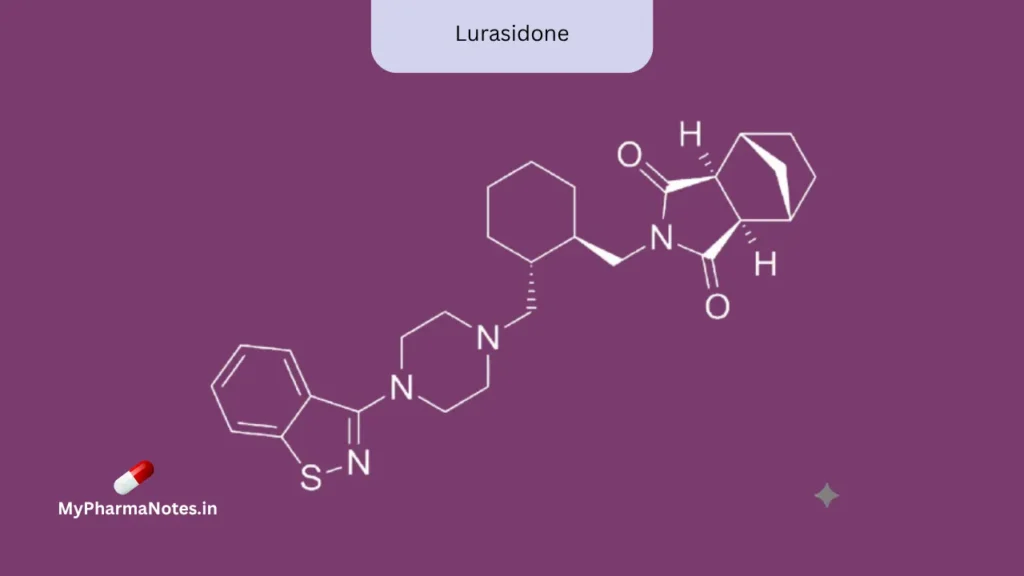
About: Newer atypical antipsychotic with a favorable metabolic profile — minimal weight gain and lipid effects compared to olanzapine and quetiapine. Must be taken with food (at least 350 calories) for adequate absorption.
Mechanism: D2 and 5-HT2A antagonist with additional 5-HT7 antagonism (which may contribute to antidepressant and procognitive effects) and partial 5-HT1A agonism.
Uses: Schizophrenia; bipolar I depression (as monotherapy or adjunct with lithium/valproate).
Side Effects: Akathisia (most common), nausea, sedation, weight neutral (advantage over other atypicals), low metabolic effects.
Contraindications: Concurrent use with strong CYP3A4 inhibitors or inducers.
Drug Interactions: Must not be combined with strong CYP3A4 inhibitors (ketoconazole) or inducers (rifampicin, carbamazepine) — significant pharmacokinetic interaction.
Stability & Storage: Cool, dry place. No direct sunlight.
Formulations: Tablets
Brand Names: Latuda
D.Pharma 1st Year — All Subjects Notes
D.Pharma 2nd Year — All Subjects Notes
