Table of Contents
Diabetes mellitus is one of the most common chronic diseases in India, affecting millions of people across all age groups. Chapter 9 of Pharmaceutical Chemistry deals with Hypoglycemic Agents — drugs that lower blood glucose levels. This is a high-scoring chapter in D Pharma exams and directly connects to real-world clinical practice.
This article covers all drugs in the PCI ER 2020 syllabus with IUPAC names, mechanisms, uses, formulations, and brand names — written so you understand the topic rather than just memorising facts.
What Are Hypoglycemic Agents?
Hypoglycemic agents are drugs that reduce blood glucose levels. They are used primarily in Type 2 Diabetes Mellitus, where the body either produces insufficient insulin or cannot use it effectively. Some are also used in Type 1 diabetes as adjuncts to insulin therapy.
Understanding why different drugs are needed requires a basic picture of how blood sugar is regulated.
When you eat carbohydrates, glucose enters the bloodstream. The pancreas responds by releasing insulin from beta cells. Insulin acts like a key that unlocks muscle, liver, and fat cells to absorb glucose for energy. In Type 2 diabetes, cells become resistant to insulin’s signal — the lock stops responding to the key — and the pancreas eventually cannot compensate by producing more.
Different classes of hypoglycemic agents target different steps in this process. Some push the pancreas to release more insulin. Some improve insulin sensitivity in cells. Some block glucose absorption from the gut. And some newer drugs directly push excess glucose out through the kidneys.
Storage Note – Applies to All Oral Drugs in This Chapter
All oral hypoglycemic tablets share the same storage requirement — room temperature, cool dry place, away from direct sunlight. This applies to every oral drug in this chapter. Insulin is the exception — it requires refrigeration at 2°C to 8°C and must never be frozen.
Classification of Hypoglycemic Agents
- Insulin and Its Preparations — directly replaces the hormone.
- Biguanides — reduce hepatic glucose output, improve insulin sensitivity. Example: Metformin
- Sulfonylureas — stimulate pancreatic insulin release. Examples: Glibenclamide, Glimepiride
- Thiazolidinediones (Glitazones) — increase insulin receptor sensitivity via PPAR-gamma. Example: Pioglitazone
- Meglitinides — short-acting insulin secretagogues, taken before meals. Example: Repaglinide
- SGLT-2 Inhibitors (Gliflozins) — block glucose reabsorption in kidneys. Example: Dapagliflozin (Forxiga).
- DPP-4 Inhibitors (Gliptins) — increase incretin hormones to stimulate insulin release. Examples: Sitagliptin (Januvia), Vildagliptin (Galvus)
Individual Drug Profiles
1. Insulin and Its Preparations
Insulin is not a synthetic drug — it is a protein hormone produced naturally by the beta cells of the islets of Langerhans in the pancreas. When blood glucose rises after a meal, beta cells detect the rise and release insulin. Insulin binds to receptors on muscle, liver, and fat cells, signalling them to absorb glucose for energy or store it as glycogen.
In Type 1 diabetes, beta cells are destroyed and insulin production stops entirely — these patients cannot survive without insulin injections. In Type 2 diabetes, insulin may be added when oral drugs are no longer sufficient to control glucose.
Commercially, insulin is produced by recombinant DNA technology using E. coli or yeast — identical to human insulin.
Types of Insulin Preparations
Insulin preparations are classified by how quickly they work, when they peak, and how long they last. Getting this timing right relative to meals is what separates safe diabetes management from dangerous hypoglycemia.
Short-acting insulin starts working within 30 minutes of injection, peaks at 2 to 3 hours, and lasts 6 to 8 hours. It is taken 30 minutes before meals to control the post-meal glucose rise. Brand example: Humulin R.
Intermediate-acting insulin takes 1 to 2 hours to start working, peaks at 4 to 12 hours, and lasts up to 18 hours. Given once or twice daily to maintain glucose control between meals and overnight. Brand example: Humulin N (NPH insulin).
Long-acting insulin has a slow, steady onset with no significant peak, lasting 20 to 24 hours. Given once daily, usually at bedtime, to control fasting glucose. Brand examples: Lantus (glargine), Levemir (detemir).
Premixed insulin is a fixed combination of short-acting and intermediate-acting insulin in one vial. Convenient for patients needing both mealtime and background control. Given once or twice daily with meals. Brand example: Huminsulin 30/70.
Special Storage for Insulin: Unopened vials refrigerated at 2°C to 8°C. Never freeze. Once opened, can be kept at room temperature for up to 28 days away from heat and light.
Formulations: Subcutaneous injection, IV infusion (emergencies), Insulin pen, Insulin pump
2. Metformin
Metformin is the most prescribed antidiabetic drug in the world and the undisputed first-line treatment for Type 2 diabetes. It has been in clinical use since the 1950s, is inexpensive, widely available, and does something no sulfonylurea can — it lowers blood sugar without triggering extra insulin release, so it does not cause hypoglycemia when used alone.
It belongs to the biguanide class, named after the guanidine-like backbone in its structure.
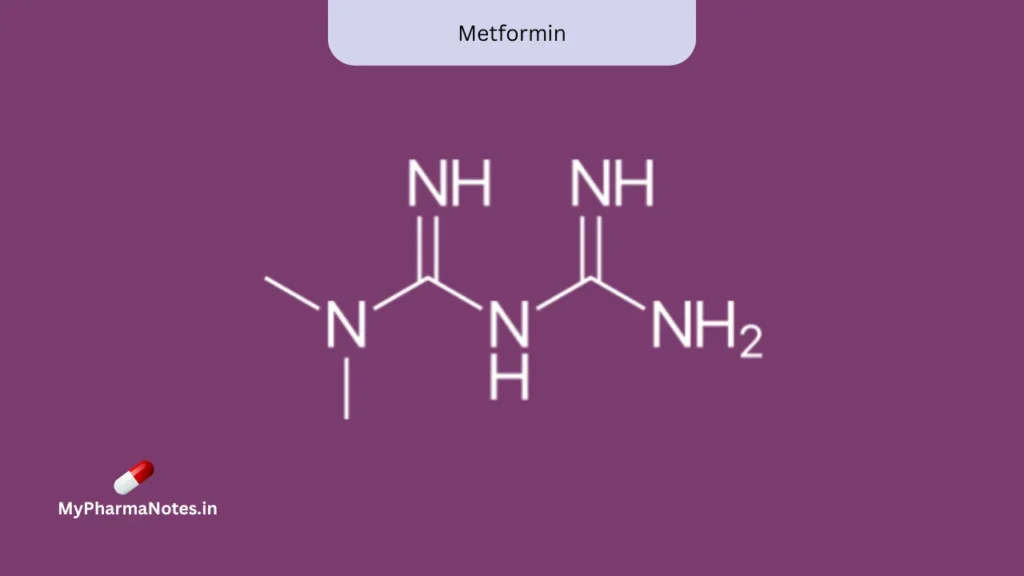
IUPAC Name: N,N-Dimethylimidodicarbonimidic diamide
Class: Biguanide
Mechanism:
Metformin works primarily by suppressing hepatic glucose production — the liver constantly releases glucose into blood through gluconeogenesis and glycogenolysis, and metformin significantly inhibits both processes. It also improves insulin sensitivity in muscle cells and mildly delays glucose absorption from the intestine. At the molecular level, it activates AMPK (AMP-activated protein kinase), an energy-sensing enzyme that switches off glucose production in the liver.
Critically, metformin does not stimulate insulin release — it only enhances the action of whatever insulin is already present. This is why it does not cause hypoglycemia alone and is also weight-neutral or mildly weight-reducing.
Uses:
First-line treatment for Type 2 diabetes, used alone or combined with any other antidiabetic class. Also widely used in Polycystic Ovary Syndrome (PCOS) to improve insulin resistance and regulate cycles. Preferred in obese diabetic patients because it does not cause weight gain.
Formulations: Tablets (immediate release and extended release)
Brand Names: Fortamet, Glumetza
3. Glibenclamide (Glyburide)
Glibenclamide is a second-generation sulfonylurea — one of the most potent drugs in its class. Sulfonylureas were the first oral antidiabetic drugs developed and were the standard of care for decades before metformin became dominant. Glibenclamide is marked with an asterisk in the PCI syllabus, meaning the chemical structure must be studied.
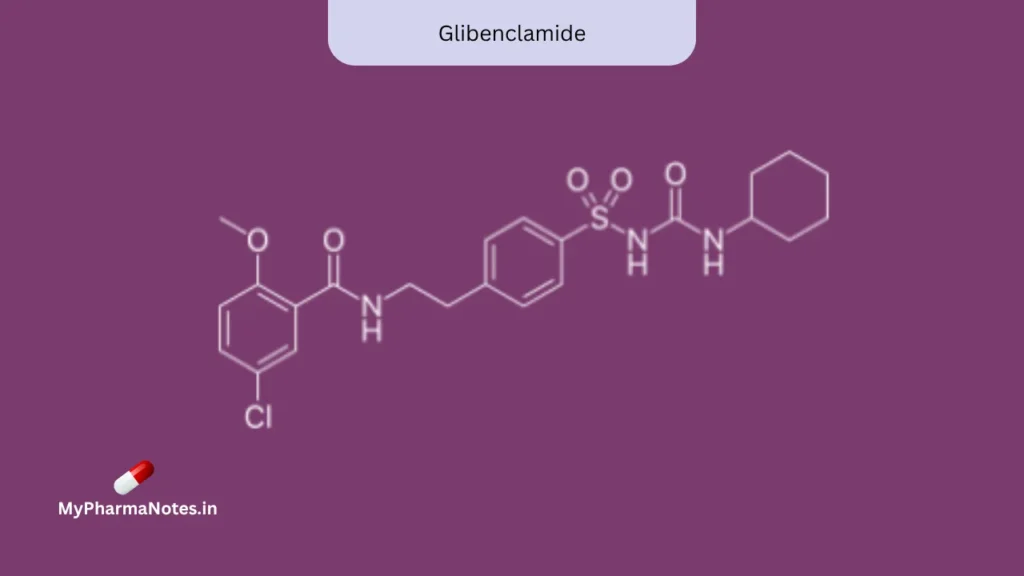
IUPAC Name: 5-chloro-N-[2-[4-(cyclohexylcarbamoylsulfamoyl)phenyl]ethyl]-2-methoxybenzamide
Class: Second-generation Sulfonylurea
Mechanism:
Glibenclamide binds to sulfonylurea receptors (SUR1) on pancreatic beta cells. This closes ATP-sensitive potassium channels (K-ATP channels), which depolarises the cell membrane, opens calcium channels, and triggers insulin release. This stimulation happens regardless of current blood glucose levels — which is both the therapeutic effect and the main risk. If a patient skips a meal or glucose is already normal, the continued insulin release can cause dangerous hypoglycemia.
Uses:
Treatment of Type 2 diabetes not controlled by diet and exercise alone. Used alongside lifestyle modification. One of the most affordable antidiabetics available in India.
Formulations: Tablets
Brand Names: Gliben-J, Daonil, Diabeta
4. Glimepiride
Glimepiride is a third-generation sulfonylurea that shares the same basic mechanism as glibenclamide but has been refined to reduce the hypoglycemia risk and improve convenience.
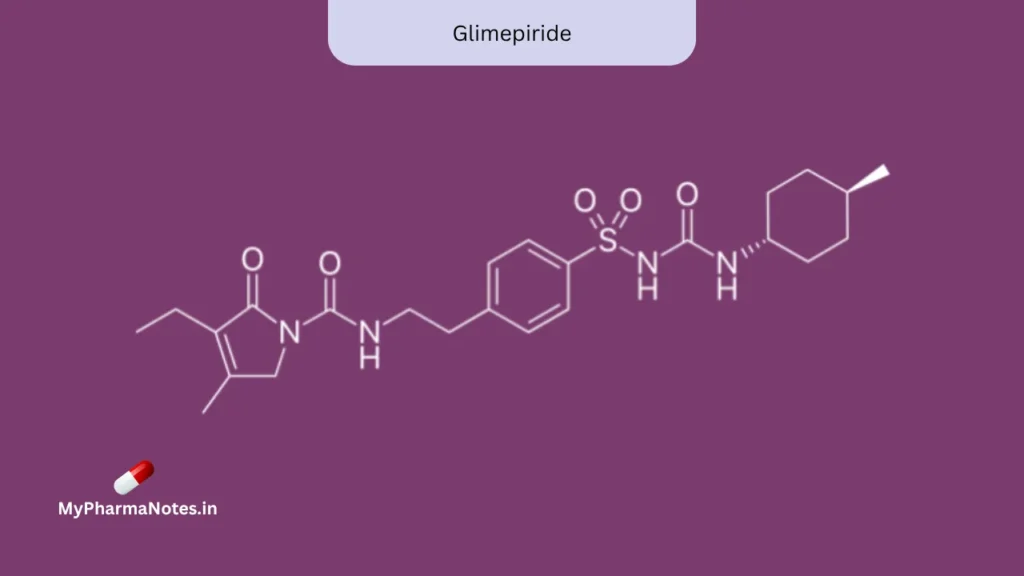
IUPAC Name: 3-Ethyl-4-methyl-N-[2-(4-{[(trans-4-methylcyclohexyl)carbamoyl]sulfamoyl}phenyl)ethyl]-2-oxo-2,5-dihydro-1H-pyrrole-1-carboxamide
Class: Third-generation Sulfonylurea
Mechanism:
Binds to SUR1 receptors on beta cells and closes K-ATP channels to stimulate insulin release — same pathway as glibenclamide. The difference is that glimepiride stimulates insulin release more proportionally to the current glucose level, reducing the risk of over-stimulation when glucose is already low. It also has a mild insulin-sensitizing effect not seen with glibenclamide.
Uses:
Treatment of Type 2 diabetes, alone or combined with metformin or insulin. Once-daily dosing makes it more convenient than glibenclamide. Preferred in elderly patients where hypoglycemia risk must be minimised.
Formulations: Tablets
Brand Names: Amaryl
5. Pioglitazone
Pioglitazone belongs to the thiazolidinedione (TZD) class, also called glitazones. Unlike sulfonylureas that push the pancreas harder, pioglitazone makes the body’s own insulin work better by improving receptor sensitivity in tissues.
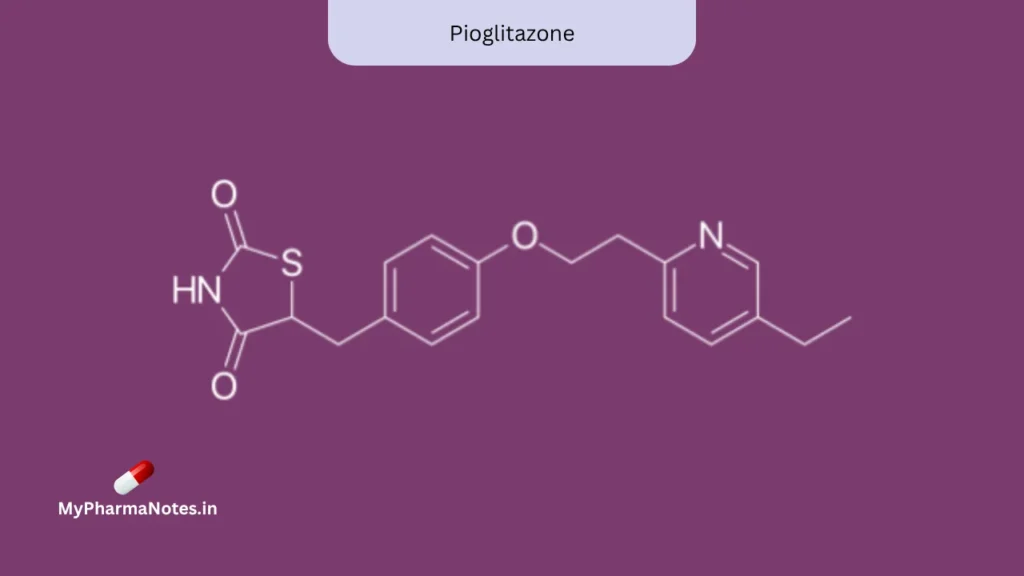
IUPAC Name: (RS)-5-(4-[2-(5-ethylpyridin-2-yl)ethoxy]benzyl)thiazolidine-2,4-dione
Class: Thiazolidinedione (Glitazone)
Mechanism:
Pioglitazone activates PPAR-gamma (Peroxisome Proliferator-Activated Receptor gamma), a nuclear receptor found mainly in fat cells. PPAR-gamma activation regulates genes involved in glucose and fat metabolism, increasing glucose transporters (GLUT-4) on cell surfaces and improving insulin receptor signalling in muscle and fat tissue. The result is that cells respond better to insulin, absorbing more glucose even without increased insulin secretion.
Because it does not stimulate insulin release, pioglitazone alone does not cause hypoglycemia — similar to metformin in that regard.
Uses:
Treatment of Type 2 diabetes, used alone or combined with metformin, sulfonylureas, or insulin. Also improves lipid profile — raises HDL (good cholesterol) and lowers triglycerides.
Important note for exams: Pioglitazone causes fluid retention and weight gain as side effects, and is avoided in patients with heart failure.
Formulations: Tablets
Brand Names: Actos
6. Repaglinide
Repaglinide is a meglitinide — a class designed to provide rapid, short-lived insulin release specifically timed to meals. Think of it as a fast-acting alternative to sulfonylureas, taken just before eating.
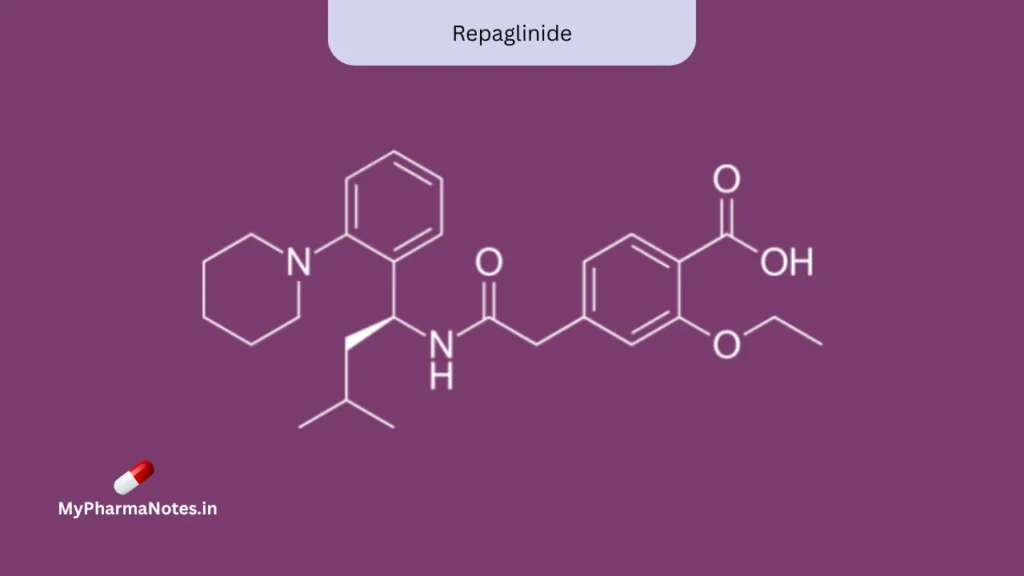
IUPAC Name: (S)-2-Ethoxy-4-(1-[2-{piperidin-1-yl}phenyl]-3-methylbutylcarbamoylmethyl)benzoic acid
Class: Meglitinide
Mechanism:
Like sulfonylureas, repaglinide closes K-ATP channels on beta cells to stimulate insulin release. The key difference is its extremely rapid onset and short duration — it starts working within 15 to 30 minutes and its effect is largely gone within 3 to 4 hours. This means insulin is released during the meal when glucose is rising, then returns to baseline — closely mimicking the natural post-meal insulin response. It must be taken before each meal and skipped if a meal is skipped.
Uses:
Treatment of Type 2 diabetes with flexible meal schedules — patients who eat irregularly benefit because the dose is linked to actual meals. Used alone or with metformin.
Formulations: Tablets
Brand Names: Prandin
7. Gliflozins (SGLT-2 Inhibitors)
Gliflozins represent a completely novel approach to treating diabetes — instead of working on the pancreas or insulin receptors, they work on the kidney. They are one of the most exciting drug classes to emerge in diabetes pharmacology in the last two decades.
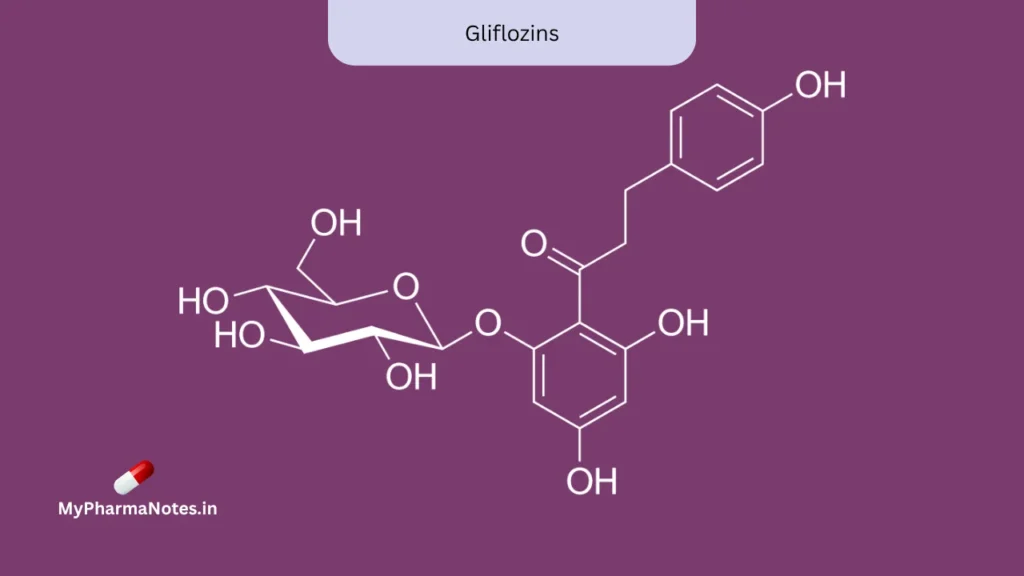
The kidney filters about 180 grams of glucose per day from the blood. Under normal circumstances, nearly all of this glucose is reabsorbed back into the blood by SGLT-2 (Sodium-Glucose Cotransporter-2) transporters in the proximal renal tubule. Gliflozins block these transporters, so glucose stays in the urine and is excreted rather than returned to the blood.
Class: SGLT-2 Inhibitors
Mechanism:
Block SGLT-2 transporters in the proximal renal tubule, preventing reabsorption of filtered glucose. The result is glucosuria — glucose in the urine — which directly lowers blood glucose levels. This mechanism is entirely independent of insulin, meaning gliflozins work even when insulin secretion is severely reduced.
Uses:
Type 2 diabetes management. Additionally, gliflozins have been found to reduce cardiovascular mortality and slow progression of diabetic kidney disease — benefits beyond just glucose control that no other oral antidiabetic class can match to the same extent.
Important exam point: Because glucose carries water with it osmotically into the urine, gliflozins also have a mild diuretic effect and reduce blood pressure. Side effect to remember — increased risk of urinary tract infections and genital fungal infections due to glucose in urine.
Formulations: Tablets
Brand Names: Forxiga (Dapagliflozin)
8. Gliptins (DPP-4 Inhibitors)
Gliptins work through the incretin system — a set of gut hormones that play a crucial role in the normal blood glucose response to eating. When you eat, your gut releases hormones called incretins (mainly GLP-1 and GIP). These hormones travel to the pancreas and stimulate insulin release in response to the meal, while simultaneously suppressing glucagon (a hormone that raises blood sugar). This glucose-dependent mechanism means incretins only stimulate insulin when glucose is actually elevated — making this approach inherently safe from hypoglycemia.
The problem is that incretins are rapidly broken down by an enzyme called DPP-4 (Dipeptidyl peptidase-4) within minutes. Gliptins block DPP-4, allowing incretins to remain active longer and exert a more sustained effect on insulin and glucagon.
Class: DPP-4 Inhibitors
Mechanism:
Inhibit DPP-4 enzyme, increasing levels of active GLP-1 and GIP. This glucose-dependent increase in incretin activity stimulates insulin release after meals, suppresses glucagon, and improves overall glycemic control. Because the effect is glucose-dependent, gliptins do not cause hypoglycemia when used alone.
Uses:
Type 2 diabetes, used alone or in combination with metformin or other antidiabetics. Well tolerated with a low side effect profile. Particularly useful in elderly patients and those at high hypoglycemia risk.
Formulations: Tablets
Brand Names: Januvia (Sitagliptin), Galvus (Vildagliptin)
Comparison Table – All Chapter 9 Drugs
| Drug | Class | Mechanism | Hypoglycemia Risk | Brand |
|---|---|---|---|---|
| Insulin | Hormone | Directly replaces insulin | Yes (if overdosed) | Lantus, Humulin |
| Metformin | Biguanide | Reduces hepatic glucose, improves sensitivity | No | Fortamet, Glumetza |
| Glibenclamide | Sulfonylurea (2nd gen) | Stimulates insulin release via K-ATP blockade | Yes | Daonil, Diabeta |
| Glimepiride | Sulfonylurea (3rd gen) | Stimulates insulin release, mild sensitizing effect | Lower than glibenclamide | Amaryl |
| Pioglitazone | Thiazolidinedione | Activates PPAR-gamma, improves insulin sensitivity | No | Actos |
| Repaglinide | Meglitinide | Rapid short-acting K-ATP blockade, meal-linked | Low (meal-linked) | Prandin |
| Gliflozins | SGLT-2 inhibitor | Blocks renal glucose reabsorption, excretes glucose in urine | No | Forxiga |
| Gliptins | DPP-4 inhibitor | Increases incretins, glucose-dependent insulin release | No | Januvia, Galvus |
High-Yield Exam Points – Chapter 9
- Metformin and Glibenclamide are the two drugs marked with asterisk (*) — chemical structures required.
- Metformin is first-line for Type 2 diabetes. It does not cause hypoglycemia alone.
- Sulfonylureas (glibenclamide, glimepiride) cause hypoglycemia — most important adverse effect to remember.
- Gliflozins are the only class that works through the kidney — completely insulin-independent mechanism.
- Gliptins and gliflozins do not cause hypoglycemia when used alone — glucose-dependent or insulin-independent mechanisms.
- Pioglitazone causes fluid retention and weight gain — avoid in heart failure patients.
- Repaglinide must be taken before meals — skip the dose if a meal is skipped.
- Insulin is stored at 2°C to 8°C. All oral drugs are stored at room temperature.
FAQ – Hypoglycemic Agents
What is the difference between sulfonylureas and biguanides?
Sulfonylureas stimulate insulin release from beta cells directly and can cause hypoglycemia. Biguanides (metformin) reduce hepatic glucose production and improve insulin sensitivity without stimulating extra insulin release — so they do not cause hypoglycemia alone and are weight-neutral.
Which hypoglycemic drugs do not cause hypoglycemia?
Metformin, pioglitazone, gliflozins, and gliptins do not cause hypoglycemia when used alone. Repaglinide has a low risk because it works only around meal times.
What is the IUPAC name of Metformin?
N,N-Dimethylimidodicarbonimidic diamide
What is the IUPAC name of Glibenclamide?
5-chloro-N-[2-[4-(cyclohexylcarbamoylsulfamoyl)phenyl]ethyl]-2-methoxybenzamide
How do gliflozins lower blood sugar?
By blocking SGLT-2 transporters in the proximal renal tubule, preventing glucose reabsorption from filtered urine. Glucose is excreted in urine (glucosuria), directly lowering blood glucose levels. This mechanism is completely independent of insulin.
What are gliptins and how do they work?
Gliptins are DPP-4 inhibitors. They block the enzyme that breaks down incretin hormones (GLP-1 and GIP). Higher incretin levels stimulate insulin release and suppress glucagon only when blood glucose is elevated — a glucose-dependent mechanism that makes them safe from hypoglycemia.
What is the difference between glibenclamide and glimepiride?
Both are sulfonylureas. Glibenclamide (2nd generation) is more potent but has higher hypoglycemia risk. Glimepiride (3rd generation) has lower hypoglycemia risk, mild insulin-sensitizing properties, and once-daily dosing for better compliance.
Why is pioglitazone avoided in heart failure patients?
Pioglitazone causes sodium and water retention as a side effect, which can worsen fluid overload in patients already struggling with heart failure. It should be used cautiously or avoided in this population.
D.Pharma 1st Year — All Subjects Notes
D.Pharma 2nd Year — All Subjects Notes
