
Table of Contents
Anaesthetics induce temporary loss of sensation or consciousness. They are classified by route of administration and extent of effect.
Classification:
- Local anaesthetics (block sensation in a specific area): Lidocaine, Bupivacaine, Mepivacaine
- General anaesthetics (cause complete unconsciousness): Thiopental Sodium, Propofol, Sevoflurane
- Inhalational anaesthetics: Nitrous oxide, Halothane, Isoflurane
- Intravenous anaesthetics: Ketamine, Etomidate, Midazolam
Thiopental Sodium ⭐
IUPAC Name: Sodium 5-ethyl-5-pentan-2-yl-2-sulfanylidene-1,3-diazinane-4,6-dione
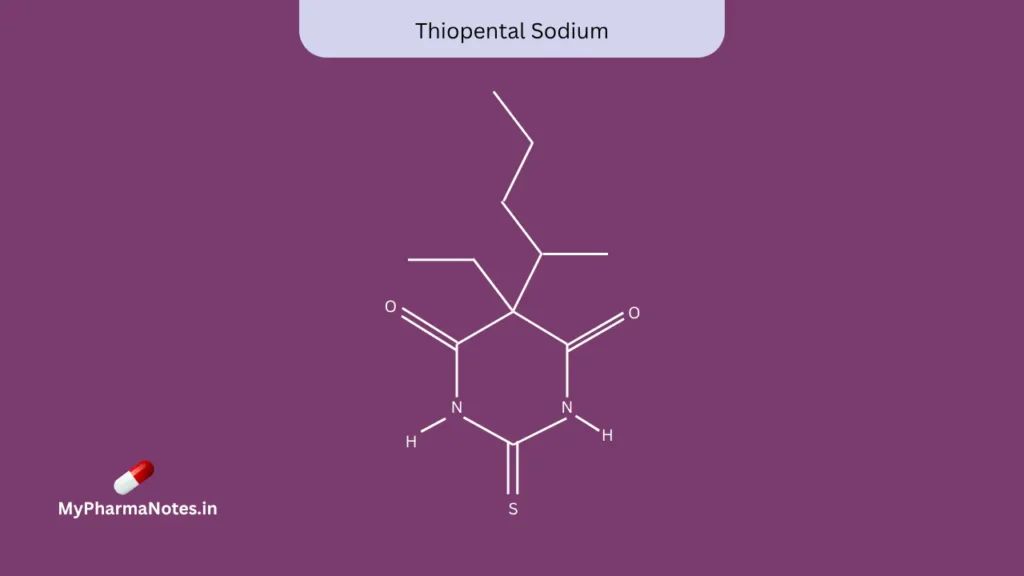
About: Ultra-short-acting barbiturate general anaesthetic. One of the oldest IV anaesthetics still in limited use. Historically used as a “truth serum” and in lethal injection protocols.
Mechanism: Enhances GABA-A receptor activity → increases chloride ion influx → neuronal hyperpolarization → rapid loss of consciousness within 30 seconds of IV injection. Duration is very short (5–10 minutes) due to rapid redistribution into fat tissue.
Uses: Induction of general anaesthesia; ICU sedation for patients on mechanical ventilation; management of status epilepticus; reduction of intracranial pressure; treatment of convulsions.
Side Effects: Respiratory depression, hypotension, laryngospasm, tissue necrosis if extravasation occurs, hangover effect, myocardial depression.
Contraindications: Porphyria (absolute contraindication — can trigger acute attack), severe cardiovascular disease, respiratory obstruction, absence of suitable veins.
Drug Interactions: Additive CNS depression with other sedatives, opioids, and alcohol. Reduces effects of corticosteroids.
Clinical Pearl: Thiopental causes rapid unconsciousness but provides no analgesia. It must always be combined with an analgesic for painful procedures.
Stability & Storage: Store at 22°C. Stable and sterile for 6 days; beyond 7 days at 3°C.
Formulations: Injection, Powder, Solution
Brand Names: Thiojex, Pentone, Pentothal, Anesthal
Ketamine Hydrochloride ⭐
IUPAC Name: 2-(2-Chlorophenyl)-2-(methylamino)cyclohexanone hydrochloride
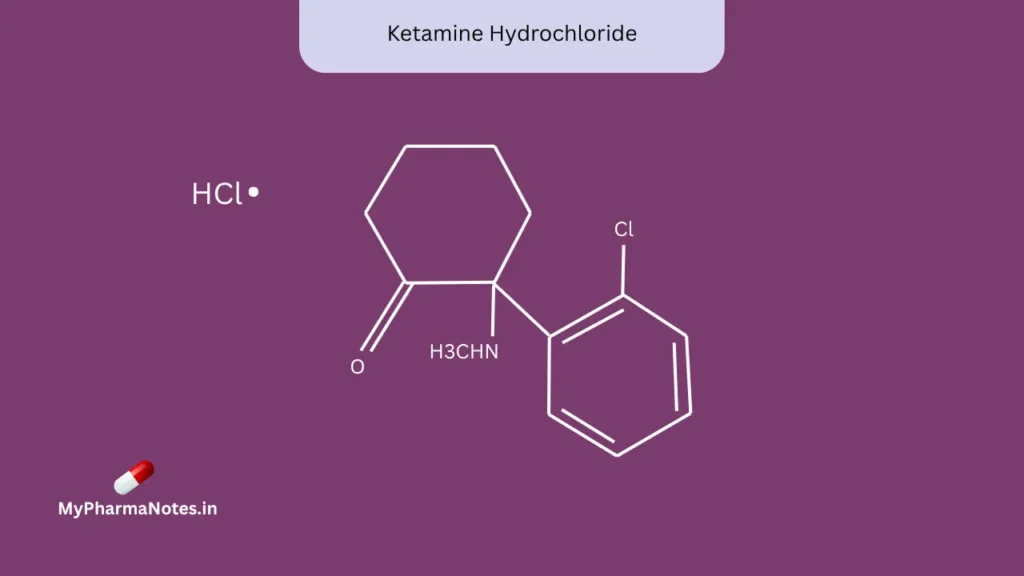
About: Unique dissociative anaesthetic that produces a trance-like state with analgesia, sedation, and amnesia while maintaining airway reflexes and cardiovascular stability — making it invaluable in emergency and field medicine.
Mechanism: NMDA (N-methyl-D-aspartate) receptor antagonist — blocks glutamate activity → dissociative anaesthesia. Also interacts with opioid receptors contributing to analgesia.
Uses: Induction and maintenance of anaesthesia (especially where airway maintenance is critical); procedural sedation; pain relief where opioids are unsuitable; emergency anaesthesia in resource-limited settings; veterinary medicine. Recently studied for treatment-resistant depression.
Side Effects: Emergence reactions (hallucinations, vivid dreams — reduced by combining with benzodiazepines), increased salivation, elevated blood pressure and heart rate, increased intraocular pressure, nausea.
Contraindications: Uncontrolled hypertension, severe cardiovascular disease, history of psychosis, elevated intracranial pressure (use with caution).
Drug Interactions: Benzodiazepines reduce emergence reactions; thyroid hormones combined with ketamine can cause hypertension and tachycardia; additive CNS depression with other anaesthetics.
Clinical Pearl: Unlike most anaesthetics, ketamine maintains blood pressure and airway reflexes, making it the anaesthetic of choice in hemodynamically unstable patients, trauma victims, and field conditions.
Stability & Storage: Store in tightly closed container, dry and well-ventilated place.
Formulations: Liquid solution, Powder
Brand Names: Ketalar, Ketmim, Ketamine
Propofol
IUPAC Name: 2,6-Diisopropylphenol
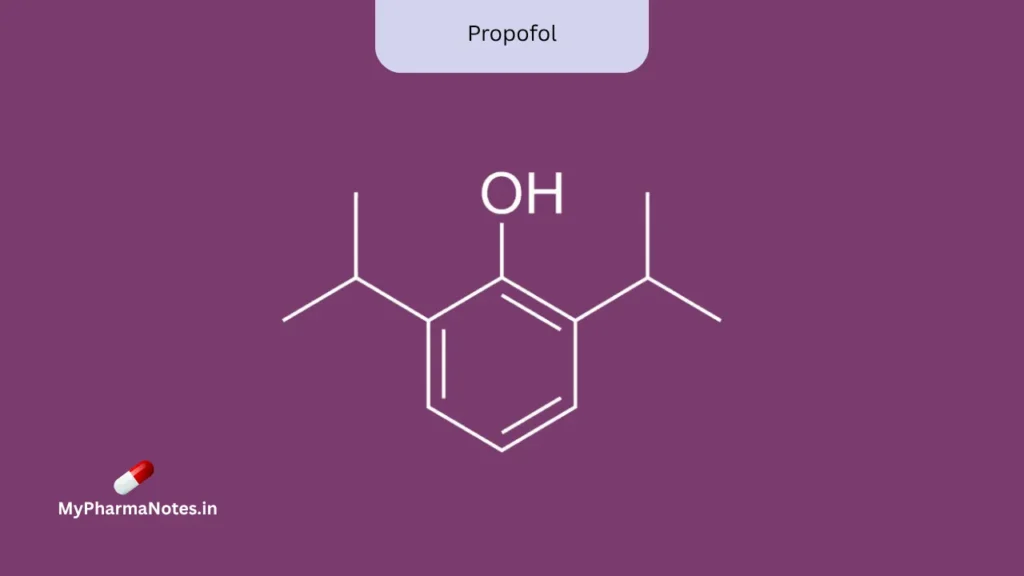
About: The most widely used intravenous anaesthetic today. Known for its rapid onset, rapid recovery, and antiemetic properties. Its milky white lipid emulsion formulation is instantly recognizable.
Mechanism: Enhances GABA-A receptor activity (similar to barbiturates) → CNS depression → rapid unconsciousness within 40 seconds. Rapidly redistributed and metabolized, allowing quick recovery.
Uses: Induction and maintenance of general anaesthesia in adults and children ≥2 months; procedural sedation; ICU sedation for ventilated patients; has antiemetic properties useful post-surgery.
Side Effects: Propofol infusion syndrome (rare but fatal — metabolic acidosis, rhabdomyolysis, cardiac failure with prolonged high-dose infusion), respiratory depression, hypotension, pain on injection, apnea, green-tinged urine.
Contraindications: Allergy to soy or egg (emulsion contains soy lecithin and egg phosphatide); not recommended for obstetric anaesthesia.
Drug Interactions: Additive CNS and respiratory depression with opioids, benzodiazepines, and other anaesthetics; fentanyl increases propofol blood levels.
Clinical Pearl: Propofol is the gold standard for day-care surgery due to its rapid, clear-headed recovery with minimal nausea. However, it has no analgesic properties and must always be combined with an analgesic.
Stability & Storage: Store between 4°C–22°C. Refrigeration not required. Once opened, use within 6 hours.
Formulations: Emulsion, Suspension, Injectable
Brand Names: Diprivan, Fresenius Propoven
D.Pharma 1st Year — All Subjects Notes
D.Pharma 2nd Year — All Subjects Notes
