Table of Contents
Chapter 9 is the management-focused capstone of this subject — it takes everything from setting up a pharmacy legally, to designing its physical space, to running it financially and digitally on a day-to-day basis. This is one of the most comprehensive chapters in the D.Pharma 2nd Year syllabus, covering legal setup, site selection, pharmacy design and interiors, procurement and inventory control, financial planning, accountancy (day book and cash book), pharmacy software and CRM, audits, SOPs, and an introduction to digital health, mHealth, and online pharmacies.
What is Community Pharmacy Management?
Community Pharmacy Management refers to the practice of overseeing and coordinating the daily operations of a community pharmacy — including financial management, inventory control, staff management, and customer service. Community pharmacy managers are responsible for ensuring the pharmacy runs efficiently and effectively while meeting the needs of its patients and the wider community it serves.
Legal Requirements to Set Up a Community Pharmacy
Setting up a community pharmacy in India requires compliance with regulations set by bodies such as the Pharmacy Council of India (PCI). Key legal requirements include:
- Registration — The owner must register the pharmacy with the PCI, submitting an application along with documents such as proof of ownership, the pharmacy layout plan, and the pharmacist’s educational qualifications.
- Location — The pharmacy must be in an easily accessible area with adequate space for storage, dispensing, and patient counselling, and must be located at least 200 meters away from another registered pharmacy.
- Infrastructure — Proper infrastructure is required, including air conditioning, refrigeration, computers, and software for managing inventory and patient records.
- Pharmacist — A qualified, registered pharmacist with a D.Pharm or B.Pharm degree and a valid license must be present at all times during working hours.
- Drug Storage — Proper storage facilities are required, with the storage area kept clean, well-lit, and well-ventilated.
- Dispensing — Drugs must only be dispensed against a prescription from a registered medical practitioner, with the pharmacist ensuring correct dosage and formulation.
- Record Keeping — Accurate, up-to-date records of drugs dispensed, drugs received, and inventory must be maintained.
- Adherence to Regulations — The pharmacy must comply with all PCI requirements and other regulatory frameworks, such as the Drugs and Cosmetics Act.
Site Selection Requirements
Site selection is one of the most important determinants of a pharmacy’s success. Key factors to consider include:
- Hospital/Nursing Homes — Locating near a hospital is advantageous since most patients move toward hospitals for treatment, and multiple supporting facilities are typically available nearby.
- Drug Store Market — Many cities have a common cluster known as a “Daba Bazar,” which can be a highly suitable location if business potential and dedication are high — people tend to gravitate toward areas with multiple drug stores, assuming all types of medicines are available there.
- Flow of Traffic — Choosing a side of the road with suitable parking, based on the purchasing power of people passing by, is important. Locations near people’s offices work well, while one-way traffic and locations near traffic signals (which often face parking problems) should be avoided.
- Nearby Amenities — Adequate parking, toilets, and small open spaces nearby are advisable, particularly for market locations.
- Nearby Common Requirements (hotels, schools, cinemas, playgrounds, etc.) — Locations near these points see consistent footfall throughout the day, making them well-suited for a pharmacy business.
- Business Locality — High-footfall localities can support a modern, high-tech pharmacy capable of serving many customers simultaneously, though this requires a higher initial investment.
Pharmacy Designs and Interiors
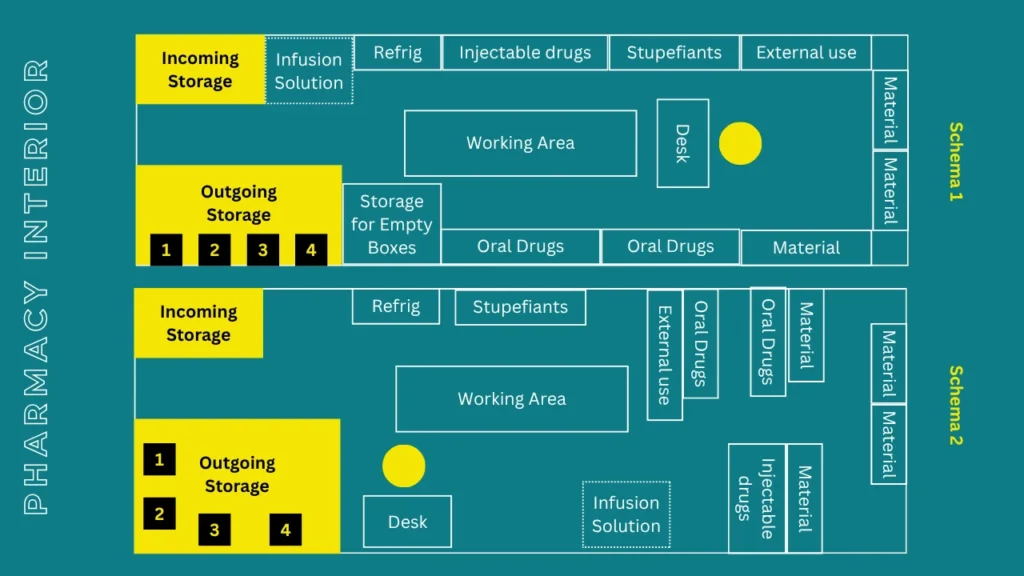
The general design and construction of a pharmacy should prioritize functionality — the location and size should accommodate anticipated personnel and inventory movement, work processes, and daily activities. Built-in storage and fixed equipment should be provided for documents, bulk supplies, dangerous drugs, psychotropic substances, portable medical gas cylinders, and refrigerated/cold-chain items, with drainage and sewerage systems located outside the premises.
Structural Design
- Wall — Should be non-porous and plastered on both sides, with washable antifungal paint indoors and weatherproof paint outdoors. Cold room walls require special materials to prevent condensation.
- Floor — Concrete, smoothly plastered, non-slippery, heavy-duty, non-porous, damp-proof, and resistant to detergent. Floor-to-ceiling height should range between 15–30 feet depending on the functional area and equipment used.
- Ceiling — Fire-retardant, asbestos-free, and made of non-shedding materials or mineral fibers.
- Roof — Pitched or sloped to prevent heavy rain damage.
- Door — Fire-retardant, with two leaves wide enough for free movement of supplies and handling equipment like forklifts and stackers. Exit doors should have luminous emergency exit signage.
- Window — Provided at workstations, offices, and staff areas, but not in storage areas.
Receiving Area
- Loading and Unloading Area — Adequately spaced and sheltered, accounting for vehicle height.
- Receiving Counter — Should have adequate waiting space and suitable office furniture/equipment.
- Sorting and Unpacking Area — Spacious enough for sorting, checking goods, and forklift use.
- Transit/Holding Area — Space for items needing further clarification before receiving, transit items not requiring special storage, and pallets.
- Disposal Room — For storing discarded items like used boxes, wrappers, and plastic covers.
Storage Area
- General Storage Requirement — 24-hour air conditioning with temperature controlled between 16–25°C, electrical supply linked to emergency power, a computerized alarm system for cold-chain equipment failures, and adequate space for forklifts, stackers, trolleys, IT facilities, pallets, shelves, and racks.
- Drug Store — Adjustable, modular, heavy-duty open racks for various package sizes, heavy-duty plastic pallets for bulk items, and a designated area with cautionary signage and a chemo-spill kit for cytotoxic drugs.
- Dangerous Drugs/Psychotropic Substances Store — Kept under lock and key in a special room/cabinet with an alarm system.
- Cold Room/Pharmaceutical Refrigerator/Freezer Area — For storing drugs requiring low temperatures (vaccines, antisera, biologicals), equipped with a computerized temperature recorder system.
- Intravenous (IV) Fluid Store — Adequately spaced for hemodialysis, peritoneal dialysis, and IV solutions, with forklift accessibility.
- Surgical Store — For bulk surgical/consumable/disposable items and X-ray films, with adjustable heavy-duty racks.
- Non-Drug Bulk Store — For dispensing bottles, containers, labels, and envelopes, with adjustable modular racks.
Vendor Selection and Ordering Procurement
Vendor selection and procurement involves identifying and evaluating potential suppliers, selecting the best ones, and placing orders for pharmaceutical products and supplies. The process typically involves:
- Determine the pharmacy’s needs — Identifying the types of pharmaceutical products and supplies required.
- Identify potential suppliers — Through research, networking, industry associations, and trade shows.
- Evaluate potential suppliers — Based on reliability, quality, pricing, and delivery time.
- Select the best suppliers — Based on the evaluation results.
- Negotiate contracts — Agreeing on pricing, delivery time, payment terms, and other key details.
- Place orders — With the selected suppliers.
- Track orders and performance — Monitoring whether suppliers meet agreed terms and quality standards.
Inventory Control Methods
Effective inventory control reduces costs, minimizes waste, and ensures availability of necessary medications. Common methods include:
- First-In-First-Out (FIFO) Method — Uses the oldest stock first to minimize expiration/spoilage, particularly useful for perishables like vaccines.
- Minimum-Maximum Method — Sets minimum and maximum inventory levels; stock is reordered to reach the maximum when it falls below the minimum.
- ABC Analysis — Categorizes items by importance/usage (Class A: most important/highest usage; Class C: least important/lowest usage) to prioritize control efforts.
- Continuous Review Method — Regularly monitors inventory and reorders as needed, suited to fast-moving items with predictable demand.
- Barcoding and Scanning — Uses barcode systems to track inventory and minimize errors.
- Automated Inventory Management Systems — Computerized software that streamlines inventory management and ordering.
Inventory Management
Proper inventory management reduces stockouts, minimizes waste, and ensures customer needs are met. Key strategies include:
- Set par levels — Determining minimum/maximum inventory levels for timely ordering.
- Track expiration dates — Removing expired products to avoid dispensing them.
- Conduct regular inventory checks — Identifying discrepancies between actual stock and records.
- Use a computerized system — Tracking inventory, orders, and expiration dates efficiently.
- Monitor trends — Adjusting inventory levels based on medication usage patterns.
- Work with suppliers — Building relationships for timely deliveries and quick issue resolution.
Financial Planning and Management
Running a successful pharmacy requires strong financial skills across several areas:
- Budgeting — Tracking income and expenses to allocate resources and set financial goals.
- Cash flow management — Maintaining adequate cash reserves and tracking inflows/outflows to prevent shortages.
- Inventory management — Balancing enough stock to meet demand without tying up excess cash.
- Cost control — Monitoring expenses like rent, utilities, wages, and supply costs to identify savings.
- Revenue management — Managing pricing, billing, and payment processes, and identifying new revenue opportunities.
- Financial reporting — Generating balance sheets, income statements, and cash flow statements to track progress and inform decisions.
Accountancy in Community Pharmacy
Accountancy in a pharmacy setting involves managing financial transactions, record-keeping, and financial analysis. Key areas include:
- Financial Management — Budgeting, cash flow management, and inventory management.
- Record-Keeping — Ensuring regulatory compliance and facilitating financial analysis.
- Tax Compliance — Maintaining accurate records to comply with tax regulations and minimize liabilities.
- Financial Analysis — Analyzing financial statements and metrics to guide operational and growth decisions.
- Fraud Detection — Helping detect and prevent fraud or embezzlement.
Day Book
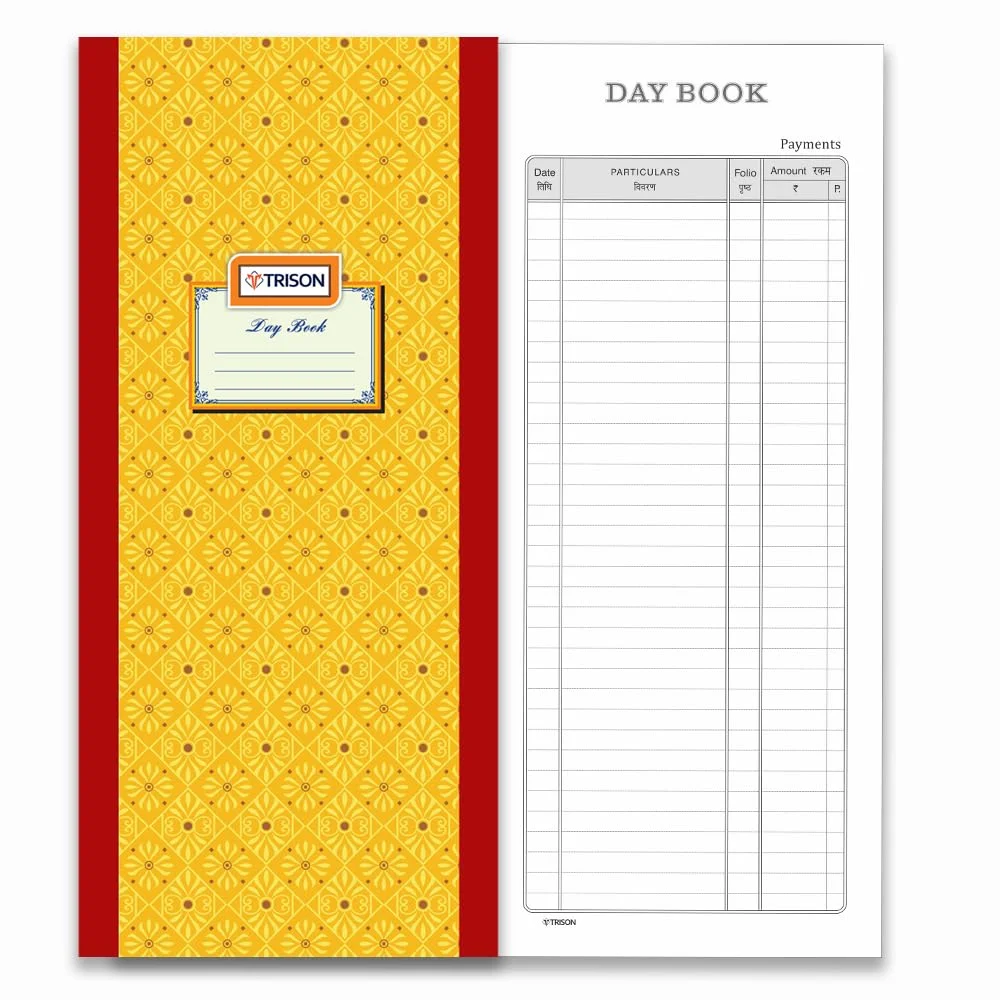
A day book is a record of all transactions taking place in the pharmacy on a particular day — including medicines sold, quantity sold, price per unit, and total amount collected per transaction, as well as any purchases of new stock, equipment, or supplies. It is typically prepared at the end of each day as a complete record of that day’s business activity.
Cash Book
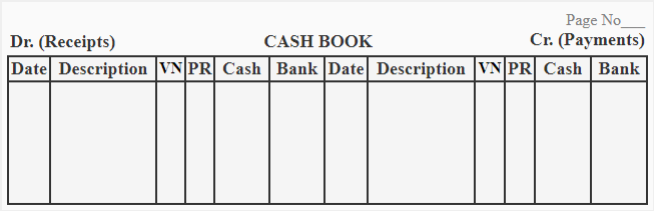
A cash book records all cash transactions in the pharmacy — cash received (such as medicine sales) and cash payments made (such as supplier payments). It is updated daily to track cash flow and helps reconcile the cash balance at the end of each day, week, or month.
Pharmacy Operation Software
Pharmacy operation software refers to computer programs designed to manage aspects of pharmacy operations such as inventory, prescription processing, patient data, and billing — streamlining workflow and improving efficiency and accuracy. Key features include:
- Inventory management — Tracking drug movement and expiration dates.
- Prescription processing — Capturing prescription details, verifying patient information, and transmitting prescriptions for filling.
- Patient data management — Managing medical history, allergies, and current medications to identify potential drug interactions.
- Billing and insurance management — Verifying insurance coverage, processing claims, and generating reports.
- Point-of-sale functionality — Accepting payments and processing transactions efficiently.
Customer Relationship Management (CRM)
CRM software helps pharmacies manage customer interactions and improve satisfaction by tracking customer orders, preferences, history, feedback, and complaints. It also supports communication tools such as email marketing, automated messaging, and appointment scheduling — increasing customer engagement, loyalty, revenue, and reputation. Popular pharmacy software programs offering CRM features include PioneerRx, PrimeRx, and QS/1.
Audits in Pharmacies
Audits ensure that medications are handled and dispensed safely and accurately, identifying discrepancies in processes, policies, and procedures that could affect patient care quality. Common issues audits aim to catch include:
- Errors in prescription processing
- Inaccurate or incomplete medication records
- Problems with medication storage or inventory management
- Noncompliance with state or federal regulations
- Inadequate training or supervision of pharmacy staff
SOP of Pharmacy Management
An SOP for Pharmacy Management is a set of guidelines and procedures pharmacy staff should follow to ensure safe, effective pharmaceutical care delivery. It should comply with local regulations and be reviewed regularly. Key components include:
- Pharmacy Staffing — Ensuring adequate staffing levels to meet patient needs.
- Medication Procurement — Defining the process for ordering, receiving, storing, and dispensing medications.
- Medication Storage — Establishing proper storage procedures, including temperature and humidity controls.
- Medication Dispensing — Checking allergies/interactions, verifying orders, and labeling prescriptions correctly.
- Medication Administration — Ensuring proper dosage, administration routes, and monitoring patient response.
- Medication Errors — Establishing procedures for identifying, reporting, and preventing errors, including staff training and root cause analysis.
- Documentation — Maintaining accurate, complete records of orders, dispensing, administration, and outcomes.
- Quality Control — Conducting regular audits of storage and dispensing procedures.
- Emergency Preparedness — Defining procedures for medication shortages or natural disasters.
- Staff Training — Ongoing education to ensure continued competence and regulatory compliance.
Introduction to Digital Health, mHealth and Online Pharmacies
Digital Health
Digital health refers to the use of digital technologies, tools, and platforms to enhance healthcare delivery, patient care, and public health. It encompasses tools that enable healthcare providers, patients, and caregivers to access, share, and analyze health information — including Learning Health Systems, Electronic Health Records, mobile applications, wearable technologies, health information systems, telehealth, telemedicine, machine learning, artificial intelligence, and big data. These technologies are evaluated for their opportunities, challenges, and effectiveness in public health and global healthcare — with the digital health response to COVID-19 serving as a notable case study in their real-world application.
mHealth and Online Pharmacies
mHealth (mobile health) refers to the use of mobile devices like smartphones and tablets to support healthcare services and improve health outcomes. Online pharmacies are digital platforms that let patients order medications online for doorstep delivery. Both have significant potential to improve healthcare and medication access for people facing barriers to traditional healthcare — such as those in rural areas or with mobility issues — allowing them to order medication or access care from home.
Exam Tips
- The 200-meter minimum distance rule between pharmacies and the educational qualification requirement (D.Pharm/B.Pharm) are high-value, frequently tested one-mark facts under legal requirements.
- The six site selection factors (hospital proximity, drug store market, traffic flow, amenities, common requirements, business locality) are commonly asked as a list — memorize them with one example each.
- For pharmacy design, the temperature range (16–25°C) for storage areas and floor-to-ceiling height (15–30 feet) are precise numerical facts examiners like to test.
- The six inventory control methods (FIFO, Min-Max, ABC Analysis, Continuous Review, Barcoding, Automated Systems) are a strong long-answer question — be ready to briefly define each.
- Day book vs. cash book is a frequently confused pair — remember day book records all daily transactions (sales + purchases), while cash book specifically tracks cash inflows and outflows.
- The 10 components of a Pharmacy Management SOP are useful as a checklist-style long answer — group them logically (staffing → procurement → storage → dispensing → administration → errors → documentation → quality → emergency → training) to make recall easier.
FAQ – Community Pharmacy and Management
What is the minimum distance required between two registered pharmacies in India?
A community pharmacy must be located at least 200 meters away from another registered pharmacy.
What are the key factors considered during pharmacy site selection?
Key factors include proximity to hospitals, drug store markets, traffic flow, nearby amenities, nearby common requirements like schools or hotels, and the overall business locality.
What is the difference between a day book and a cash book?
A day book records all transactions (sales and purchases) occurring in the pharmacy on a given day, while a cash book specifically tracks all cash received and paid out, helping reconcile cash balances regularly.
What are common inventory control methods used in pharmacies?
Common methods include FIFO, the Minimum-Maximum method, ABC Analysis, the Continuous Review method, barcoding and scanning, and automated inventory management systems.
What is the purpose of audits in a pharmacy?
Audits help identify discrepancies in pharmacy processes, policies, and procedures — such as prescription errors, incomplete records, storage issues, regulatory noncompliance, and inadequate staff training — to ensure safe and effective patient care.
What is mHealth?
mHealth (mobile health) refers to the use of mobile devices like smartphones and tablets to support healthcare delivery and improve health outcomes, often working alongside online pharmacies to improve healthcare access.
